
Invasive mosquitoes found breeding in east London: what it means
What happened
On Thursday 3 September 2026, the UK Health Security Agency (UKHSA) said it had found invasive Aedes aegypti mosquitoes, along with their larvae, at residential properties in east London. This is the first time this particular species has been found breeding in the UK. It has been detected here four times in recent years, but always as adults that had hitched a ride from somewhere warmer. This time, eggs had hatched and young mosquitoes were growing in water on the site. The finding did not come from a laboratory or a government inspection. It started with a report to Mosquito Watch, UKHSA's scheme that lets anyone send in a photo or a specimen of a mosquito they think looks unusual. Experts then confirmed the identification and went out to look. UKHSA has since destroyed the larvae, stepped up trapping and surveillance in the area, and said it will keep monitoring closely to find and remove any others. Dr Jolyon Medlock, Head of Medical Entomology and Zoonoses Ecology at UKHSA, said that while Aedes aegypti can spread diseases such as dengue, chikungunya and Zika in countries where those infections are circulating, "the risk to the public from this finding is assessed as very low". He added that there is "no evidence that these mosquitoes have caused human infections". There is also no evidence that the mosquitoes or larvae have spread into nearby public areas.
Why this matters
Britain has plenty of mosquitoes. Around 35 species live here, and most of them are a nuisance rather than a danger. So why the attention? Because Aedes aegypti is a different animal. Around the world it is one of the main species that carries dengue, chikungunya, Zika and yellow fever. It likes living close to people, it breeds in very small amounts of water, and it bites during the day rather than at dusk. The word that made this news is "breeding". A single mosquito arriving in a suitcase is an accident. Larvae in a water container mean the insect found somewhere in east London warm enough and wet enough to start a family. That is a first for the UK, and it is the sort of thing public health teams want to catch early. It is worth being just as clear about what this is not. It is not an outbreak. Nobody has been made ill. The mosquito itself does not create dengue or Zika out of nothing: it can only pass a virus on if it first bites someone who already has that virus in their blood. Without the virus in circulation, an Aedes aegypti bite is an itchy bite. The other reason this matters is quieter, and more encouraging. The system worked. Somebody looked at a mosquito, thought it looked odd, and reported it. That report reached scientists, who acted within days.
What the evidence actually says
Here is what is actually established, and what is not. UKHSA has assessed the risk to the public from this finding as very low. That is the agency's own wording, not a summary of it. Dr Medlock explained that the mosquitoes are believed to be accidental arrivals. Invasive mosquitoes travel in vehicles, in luggage and in imported plants. If they land somewhere with the right conditions, they can survive for a while. Crucially, he said the species is not established in the UK and cannot survive long-term in the typical UK climate, which is too cold overall. Breeding happened locally, in a small area, after an unusually hot summer. That is different from the species settling in permanently. There is no evidence of any human infection connected to this finding, and no evidence of mosquitoes or larvae in nearby public spaces. What is not yet known is how many mosquitoes were involved, or exactly how they arrived. UKHSA has not published those details, and the trapping work is still going on. Anyone telling you they know the full picture today is going further than the evidence does. It is also fair to say the background is changing. Hotter, longer summers make Britain a slightly friendlier place for insects that used to find it hostile. That is a reason for good surveillance, not for alarm. Public health teams in France, Italy and Spain have been managing invasive mosquitoes for years, and the main tools are unglamorous: find them early, get rid of the water they breed in, and keep watching.
Practical advice
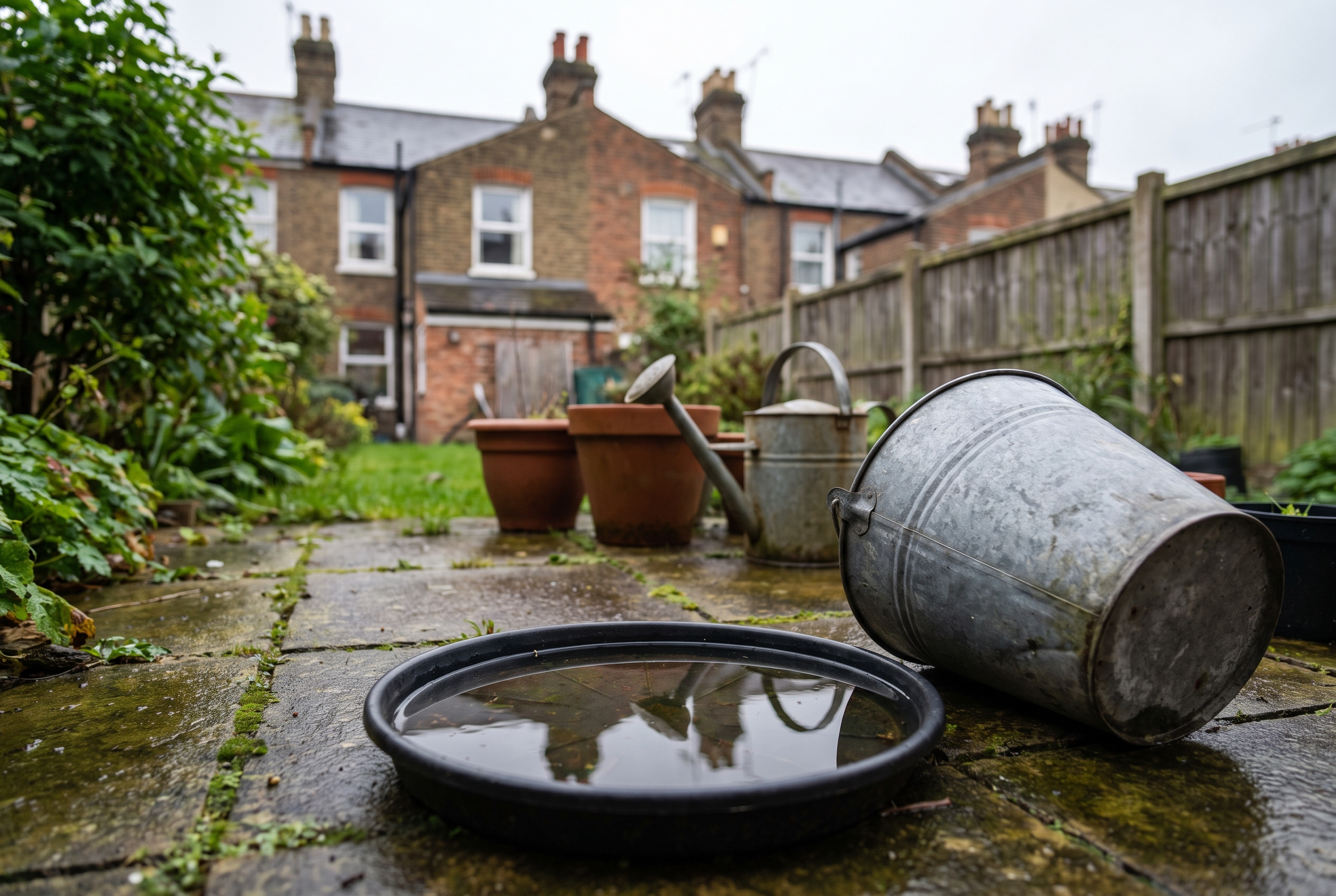
If you live in east London, or anywhere else in the UK, the single most useful thing you can do costs nothing and takes about five minutes a week. Tip out standing water. Mosquitoes do not need a pond. An egg cup's worth of water will do. Once a week, empty and turn over: - plant pot saucers and hanging basket trays - buckets, watering cans and wheelbarrows - children's paddling pools and outdoor toys - old tyres, tarpaulins and anything with a dip in it - pet water bowls left outside (refresh these anyway) Then check the things you cannot tip up. Clear blocked gutters and drains. Put a lid or a fine mesh on your water butt. If you have a birdbath, change the water weekly. Report anything unusual. If you see a mosquito that looks distinctive, especially one with black and white markings that is biting in daylight, take a photo or safely keep the specimen and report it through UKHSA's Mosquito Watch scheme. Reports from ordinary members of the public are how this finding came to light in the first place. If you have recently travelled somewhere where dengue, chikungunya or Zika circulate and you develop a fever, severe headache, joint pain or a rash, contact NHS 111 or your GP practice and tell them where you have been. That travel detail genuinely changes how your symptoms are assessed. For ordinary bites, the usual advice applies: keep the area clean, try not to scratch, and speak to your pharmacist if a bite becomes hot, swollen, or increasingly painful over several days.
What to know
On 3 September 2026, UKHSA confirmed that invasive Aedes aegypti mosquitoes and larvae had been found at residential properties in east London. It is the first confirmed breeding of this species in the UK and the fourth time it has been detected here in recent years. UKHSA has destroyed the larvae and is running enhanced surveillance and trapping in the area. The agency assesses the risk to the public as very low. There is no evidence of any human infection, and no evidence that the mosquitoes have reached nearby public areas. Aedes aegypti can carry dengue, chikungunya and Zika in countries where those viruses circulate, but it can only pass a virus on if that virus is already present. UKHSA says the species is not established in the UK and cannot survive long-term in the typical British climate. The useful response is not worry. It is emptying standing water around your home once a week, and reporting unusual mosquitoes to Mosquito Watch. Sources: UK Health Security Agency, "Invasive mosquito species detected in east London", GOV.UK, 3 September 2026, https://www.gov.uk/government/news/invasive-mosquito-species-detected-in-east-london; Evening Standard, "Invasive mosquitoes which can carry deadly virus found breeding in east London homes", 3 September 2026, https://www.aol.co.uk/articles/invasive-mosquitoes-carry-deadly-virus-104525000.html This article is for general information and does not replace advice from a doctor, pharmacist or other qualified healthcare professional. If you feel unwell after travelling abroad, contact NHS 111 or your GP practice and tell them where you have been.
Related articles

Salmonella outbreak grows to three clusters: what UKHSA now says
The UK Health Security Agency (UKHSA) updated its national Salmonella outbreak investigation on Wednesday 3 September 2026, and the numbers have grown. UKHSA i…

A pill for sleep apnoea? What the new trial really showed
Results from a large trial of a once-nightly pill for obstructive sleep apnoea were published in the American Journal of Respiratory and Critical Care Medicine,…

Seven minutes, one finger prick: pharmacies start checking cholesterol
Around 100 NHS pharmacies in England started offering seven-minute cholesterol checks on 31 August 2026. The test is simple. A pharmacist takes a tiny drop of…