
Seven minutes, one finger prick: pharmacies start checking cholesterol
What happened
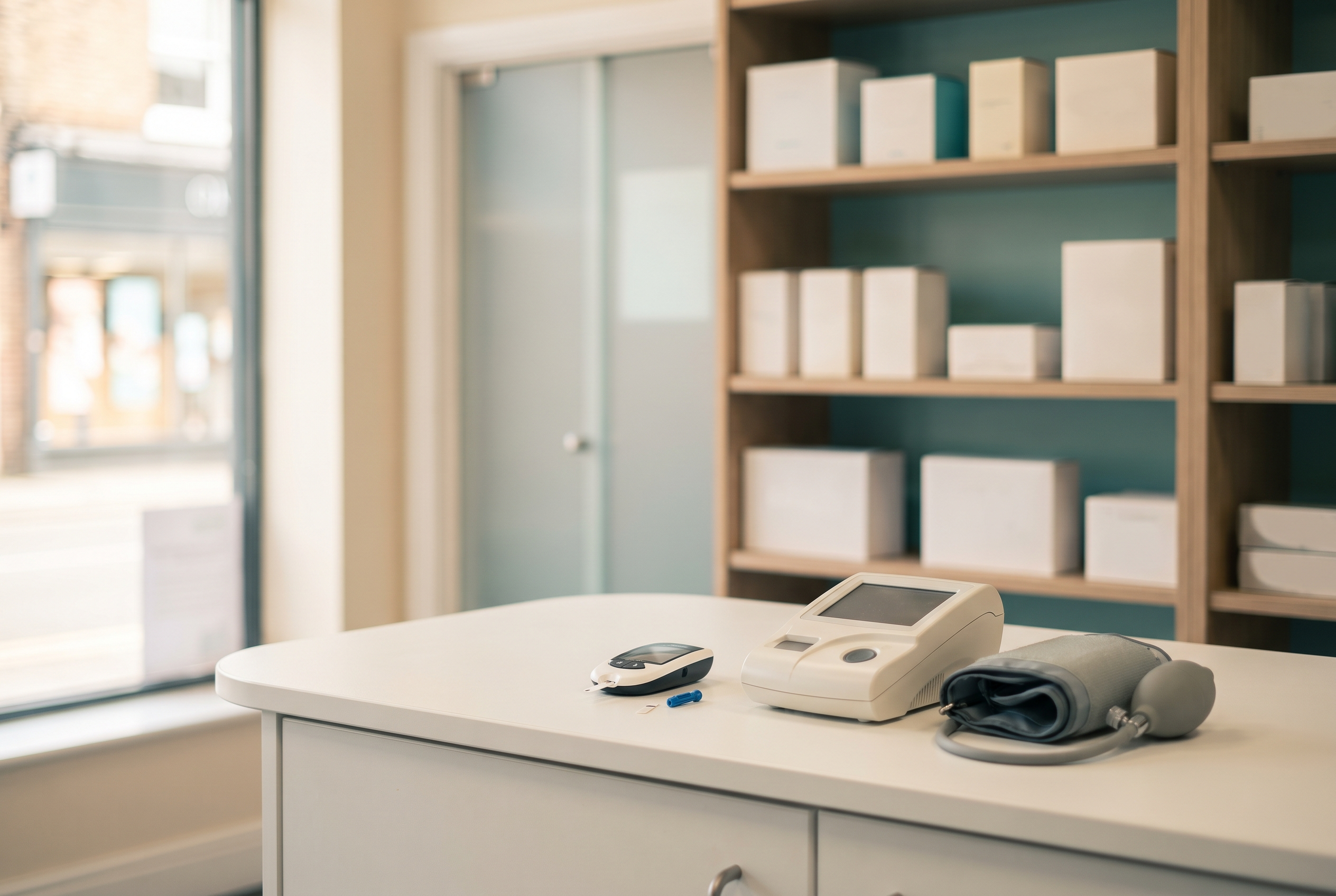
Around 100 NHS pharmacies in England started offering seven-minute cholesterol checks on 31 August 2026. The test is simple. A pharmacist takes a tiny drop of blood from your fingertip, feeds it into a small desktop machine, and reads your cholesterol result about seven minutes later. You also get your blood pressure checked in the same appointment, and your results are sent to you by email. If your numbers suggest a problem, the pharmacist talks you through what to do next. Some pharmacists are qualified prescribers, which means they can start you on treatment there and then rather than sending you off to book a GP appointment. Who can have one? The service is for people aged 40 to 84 who are not pregnant and who have not had a cholesterol blood test in the past year. The scheme runs as a pilot until spring 2027. It sits inside a bigger NHS goal: cutting deaths from heart disease and stroke by a quarter over the next decade. David Webb, the Chief Pharmaceutical Officer for England, said: "Your local pharmacy can be a vital first line of defence against serious illness." Health Minister Alison McGovern said: "This programme is exactly the type of innovation we want to see across the NHS." Dr Rani Khatib, an NHS England National Specialty Advisor, said: "Everyone should strive to be aware of the most common risk factors including high cholesterol and blood pressure."
Why this matters
High cholesterol has no symptoms. None at all. You cannot feel it, and you will not notice it building up. That is exactly what makes it dangerous: the first sign for some people is a heart attack or a stroke. The only way to know your cholesterol level is to have it measured. And that is where the system has quietly been letting people down. Getting a cholesterol test has usually meant booking a GP appointment, taking time off work, waiting, and then waiting again for results. For someone who feels perfectly well, that is a lot of effort to check on a problem they do not think they have. So many people simply do not bother. Moving the test into a high street pharmacy changes the maths. There is a pharmacy on most high streets. Many are open in the evening and at weekends. You can often walk in on your way to do the shopping. This is part of a wider shift in how the NHS uses pharmacies. Over the past few years pharmacists have taken on more clinical work: treating some common conditions, giving vaccinations, and now spotting risk factors early. It is a sensible use of a skilled workforce that people already trust and already walk past.
What the evidence actually says
This national pilot did not appear out of nowhere. It follows a smaller scheme run in north London between January 2025 and March 2026. In that scheme, 2,493 people were tested at 61 pharmacies. According to NHS England, around one in five of those tested turned out to be at high risk of a heart attack or stroke within the next 10 years. Eighty-eight people started taking statins as a result. Those are real numbers from a real programme, and they are worth pausing on. Roughly one in five people who walked in feeling fine were carrying meaningful risk they did not know about. But it is worth being clear about what these figures do and do not prove. A pilot of 2,493 people is a decent size, but the people who volunteer for a pharmacy health check are not a perfect cross-section of the country. People who take up an offer like this may already be a little more health-conscious, or may have a family history that worries them. That can push the numbers in either direction. We also do not yet know the most important thing: whether finding these people earlier actually prevents heart attacks and strokes down the line. That takes years to measure. Starting someone on a statin is a good sign, because the evidence for statins reducing cardiovascular risk is strong and well established. But the pilot itself cannot tell us how many events were avoided. Dr Sotiris Antoniou of Barts Health NHS Trust, who worked on the earlier scheme, said the national programme "builds on our experience of developing a robust, quality-assured model". That is a careful way of saying: the method works, and now we find out how well it scales. One more honest point. A high cholesterol result is not a diagnosis, and it does not automatically mean you need medicine. Cholesterol is one factor among several, including blood pressure, age, weight, smoking, family history and other conditions. A good pharmacist will look at the whole picture, not one number.
Qurexa perspective
This story sits very close to what we do at Qurexa. We deliver prescriptions and help people keep on top of their medicines across Lincolnshire, and a large share of what we carry is for hearts and circulation: statins, blood pressure tablets, blood thinners. So we will say something that might sound odd coming from a delivery company. The best outcome of this scheme is not more prescriptions. It is fewer emergencies. We also see the other half of the problem every week. Finding out you have high cholesterol is the easy part. Taking a tablet every single day for years, when you feel completely fine and the tablet does not make you feel any better, is the hard part. Studies of statin use consistently find that a sizeable share of people stop within the first year or two. The exact figures vary widely depending on who is studied and how it is measured, and stopping is more common among people taking a statin as a precaution than among those who have already had a heart attack. That is not carelessness. It is human. A medicine that treats an invisible problem is genuinely hard to stay motivated about. If you do start a new heart medicine after a check like this, the practical things help more than willpower: tying the tablet to something you already do every day, using a pill organiser, and getting your repeat prescription delivered so a missed trip to the pharmacy never becomes a missed week of medicine. Those are the parts we can help with, and they are worth sorting out in the first month rather than the sixth.
Practical advice
Check whether a pharmacy near you is taking part. Around 100 pharmacies in England are involved at this stage, so not every high street will have one yet. Ring ahead or ask at the counter. You do not need to fast for this test. The finger-prick check does not require you to skip breakfast, unlike some older cholesterol tests. Go if you are between 40 and 84 and have not had a cholesterol test in the past year. That is the eligibility rule, and "I feel fine" is not a reason to skip it. Feeling fine is the normal state for someone with high cholesterol. Take a note of your medicines. If you already take tablets for anything, the pharmacist will want to know. Ask what your numbers mean, not just what they are. A good question is: "What is my risk over the next 10 years, and what would make the biggest difference?" Do not panic at a high reading. It is information, not a verdict. Diet, activity, stopping smoking and, where appropriate, medicine all shift the picture. If you are pregnant, this particular service is not for you. Speak to your midwife or GP instead. If your pharmacy is not part of the pilot, you can still ask your GP surgery for a cholesterol test, and anyone aged 40 to 74 in England can ask about the NHS Health Check.
What to know
From 31 August 2026, around 100 high street pharmacies in England began offering cholesterol checks that give a result in about seven minutes from a single finger prick, plus a blood pressure check. It is open to people aged 40 to 84 who are not pregnant and have not been tested in the past year, and it runs as a pilot until spring 2027. The reason this matters is simple: high cholesterol has no symptoms, so the only way to find it is to look. An earlier north London scheme tested 2,493 people and found around one in five were at high risk of a heart attack or stroke within 10 years, with 88 going on to start statins. The evidence for statins is strong, but this pilot cannot yet tell us how many heart attacks and strokes it will prevent. That takes years to measure, and it is fair to hold the enthusiasm and the caution at the same time. If you are in the age range and it has been over a year, it is a seven-minute job. That is a genuinely small amount of time for something you cannot otherwise detect. Sources: NHS England, "High-street pharmacies to launch seven-minute cholesterol checks", 31 August 2026, https://www.england.nhs.uk/2026/08/high-street-pharmacies-to-launch-seven-minute-cholesterol-checks/; NHS, "High cholesterol", accessed 3 September 2026, https://www.nhs.uk/conditions/high-cholesterol/; NHS, "Statins", accessed 3 September 2026, https://www.nhs.uk/conditions/statins/; PLOS One, "Statin adherence is lower in primary than secondary prevention: A national follow-up study of new users", https://journals.plos.org/plosone/article?id=10.1371%2Fjournal.pone.0242424 This article is for general information and does not replace advice from a doctor, pharmacist or other qualified healthcare professional. Never start, stop or change a prescribed medicine without speaking to a healthcare professional first.
Related articles

47% stayed off, 14% called anyone: what 68,000 surveys say about how we handle flu
On 15 October 2026, the UK Health Security Agency (UKHSA) published new findings about what people actually do when they come down with flu-like symptoms. The…
One dose, not two: what WHO's advisers have just said about the HPV jab
The World Health Organization's expert vaccine panel has changed its advice on the HPV jab. The panel is called SAGE, short for the Strategic Advisory Group of…
3.5 million deaths a year, and no level of it is safe
On 15 October 2026, the World Health Organization (WHO) published an update calling on countries to speed up action against lead poisoning. It came just before…