
Flu jabs begin: what the new NHS rollout means for your family
What happened
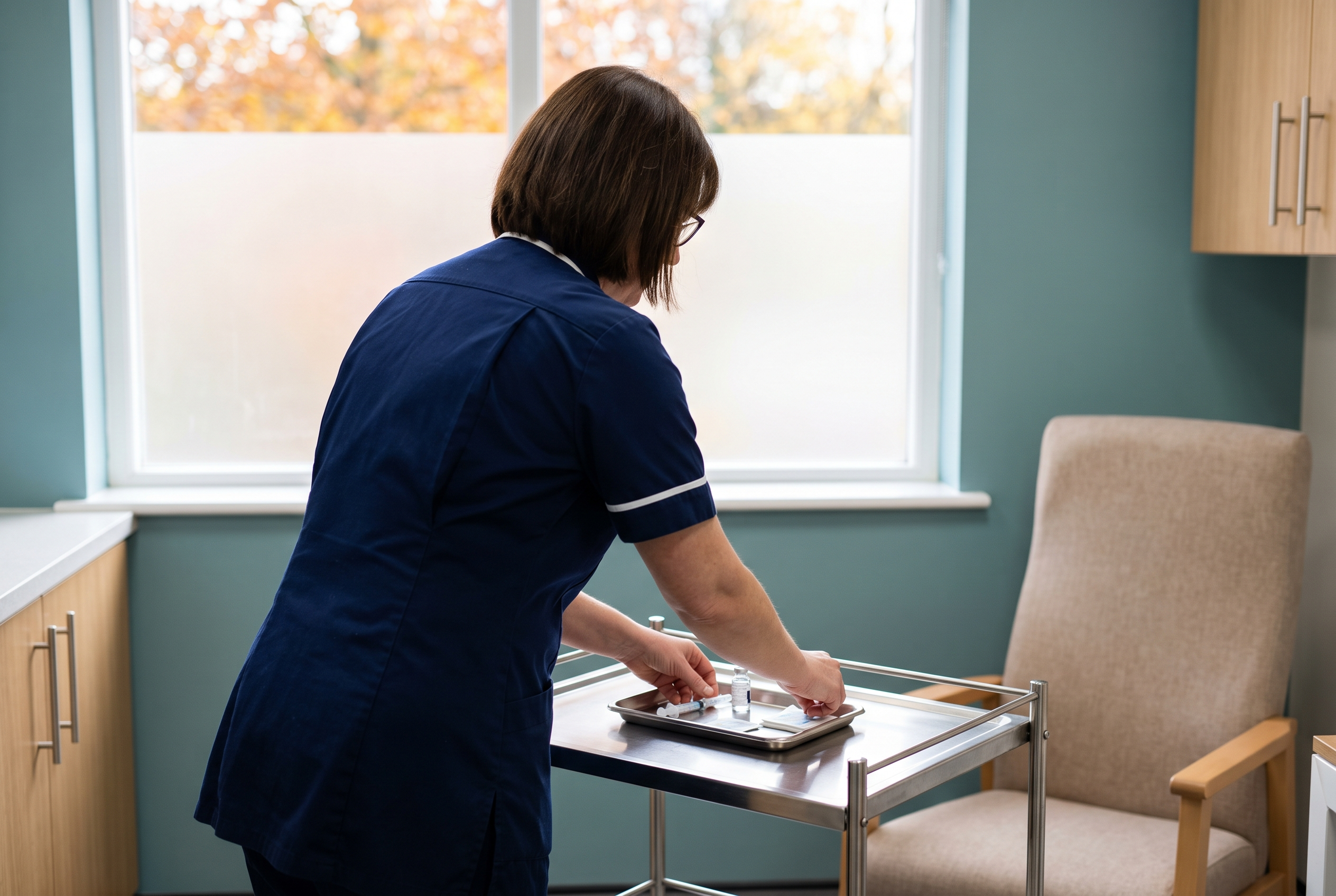
The NHS in England began its winter flu vaccination programme on 1 September 2026. From that date, pregnant women, school-aged children, children aged two and three, and children in clinical risk groups can get a free flu vaccine. A second stage starts on 1 October 2026. That is when the free vaccine becomes available to people aged 65 and over, adults with long-term health conditions, care home residents, carers, people who live with someone whose immune system is weak, people experiencing homelessness, and frontline health and social care staff. NHS England said the jabs will be given in many different places: high street pharmacies, GP surgeries, school sessions, and mobile vans that travel out into local communities. Most adults are offered an injection. Most children are offered a nasal spray instead, so there is no needle. Dr Amanda Doyle, NHS England's National Director for Primary Care and Community Services, said: "Getting vaccinated only takes a few minutes, but it can make a real difference." Yvette Cooper, the Secretary of State for Health and Social Care, said: "Vaccinations play a vital role in protecting those most at risk from flu." There is more on offer this autumn than flu protection alone. From 1 September the RSV vaccination programme also widened to include people aged 65 to 74 who have a weakened immune system or certain lung conditions. Pregnant women can be offered the RSV and whooping cough vaccines alongside the flu jab, which helps protect newborn babies in their first weeks of life.
Why this matters
Flu is often brushed off as "just a bad cold". It is not the same thing. Flu can put people in hospital, and every winter it does. NHS England says last winter's vaccination programme helped avoid around 104,000 hospital admissions. That is a large number of beds that stayed free for other patients. Timing matters too. Flu usually peaks in December and January in the UK. A vaccine takes roughly two weeks to build up your protection, so having it in the autumn means you are covered before the busiest weeks arrive. Waiting until you hear that flu is going round locally is often waiting too long. There is a second reason this matters, and it is less obvious. When fewer people catch flu, fewer people pass it on. Vaccinating children is not only about the children. School-aged children mix closely and spread flu quickly, so protecting them also helps protect grandparents, babies, and people having cancer treatment. This is why the NHS starts with children and pregnant women in September, then opens up to older adults in October. It is not a queue based on who matters most. It is a plan built around how flu actually spreads and when protection is most useful.
What the evidence actually says
Almost 19 million people in England had a flu vaccine last winter. That is a lot of people making the same choice. But popularity is not proof, so it is worth looking at what the evidence really shows, and being honest about its limits. The flu vaccine does not stop every case of flu. Flu viruses change from year to year, so each season's vaccine is a best match rather than a perfect one. Some winters the match is very good. Some winters it is less good. What the evidence shows consistently, across many years and many countries, is that vaccinated people who do catch flu tend to be less unwell and are less likely to end up in hospital. The figure of around 104,000 avoided hospital admissions is an NHS estimate, not a direct head count. Researchers work it out by comparing what actually happened with what models suggest would have happened without the programme. Estimates like this always carry some uncertainty, and the true number could be somewhat higher or lower. Even so, the direction of the evidence is steady and well established. Side effects are usually mild. A sore arm, feeling tired, or a slight temperature for a day or so are the common ones. The nasal spray given to children can cause a runny or blocked nose. Serious reactions are rare. One point causes a lot of confusion, so it is worth stating plainly: the flu jab cannot give you flu. The injected vaccine does not contain live flu virus. If you feel a bit rough for a day afterwards, that is your immune system responding, not an infection.
Qurexa perspective
At Qurexa we deliver prescriptions and support people with taking their medicines, mostly across Lincolnshire. That means we see one part of this story up close. Many of the people who become eligible for a free flu jab on 1 October are the same people we deliver to: older adults, people living with diabetes, asthma or heart disease, and people who find leaving the house difficult. For them, the barrier is rarely a lack of willingness. It is practical. It is a bus that does not run on a Tuesday, a carer's shift that will not stretch, or simply not knowing that a pharmacy two streets away now offers the jab without an appointment. So we would say two things. First, if a family member or neighbour falls into one of the eligible groups, offering them a lift or helping them book is one of the genuinely useful things you can do this autumn. Second, if we already deliver your medicines and you are not sure where your nearest walk-in flu clinic is, do ask. Pointing people towards the right NHS service is part of the job, and it costs you nothing. One thing we want to be clear about: Qurexa does not give vaccinations. Your flu jab comes from the NHS, through a pharmacy, GP surgery or school session, and it is free if you are eligible.
Practical advice
Check whether you are eligible. The NHS flu vaccine page lists the groups. If you are pregnant, you can have the jab at any stage of your pregnancy. Book earlier rather than later. Protection takes about two weeks to build, and flu peaks in December and January. You do not have to use your GP surgery. Many high street pharmacies give the free NHS jab, and a lot of them take walk-ins. If your child is offered the nasal spray at school, watch out for the consent form. Returning it on time is the step families most often miss. Ask about other vaccines while you are there. If you are pregnant, or aged 65 to 74 with a weakened immune system or certain lung conditions, you may also be eligible for RSV or whooping cough vaccination. It can often be sorted in the same visit, which saves you a second trip. If you wake up with a fever on the day of your appointment, ring and rearrange. A mild cold is usually fine, but check if you are unsure. If you have had a bad reaction to a flu vaccine before, or you have a severe egg allergy, speak to your pharmacist or GP first. There are alternative vaccines, and this is exactly the sort of question pharmacists answer every day.
What to know
The NHS winter flu programme opened on 1 September 2026 for pregnant women and children, and opens on 1 October 2026 for older adults, people with long-term conditions, carers, and frontline health and care staff. The vaccine is free for those groups and is available at pharmacies, GP surgeries and school sessions. Flu peaks in December and January, and protection takes around two weeks to build, so autumn is the sensible time to act rather than the last minute. Last winter nearly 19 million people in England were vaccinated, and NHS England estimates the programme helped avoid roughly 104,000 hospital admissions. The vaccine is not perfect and will not stop every case of flu. What it reliably does is make serious illness less likely, both for you and for the people around you. Sources: NHS England, "NHS kicks off flu jabs for children and pregnant women ahead of winter", 1 September 2026, https://www.england.nhs.uk/2026/09/nhs-kicks-off-flu-jabs-for-children-and-pregnant-women-ahead-of-winter/; NHS, "Flu vaccine", accessed 3 September 2026, https://www.nhs.uk/vaccinations/flu-vaccine/; NHS, "RSV vaccine", accessed 3 September 2026, https://www.nhs.uk/vaccinations/rsv-vaccine/; UK Health Security Agency, "Annual flu programme", GOV.UK, accessed 3 September 2026, https://www.gov.uk/government/collections/annual-flu-programme This article is for general information and does not replace advice from a doctor, pharmacist or other qualified healthcare professional. If you are unsure whether the flu vaccine is right for you, speak to your pharmacist or GP.
Related articles

Salmonella outbreak grows to three clusters: what UKHSA now says
The UK Health Security Agency (UKHSA) updated its national Salmonella outbreak investigation on Wednesday 3 September 2026, and the numbers have grown. UKHSA i…
Invasive mosquitoes found breeding in east London: what it means
On Thursday 3 September 2026, the UK Health Security Agency (UKHSA) said it had found invasive Aedes aegypti mosquitoes, along with their larvae, at residential…

A pill for sleep apnoea? What the new trial really showed
Results from a large trial of a once-nightly pill for obstructive sleep apnoea were published in the American Journal of Respiratory and Critical Care Medicine,…