
The government has published its first proper guide to using AI in care homes and home care
What happened
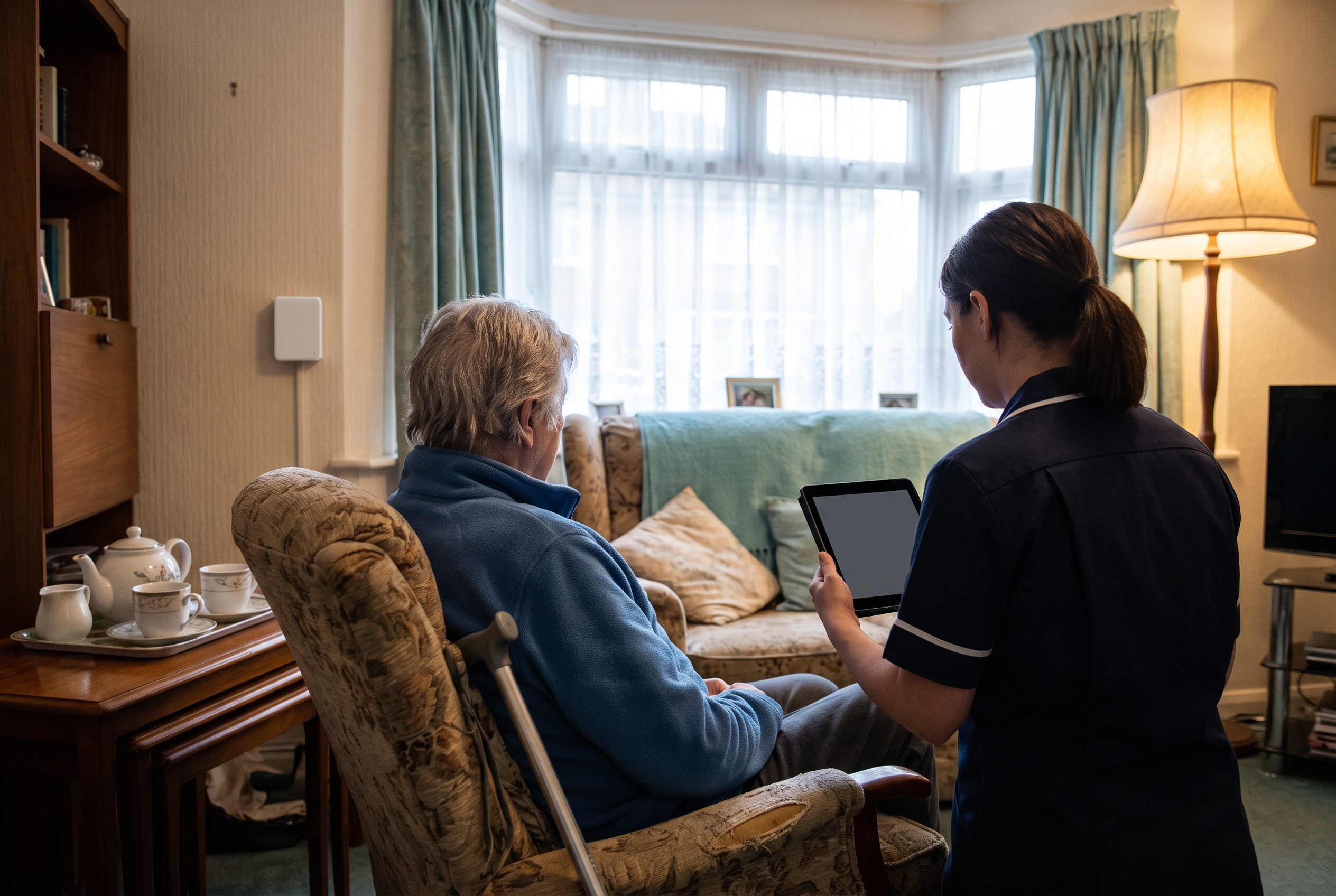
On 29 September 2026, the Department of Health and Social Care published new guidance called "Using AI in adult social care". It came out alongside a whole set of new material on digitising adult social care, covering digital care records, secure email, smartphones and devices, choosing IT suppliers, and a qualification in digital leadership for care managers. The AI guidance is aimed at care providers: care homes, home care agencies and supported living services. It is an introduction rather than a rulebook, and it sets out what AI is already being used for in care, what the benefits are, and what providers should be careful about. It draws on work by the Oxford Project on the responsible use of generative AI in social care, which brought organisations across the sector together to co-produce guidance. The guidance groups the technology into a few types: - sensor-based technology, including acoustic monitoring - chat bots - facial recognition technology - data collection and analytics tools - generative AI used to write care plans and assessments It also notes something honest: many care providers are still at the early stages of exploring AI and have not implemented anything yet.
Why this matters
Adult social care is the part of the health and care system most of us only think about when it becomes personal. It is also where staff are stretched thinnest and where paperwork eats hours that could be spent with people. That combination is exactly why AI has arrived here first in some ways, and why it needs watching. Take night checks. In a care home, staff traditionally walk round and look in on residents through the night. It keeps people safe. It also wakes them up. Acoustic monitoring, which listens for disturbances and alerts staff, can reduce those intrusive checks while still catching a fall or a call for help. Or take care plans. Writing and auditing them is a large administrative load. If a tool can draft them faster, that is real time handed back to real care. But the same technologies raise obvious questions. A sensor in someone's bedroom is surveillance as well as safety. Facial recognition used to spot pain is reading a person's face without their say-so. And a care plan written by a machine is a document about someone's life that they did not have a hand in. The guidance is notable because it says the useful thing and the uncomfortable thing in the same breath.
What the evidence actually says
The most valuable sentence in the guidance is a cautious one. On generative AI writing care plans, it says: "Evidence that generative AI can create truly personalised care plans is currently limited." That is the honest position. The time savings from drafting are plausible and being seen. The claim that a machine can produce a genuinely personal plan is not yet supported. The guidance is firm about what must follow. If AI is used in care planning, a member of care staff must review the plan to make sure it is accurate. And care organisations must ensure any use of AI does not breach data protection law. On sensors, the guidance is more positive, and points to specific examples rather than general claims. It cites a case study from WCS Care on night-time acoustic monitoring, and one from Hartland House Care Home, where an optical care sensor system is reported to have cut falls by 84%. That 84% is worth handling carefully. It comes from a single care home's case study cited in the guidance, not from a controlled trial across many settings. It is encouraging, and it is not proof that the same result would follow anywhere else. On facial recognition, the guidance describes a genuinely thoughtful use: assessing pain in someone who cannot say they are in pain, or is reluctant to. Software analyses facial muscle movements associated with pain. For people with advanced dementia, or communication difficulties, that could address a long-standing problem in care. It also, plainly, involves cameras pointed at faces. The guidance also describes what sensors can do beyond alerting: track heart rate, breathing and temperature, notice changes in how someone walks that may suggest increasing frailty, and spot patterns that predict a problem before it happens.
Qurexa perspective
We work alongside home care every day. When we deliver medicines to someone who is housebound, we are often one of a small number of people who see them that week. Two things ring true from the guidance. The first is that the admin burden is real. Anything that returns time to carers is worth taking seriously, and we would rather see a carer spending ten minutes with someone than ten minutes typing. The second is that technology in someone's home should always be something done with them, not to them. A sensor that means fewer disturbed nights is a gift. A sensor that nobody explained is something else. We would encourage any family considering this to ask to see the conversation, not just the kit.
Practical advice
If you are a care provider: - Start with the guidance itself, and read it alongside the wider digitising adult social care material published the same day. - Treat any AI-drafted care plan as a first draft. The requirement for staff review is not optional. - Check your data protection position before you buy, not after. - Ask suppliers for evidence from settings like yours, not just a headline percentage. If you have a relative in a care home, or receiving care at home: - It is entirely reasonable to ask what technology is in use, what it records, who sees it, and how long it is kept. - Ask whether your relative was asked, and what happens if they change their mind. - If acoustic or optical monitoring is proposed, ask what it replaces. Fewer disturbed nights is a good answer. - If a care plan feels generic, say so. A plan that does not sound like the person it is about is not doing its job, whoever or whatever wrote it.
What to know
DHSC published guidance on using AI in adult social care on 29 September 2026, as part of a larger release on digitising the sector. It covers sensor-based technology including acoustic monitoring, chat bots, facial recognition for pain assessment, analytics, and generative AI for care planning. The guidance is positive about sensors, citing case studies including one care home reporting an 84% reduction in falls. It is deliberately cautious about generative AI in care planning, stating that evidence it can create truly personalised care plans is currently limited, and requiring staff to review any AI-produced plan for accuracy. Data protection obligations apply throughout. For families, the useful takeaway is that asking questions about care technology is now firmly expected, not awkward. Sources: Department of Health and Social Care, "Using AI in adult social care", 29 September 2026, https://www.gov.uk/guidance/using-ai-in-adult-social-care. Department of Health and Social Care, "Digitising adult social care" collection, 29 September 2026, https://www.gov.uk/government/collections/digitising-adult-social-care. Department of Health and Social Care, "Adult social care digital skills framework", 29 September 2026, https://www.gov.uk/government/publications/adult-social-care-digital-skills-framework. This article is for general information and does not replace advice from a doctor, pharmacist, social worker or other qualified professional. Decisions about a person's care should always involve that person wherever possible.
Related articles

Four months early: 3,880 rural premises and an £8.2 million contract
On 13 October 2026, the government announced that a rural broadband project in North Oxfordshire had finished four months ahead of schedule. The work connected…
First hearing from a police cell: £17.4 million and four force areas
On 12 October 2026, the Ministry of Justice published the government's response to Lord Leveson's review of the criminal courts. The review made 180 recommendat…
Over 1,000 weak spots found, and a minister's message to AI firms
On Monday 12 October 2026, the UK government set out a package of measures aimed at protecting the country from increasingly powerful artificial intelligence.…