
To read scrolls burned by Vesuvius, scientists burned their own first
What happened
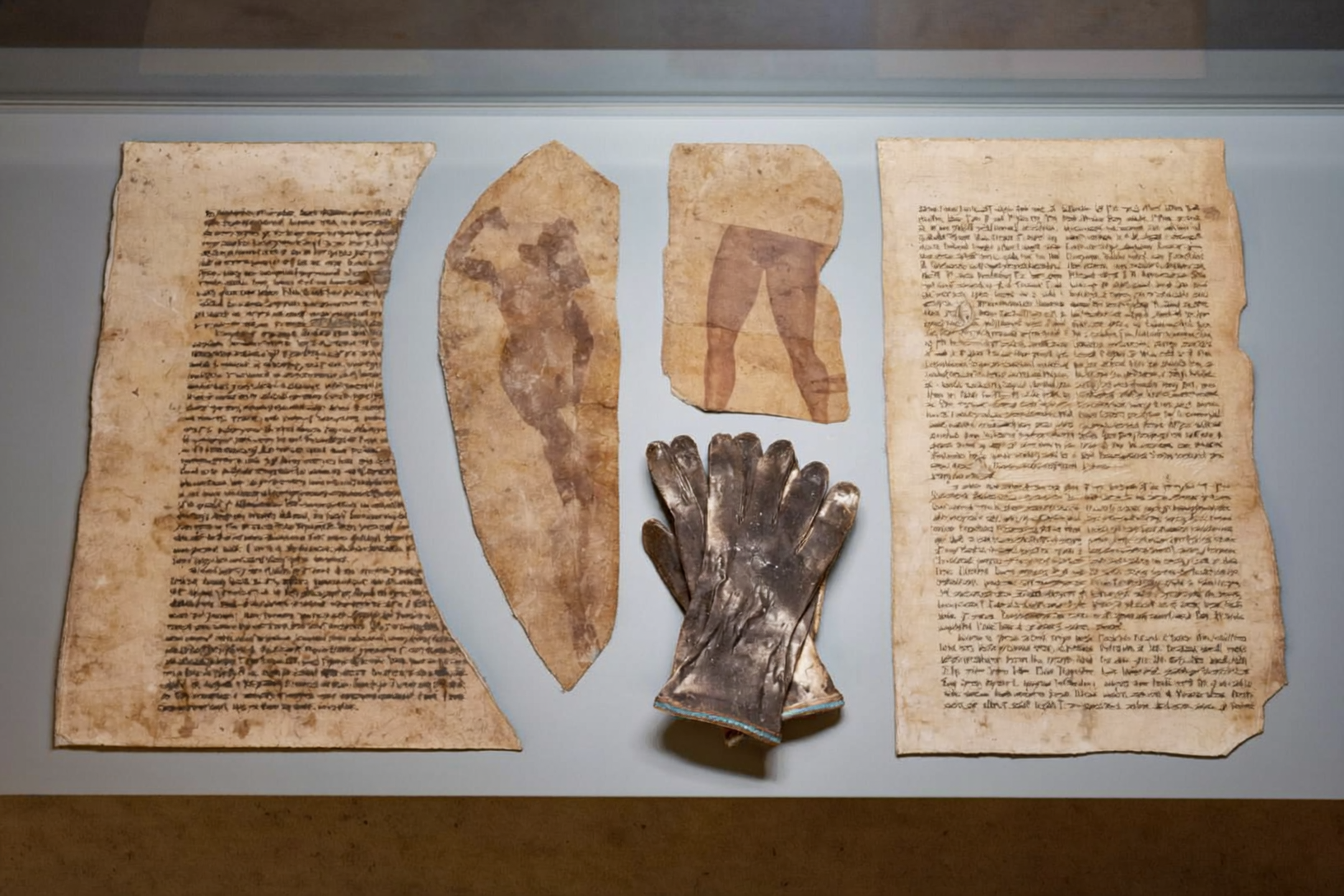
When Mount Vesuvius erupted in AD 79, it buried the town of Herculaneum. Among the buildings it covered was a villa with a library. Hundreds of papyrus scrolls were turned to charcoal by the heat. They survived. They just cannot be opened. Unrolling a carbonised scroll destroys it. For years, researchers have been scanning these scrolls with X-rays and using computers to "virtually unroll" them. The hard part is seeing the ink. Ancient carbon-based ink on charred papyrus is carbon sitting on carbon, and X-rays struggle to tell the two apart. On 16 September 2026, a study in the open-access journal PLOS ONE took a different approach. Douglas Seiler and colleagues, working at the University of California, Berkeley, made their own scrolls, burned them, and then tried to read them. They used real Egyptian papyrus, traditional lampblack ink and reed pens. They wrote various texts. They carbonised the scrolls in a furnace, recreating what Vesuvius did. Then they scanned them with X-ray computed tomography and handheld X-ray fluorescence.
Why this matters
The Herculaneum library is the only substantial library to survive from the ancient world, and most of it has never been read. What is inside could include lost works of philosophy, poetry or history that nobody has seen for nearly two thousand years. That is a big prize, and it explains why so many teams have thrown so much technology at the problem. But there is a difficulty that runs through all of this work. With a genuine scroll, you never know the right answer. If your scan shows something that might be a letter, you cannot check. Making your own scrolls solves that. You know exactly what you wrote. So when the scan shows something, you can tell whether the method actually works or whether you are seeing what you hoped to see. It is an unglamorous idea, and a very good one.
What the evidence actually says
The team's focus was lead. Some ancient inks contained small amounts of lead. Lead is much heavier than carbon, and it absorbs X-rays far more strongly. The researchers found that lead absorbs up to 25 times more X-rays than charred papyrus. That difference is enormous. In the scans, leaded writing showed up as bright marks against a darker background - exactly what you want. They were able to detect lead at concentrations as low as 25 micrograms per square centimetre. That is a very small amount, which matters, because ancient inks were not deliberately leaded and any lead present would be incidental. Douglas Seiler put it in less formal terms: "With lead in the ink, you would get a huge friggin' signature." The catch is the word "if". This work shows that if a Herculaneum scroll's ink contains lead, current scanning methods should find it clearly. It does not tell us how many of the real scrolls have leaded ink. That is still an open question, and it is the one that decides how useful this route turns out to be. It is also worth noting this is one team's test on model scrolls rather than a new reading of an actual ancient text.
Practical advice
Nothing here needs acting on for your health, but if this kind of science interests you, there are a few genuinely useful things to know. The PLOS ONE paper is open access, which means anyone can read the full study free of charge, without a university login. The reference is at the end of this article. Open-access papers are worth seeking out for exactly this reason. If you want to follow the Herculaneum scrolls properly, look for results that report a text actually being read, rather than a method being tested. The two get reported in similar language and they are very different stages. Be cautious with headlines claiming a lost work has been recovered. Sometimes a few words have been made out, not a book. And if you have young people at home who like this sort of thing, the study is a good example of something schools rarely get across: a lot of science is not about discovering new things at all. It is about checking whether your method works, by testing it on something where you already know the answer. That is a transferable habit, and it is worth more than any single finding.
What to know
Researchers at the University of California, Berkeley made replica papyrus scrolls using authentic materials, deliberately burned them in a furnace, and then scanned them - all to test whether lead in ancient ink can be spotted inside a scroll that must never be opened. The answer was a clear yes. Lead absorbs up to 25 times more X-rays than charred papyrus, and the team detected it at levels as low as 25 micrograms per square centimetre. Whether the real Herculaneum scrolls contain enough lead is the next question. But this study gives everyone working on them something valuable: a way to check their methods against a text they already know the answer to. Sources: PLOS ONE, "Detection of lead-based inks in carbonised papyrus scrolls", 16 September 2026, DOI 10.1371/journal.pone.0353485, https://doi.org/10.1371/journal.pone.0353485 | Phys.org, "To read 2,000-year-old burned scrolls, scientists burn their own", 18 September 2026, https://phys.org/news/2026-09-year-scrolls-scientists.html This article is for general information about scientific research and does not replace advice from a doctor, pharmacist or other qualified healthcare professional.
Related articles

Four months early: 3,880 rural premises and an £8.2 million contract
On 13 October 2026, the government announced that a rural broadband project in North Oxfordshire had finished four months ahead of schedule. The work connected…
First hearing from a police cell: £17.4 million and four force areas
On 12 October 2026, the Ministry of Justice published the government's response to Lord Leveson's review of the criminal courts. The review made 180 recommendat…
Over 1,000 weak spots found, and a minister's message to AI firms
On Monday 12 October 2026, the UK government set out a package of measures aimed at protecting the country from increasingly powerful artificial intelligence.…