
A film thinner than paper that blocks heat better than anything in nature
What happened
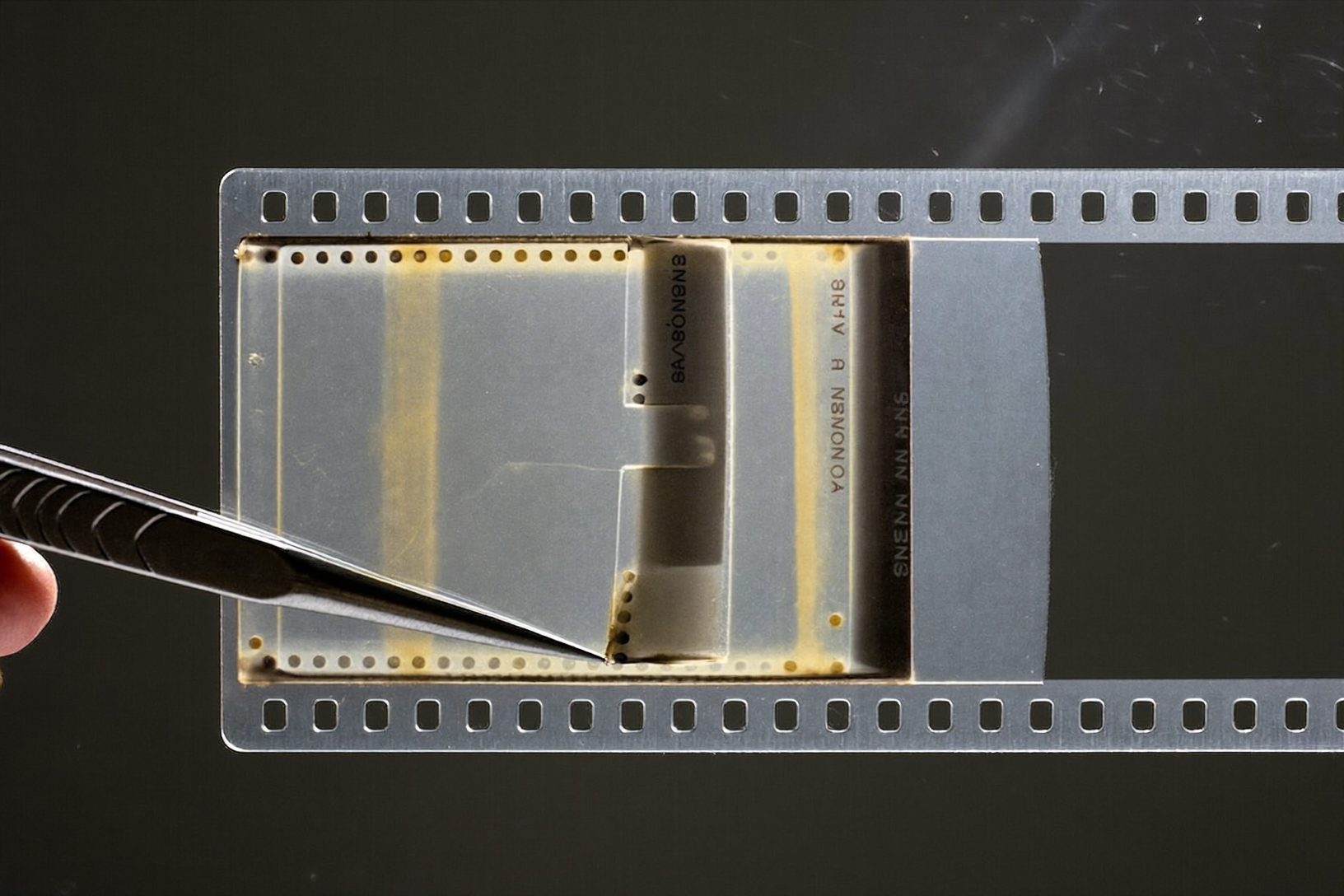
Materials that are good at blocking heat are usually soft, squashy or full of air. Think of loft insulation, foam or a neoprene oven glove. Materials that are stiff and strong, like metal or glass, are usually poor insulators. On 18 September 2026, researchers at North Carolina State University reported a material that is both. It is stiff, and it blocks heat better than any dense material found in nature. The work was published in the open-access journal Science Advances, under the title "Extremely Low Thermal Conductivity in Rigid Layered Hybrid Perovskites". The material has a mouthful of a name: azobenzene ethyl ammonium lead iodine. It belongs to a family called two-dimensional hybrid organic-inorganic perovskites. In simple terms, it is built from alternating layers - one layer of crystal, then a layer of organic molecules, then crystal again, over and over. The co-corresponding authors were Jun Liu, associate professor of mechanical and aerospace engineering, and Dali Sun, professor of physics. The co-lead authors were Ziqi Wang and Ankit Negi, both NC State PhD graduates. The work was funded by the US National Science Foundation, the Department of Energy, the Office of Naval Research and a university endowment.
Why this matters
Heat gets everywhere, and stopping it is one of the quiet problems behind a lot of technology. In a phone or laptop, heat from one chip leaks into the components beside it. In a car battery, heat from one cell can spread to its neighbours. In spacecraft, in ovens, in industrial kit, engineers constantly need a barrier that stops heat without taking up much space. The usual trick is to use something full of tiny air pockets, because air is a poor conductor of heat. That works well, but porous materials are weak. You cannot build a structure out of them, and you cannot make them very thin. A material that insulates like foam but is as rigid as a hard plastic opens up places where neither option currently fits: a thin coating on a component, a barrier inside a battery pack, a layer on the handle of a pan. That combination is what makes this result interesting, more than the insulation figure on its own.
What the evidence actually says
The headline number is thermal conductivity, which measures how easily heat passes through something. Lower is better for an insulator. The new film measured about 0.04 watts per metre per kelvin at room temperature. Silicone, a familiar dense insulator, sits at around 0.2. So the new material is roughly five times better. The researchers say this approaches the theoretical limit for how well a dense material can insulate. That is a strong claim, and it is the part other groups will want to check. On stiffness, the film has an elastic modulus of 7.7 gigapascals. Depending on the type of silicone you compare it with, that makes it somewhere between 700 and 10,000 times stiffer. It is made by spin-casting, a standard way of producing thin films, which the team say can be scaled up. Two honest caveats. First, this is a laboratory demonstration, not a product. Getting from a spun film in a university lab to something manufactured at volume is a long road, and many materials never make it. Second, the material contains lead. Lead-based perovskites are studied all over the world because they perform extremely well, but lead content is a real issue for anything that might end up in a consumer product or in waste. The researchers mention cookware among the possible uses, and that is exactly the kind of application where the lead question would need answering first.
Practical advice
This is laboratory research, so there is nothing to buy and nothing to change at home. But a couple of points are worth keeping in mind. If you see this material described in the coming months as something you can put in your loft or behind your radiator, treat that with caution. It is a spun thin film made in a university laboratory, and it is not on sale. For insulating a home today, the materials that work are the ordinary ones: loft insulation, cavity wall insulation, draught-proofing and thicker curtains. If you are on certain benefits or have a low income, you may qualify for help with the cost. In Great Britain, the Energy Company Obligation scheme and the GOV.UK 'Help to heat' pages set out what is available, and the Energy Saving Trust gives free impartial advice. There is a health reason for mentioning this. Cold homes are a genuine health risk, particularly for older people, babies and anyone with a heart or lung condition. Damp and cold indoor air makes asthma and chest problems worse. If you are struggling to heat your home and someone in the house has a long-term condition, tell your GP practice or pharmacist. They can sometimes refer you to local support schemes you would not otherwise hear about.
What to know
Researchers at North Carolina State University have made a thin film that blocks heat about five times better than silicone, while being hundreds to thousands of times stiffer. Its thermal conductivity of roughly 0.04 W m-1 K-1 is said to approach the theoretical limit for a dense material. The material is a layered hybrid perovskite, built from alternating crystal and organic layers, and it can be spun into films at scale. Possible uses suggested by the team include electronics, cookware and spacecraft. All of those are some way off, and the fact that the material contains lead is a genuine hurdle for anything that touches food or ends up in household waste. For now it is a laboratory result - but an unusual one, because it breaks a trade-off that materials scientists have lived with for a long time. Sources: Science Advances, "Extremely Low Thermal Conductivity in Rigid Layered Hybrid Perovskites", 18 September 2026, DOI 10.1126/sciadv.aee5269, https://doi.org/10.1126/sciadv.aee5269 | NC State University News, "New Material Is an Extreme Thermal Insulator", 18 September 2026, https://news.ncsu.edu/2026/09/extreme-thermal-insulator/ | Phys.org, "New thermal insulator outperforms any material found in nature", 18 September 2026, https://phys.org/news/2026-09-thermal-insulator-outperforms-material-nature.html This article is for general information about scientific research. It does not offer medical advice and does not replace advice from a doctor, pharmacist or other qualified healthcare professional.
Related articles

Four months early: 3,880 rural premises and an £8.2 million contract
On 13 October 2026, the government announced that a rural broadband project in North Oxfordshire had finished four months ahead of schedule. The work connected…
First hearing from a police cell: £17.4 million and four force areas
On 12 October 2026, the Ministry of Justice published the government's response to Lord Leveson's review of the criminal courts. The review made 180 recommendat…
Over 1,000 weak spots found, and a minister's message to AI firms
On Monday 12 October 2026, the UK government set out a package of measures aimed at protecting the country from increasingly powerful artificial intelligence.…