
An injection every eight weeks beat daily tablets for teenagers with HIV
What happened
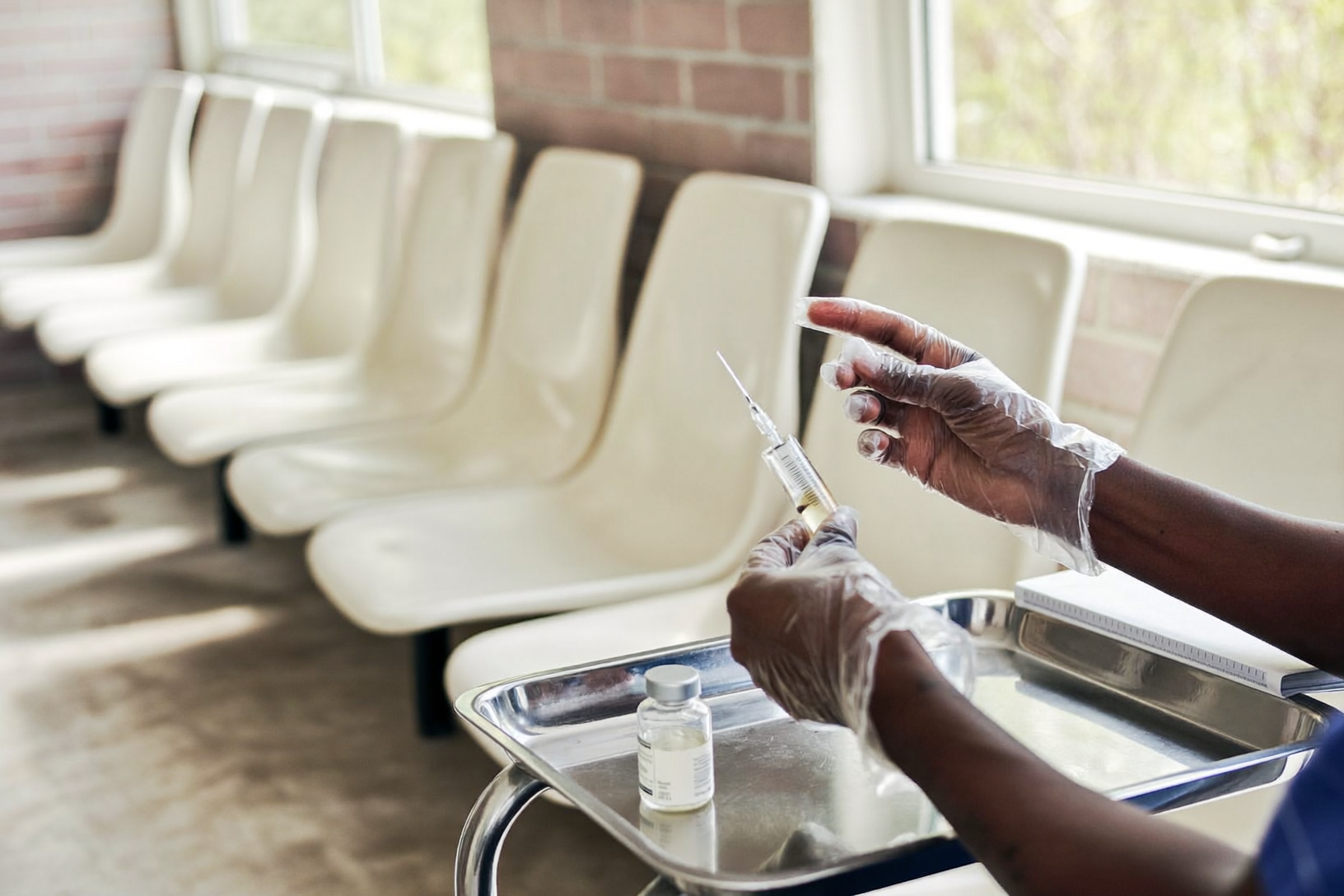
On 17 September 2026, The Lancet published the results of a trial called LATA. It is short for Long-Acting Treatment in Adolescents. The trial followed 476 young people aged 12 to 19 who are living with HIV. They went to five clinics in Kenya, South Africa, Uganda and Zimbabwe. Almost all of them had been born with HIV. Every one of them was already doing well. They had been taking daily tablets for more than a year, and the virus in their blood was fully under control. Half were asked to carry on with the daily tablet. The other half switched to two injections given every eight weeks. The medicines in the injections are called cabotegravir and rilpivirine. The researchers then watched what happened over 96 weeks, which is nearly two years. The trial was run by University College London. The chief investigator was Professor Sarah Pett. It was paid for by the European Union through EDCTP-2 and by Johnson & Johnson Innovative Medicines.
Why this matters
HIV treatment works. When someone takes it properly, the virus drops so low that tests cannot find it. That person stays well and cannot pass HIV on to anyone else. But it only works if the medicine is actually taken. And taking a tablet every single day, for your whole life, starting when you are a child, is hard. Teenagers have a particularly tough time with it. School, exams, sleepovers, moving between family members, and the fear of someone seeing the bottle all get in the way. Across the world, young people with HIV are more likely than adults to have the virus come back. That is why this trial matters. Nine out of ten adolescents living with HIV are in Africa. Long-acting injections are already used by many adults in richer countries. They have not been widely available to the young people who may need them most. Professor Pett put it plainly: "Nine out of 10 adolescents with HIV live in Africa, yet currently this treatment is not accessible to them."
What the evidence actually says
The main thing the researchers measured was viral rebound. That means the virus coming back and showing up in two blood tests in a row. By 96 weeks, about 1% of the young people on the injections had a confirmed rebound. In the tablet group, it was about 6%. That is a real difference, and it went in the direction of the injections. The trial was designed to test whether injections were no worse than tablets. They turned out to be better. The researchers also asked the young people what they thought. Around 94% of those who had the injections said the eight-weekly schedule was easier than taking a pill every day. No new safety problems were found. There are limits, and they are worth being honest about. This was an open-label trial, which means everyone knew which treatment they were getting. Everyone taking part was already doing well on tablets, so the results may not apply to someone whose virus is not yet under control. And 476 people is a good-sized trial, but it is not enormous. Professor Pett said the benefits for this age group were "stronger than we have seen for adults". That is a striking claim from a team that has spent years working on exactly this question.
Practical advice
This trial was done in sub-Saharan Africa, but the lesson behind it travels. If you or someone in your family takes a daily medicine and finds it hard, say so. Do not wait until doses have been missed for months. Pharmacists and doctors hear this all the time and they are not there to tell you off. Ask whether there is a longer-acting version of your medicine. For some conditions there now is. For others there is not, but it costs nothing to ask. If tablets are the only option, small changes help more than people expect. Link the dose to something you already do every day, such as brushing your teeth. Keep a week's supply somewhere you will see it. Ask your pharmacy about a weekly pill organiser. Never stop an HIV medicine, or any long-term medicine, without speaking to your clinic first. Stopping suddenly can allow the virus to come back and can make the medicine work less well in future. And if you are worried about privacy, say that too. It is a common reason for missed doses, and there are usually ways around it.
What to know
A 96-week trial of 476 young people in Kenya, South Africa, Uganda and Zimbabwe found that HIV injections given every eight weeks kept the virus under control better than daily tablets. Roughly 1% of the injection group had the virus return, against about 6% of the tablet group. Around 94% of the young people said the injections were easier to live with. The treatment is not yet widely available to adolescents in Africa, which is the point the researchers are pressing. For everyone else, the useful takeaway is simpler: if a daily medicine is hard to keep up with, that is a medical problem worth raising, not a personal failing. Sources: The Lancet, "Switch to injectable cabotegravir-rilpivirine given every 8 weeks in adolescents living with HIV with virological suppression in sub-Saharan Africa (LATA): a randomised, open-label, multicentre, 96-week non-inferiority trial", 17 September 2026, https://www.thelancet.com/journals/lancet/article/PIIS0140-6736(26)01537-0/fulltext | UCL News, "HIV injections work better than tablets for young people", 17 September 2026, https://www.ucl.ac.uk/news/2026/sep/hiv-injections-work-better-tablets-young-people | Medical Xpress, "HIV injections work better than tablets for young people, clinical trial finds", 17 September 2026, https://medicalxpress.com/news/2026-09-hiv-tablets-young-people-clinical.html This article is for general information and does not replace advice from a doctor, pharmacist or other qualified healthcare professional.
Related articles

Six hours, not never: the ICU filter notice the MHRA issued today
The UK's medicines and devices regulator has issued a new safety notice to hospitals, and it is about timing. On 13 October 2026 the Medicines and Healthcare p…
Eight pages to a minister: what the data guardian says trust is worth
On 12 October 2026, the government published a letter about who should be trusted with NHS patient data. It was written by Dr Nicola Byrne, the National Data G…
Update: the tests came back, and it was not plague
This is a follow-up to a story we covered on 5 October, when nearly 200 people were being monitored after the death of a laboratory worker in Siberia. There has…