
A careful launch just doubled the life of NASA's newest telescope
What happened
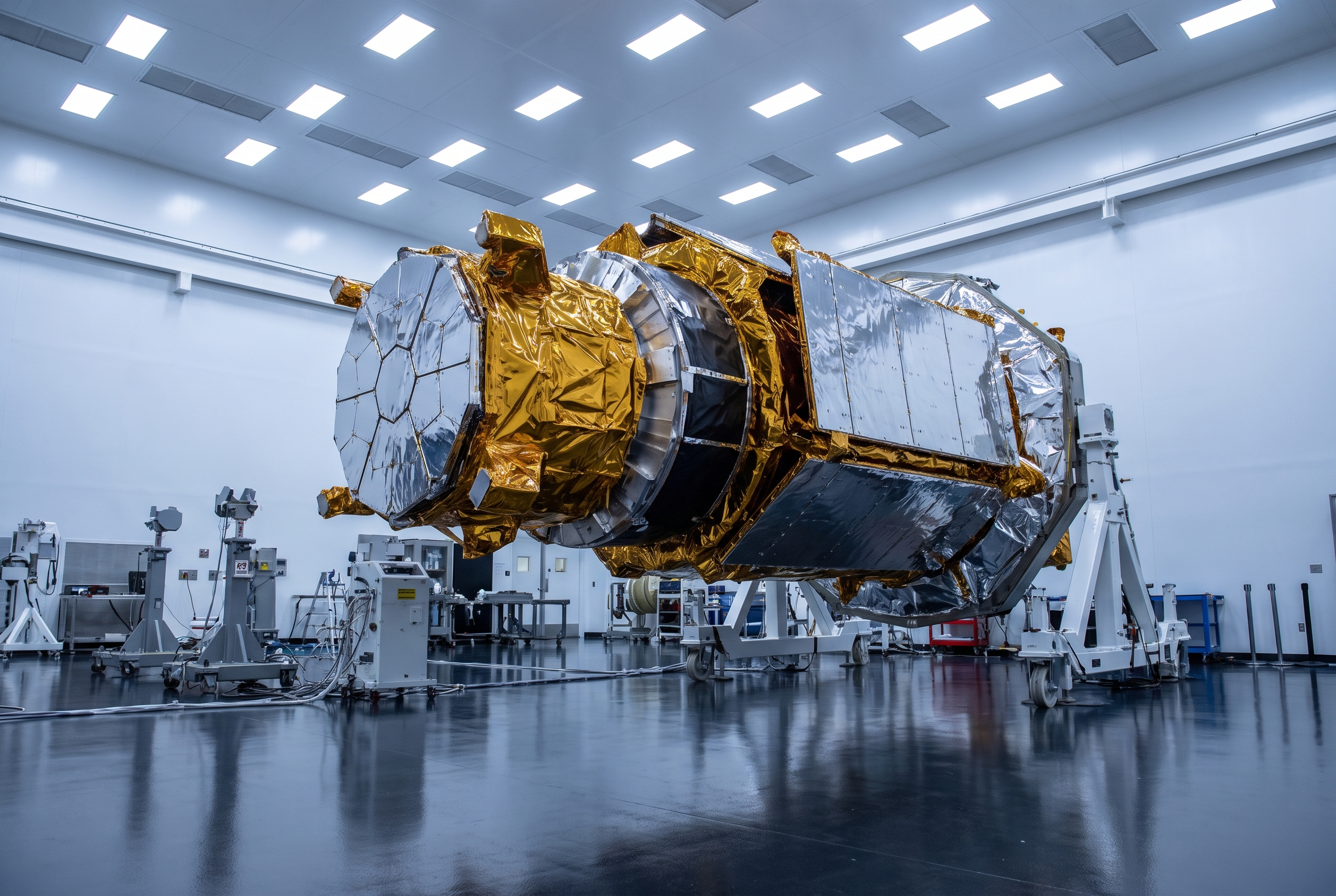
NASA has announced that its newest big space telescope carries enough fuel to work for far longer than it was designed to. The Nancy Grace Roman Space Telescope launched on 30 August 2026, on a SpaceX Falcon Heavy rocket from the Kennedy Space Center in Florida. The original plan was a ten-year mission. That was made up of five years of primary observations, followed by a possible five-year extension. NASA now says the telescope has fuel for at least 22 years of potential science operations. Roughly double. The reason is not a new technology or a clever fix after the fact. It comes down to two pieces of careful engineering and one very accurate launch. The first reason is the rocket. The Falcon Heavy's departure burn from low Earth orbit was unusually precise. When a launch is exact, the spacecraft does not need to spend its own fuel correcting the path afterwards. Every correction avoided is fuel saved for later. The second reason is weight. Roman ended up lighter than engineers had budgeted for. Spacecraft are designed with mass allowances, and Roman came in under its allowance. That left spare capacity, so the propellant tanks were filled to the top rather than only filled to the level needed to meet the ten-year requirement. Jamie Dunn, centre director at NASA's Goddard Space Flight Center, summarised it: "As a result of exquisite planning by our orbital dynamics team, brilliant execution by the operations team, and a precise launch from SpaceX, Roman has fuel for at least 22 years of potential science operations."
Why this matters
Space telescopes do not usually stop working because they break. They stop because they run out of the fuel used to point and hold position. Roman sits at a spot far from Earth where the gravity of the Sun and Earth combine in a useful way. It is a stable region, but not perfectly stable. A spacecraft parked there drifts and needs regular small nudges to stay put. Those nudges cost propellant, and when the propellant is gone, the mission ends even if every instrument still works perfectly. So fuel is time. Doubling the fuel margin roughly doubles the potential lifetime of a working observatory. That is worth more than it first sounds, for a reason specific to astronomy. Some of the most valuable things a telescope can do require watching the same objects over long periods. Stars wobbling as planets orbit them. Galaxies shifting. Explosions brightening and fading. These are measured over years, and longer baselines produce better answers. There is also a straightforward value-for-money point. The expensive parts of a space telescope are building it and launching it. Once it is up there and working, each extra year of observations is comparatively cheap. Twenty-two years of data from an instrument already paid for is a considerably better deal than ten. Roman's main jobs include surveying enormous numbers of galaxies to study dark energy, the unexplained effect that appears to be pushing the universe apart, and hunting for planets around other stars. Both benefit from time.
What the evidence actually says
The careful word in NASA's announcement is potential. The telescope has fuel for at least 22 years of potential science operations. Fuel is one requirement for a long mission. It is not the only one. Several other things have to hold up. Instruments degrade. Detectors are damaged slowly by radiation, which is harsher outside Earth's protective magnetic field. Moving parts wear. Electronics fail. Solar panels lose efficiency. None of these are fixed by having spare propellant. There is also funding. Space missions are paid for year by year. An extended mission has to be approved and financed, and telescopes have been switched off before while still functional because the money to operate them was not renewed. NASA reviews extended missions periodically, and they compete with newer projects. So the honest framing is this. Fuel is no longer the thing that will decide when Roman stops. Something else will. That is still a real and welcome improvement, because fuel was the hard limit, and hard limits cannot be negotiated. It is also worth being clear that the telescope has only recently launched. It launched on 30 August 2026 and, at the time of the announcement, had not yet reached its final observing position. Commissioning a new observatory takes months. Instruments must be cooled, aligned and calibrated before serious science begins. The fuel figure itself is a calculation rather than a measurement of something that has happened. It is based on how much propellant is aboard and how much is expected to be needed per year. Those estimates are well understood and conservative, but they are projections. And one thing this does not mean: the telescope has not become more powerful. Its cameras and mirrors are exactly what they were. What has changed is how long it may be able to use them.
Practical advice
This is a story to follow rather than act on, but there are a few genuinely useful things here. If you or a young person in your life is interested in space, Roman will begin releasing data in the coming years, and NASA makes its science data publicly available. Its predecessors, Hubble and the James Webb Space Telescope, both publish images and datasets that anyone can browse without any technical background. Roman is designed to survey very wide areas of sky, which means it will produce enormous quantities of data. Projects of that kind often turn to volunteers to help classify what has been found. Platforms such as Zooniverse have run citizen science projects using telescope data for years, and they require no qualifications, only patience. If you want to keep track, NASA's mission pages are the reliable source. Coverage of space missions online frequently overstates findings, and early claims about discoveries are often walked back. A small note on expectations. A telescope launching in 2026 will not produce its headline results immediately. Commissioning takes time, surveys take years, and the dark energy measurements Roman is built for depend on accumulating observations. Patience is part of the design.
What to know
NASA's Nancy Grace Roman Space Telescope, launched on 30 August 2026 aboard a SpaceX Falcon Heavy, has enough fuel for at least 22 years of potential science operations rather than the ten originally planned. The extra margin came from an unusually precise launch, which saved the spacecraft from spending fuel on corrections, and from the telescope coming in lighter than budgeted, which allowed its tanks to be filled completely. Fuel is what normally ends missions like this, because the telescope must continually adjust its position. Removing that limit substantially raises how long it could operate. A longer life is not guaranteed. Instruments degrade, radiation takes a toll, and extended missions must be funded. The telescope is also still being commissioned. Roman's main work includes surveying galaxies to study dark energy and searching for planets around other stars, both of which benefit from long observation periods. Sources: Phys.org, "From 10 to 22 years: The Nancy Grace Roman Space Telescope's mission has just been extended", September 2026, https://phys.org/news/2026-09-years-nancy-grace-roman-space.html ; NASA, Nancy Grace Roman Space Telescope mission pages, https://science.nasa.gov/mission/roman-space-telescope/ ; ScienceDaily, "NASA's powerful Roman Space Telescope is about to transform astronomy", 2026, https://www.sciencedaily.com/releases/2026/05/260518041345.htm This article is for general information and is not medical advice. If anything here relates to your health or your care, speak to a doctor, pharmacist or other qualified healthcare professional.
Related articles

Four months early: 3,880 rural premises and an £8.2 million contract
On 13 October 2026, the government announced that a rural broadband project in North Oxfordshire had finished four months ahead of schedule. The work connected…
First hearing from a police cell: £17.4 million and four force areas
On 12 October 2026, the Ministry of Justice published the government's response to Lord Leveson's review of the criminal courts. The review made 180 recommendat…
Over 1,000 weak spots found, and a minister's message to AI firms
On Monday 12 October 2026, the UK government set out a package of measures aimed at protecting the country from increasingly powerful artificial intelligence.…