
NASA's Moon orbiter found a crater that was not there before
What happened
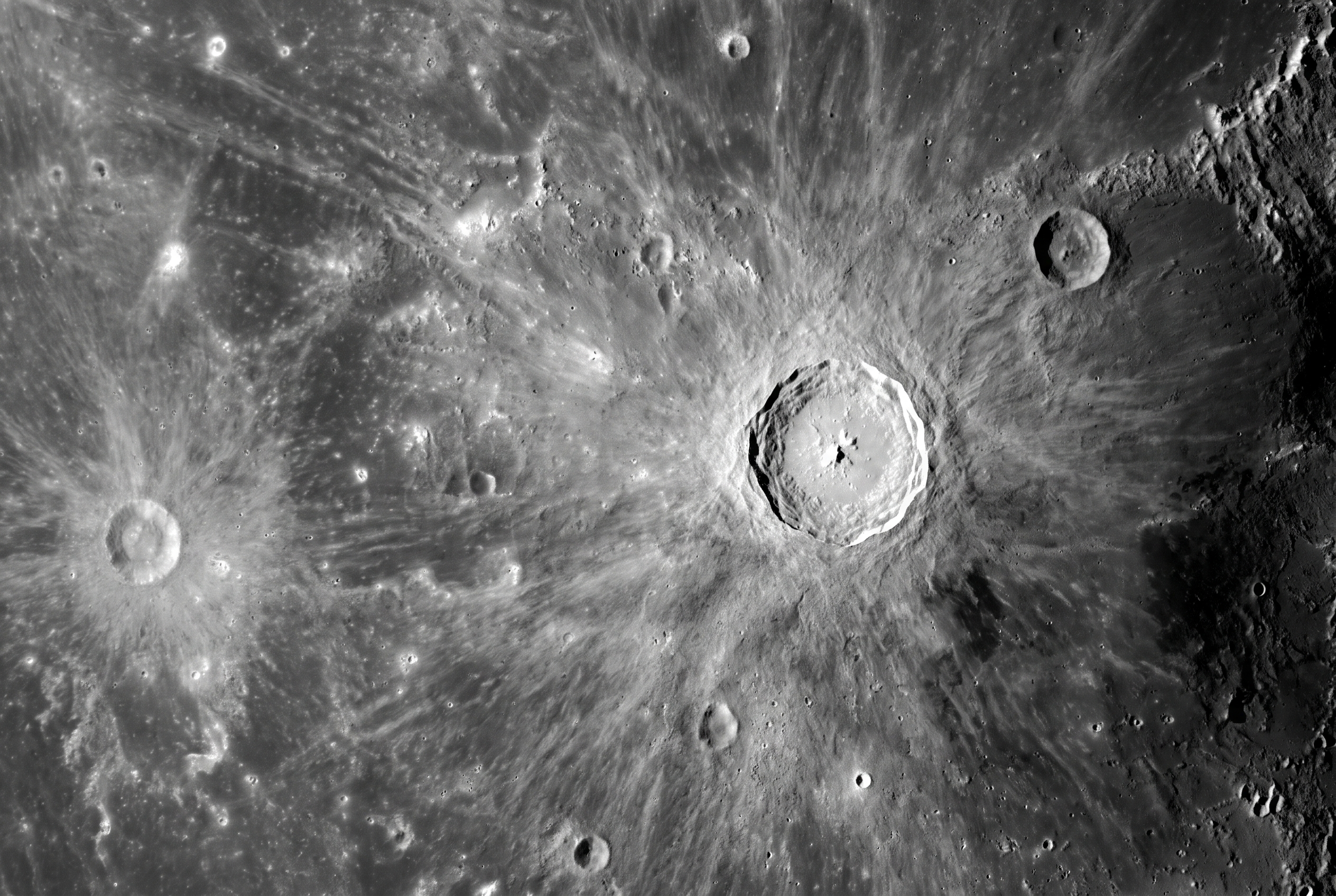
NASA has confirmed that a large crater appeared on the Moon recently enough that spacecraft images caught the before and the after. The crater is about 728 feet across. That is roughly 222 metres, or about two football pitches laid end to end. It is around 141 feet deep, close to 43 metres. Scientists have described it as deep enough to hold three yellow school buses stacked on top of one another. It was found using NASA's Lunar Reconnaissance Orbiter, usually called LRO. This spacecraft has been circling the Moon since 2009, photographing the surface over and over again. That long record is the key to the discovery. Because LRO has imaged the same ground many times, researchers can compare pictures taken years apart and spot anything new. The crater was noticed on 24 October 2025, in global images taken by LRO's Wide-Angle Camera. By comparing images, scientists narrowed down when it formed. The impact happened somewhere between 11 April and 22 May 2024, near the Moon's eastern edge. It has been given a name: McGetchin. It honours Tom McGetchin, a lunar scientist who worked on understanding how impacts and volcanic eruptions shape planetary surfaces. The object that made it is estimated to have been an asteroid or comet roughly the size of a three to six storey building. This is the largest newly formed crater ever recorded anywhere in the solar system. Not the largest crater, by an enormous margin, but the largest one that humans have watched appear.
Why this matters
It is easy to file this under interesting but irrelevant. It is neither of those things entirely. The Moon has no atmosphere. Nothing burns up on the way in. Every rock that arrives hits the ground at full speed, and the scar stays there more or less forever, because there is no weather and no plate tectonics to erase it. Earth is hit by material constantly too. The difference is that our atmosphere destroys almost all of it, and wind, rain and moving continents remove the evidence of the rest. So the Moon acts as a record keeper for our corner of space. Counting craters there tells us how often objects of a given size come our way. That is genuinely useful. Estimates of how often Earth might be struck by something large enough to matter depend partly on this kind of data. There is also a practical angle that is becoming less theoretical. Several countries and companies are planning to put equipment, and eventually people, on the lunar surface. An impact of this size arriving without warning is a real consideration when deciding where to build and how much shielding to provide. And the impact did more than dig a hole. Researchers found it disturbed the surface for miles around, creating a surprisingly large area of altered ground that shows up as unusually cold. A single collision reshaped a substantial patch of the Moon.
What the evidence actually says
The strength of this finding is that it does not rely on inference. There is an image without the crater and an image with it. That is why the dating is confident but bracketed. Scientists can say the impact happened between 11 April and 22 May 2024 because those are the dates of the images either side. They cannot name the day, because nobody was watching that spot at that moment. The measurements come from spacecraft imaging and shadow analysis, which is a well-established method. When sunlight strikes at a low angle, the length of the shadow cast by a crater rim reveals its depth. It is reliable, though it carries some margin of error. The estimate of the impacting object's size is more uncertain than the crater's size. Working backwards from a crater to the thing that made it involves assumptions about speed, angle and what the object was made of. A fast, dense object makes a bigger hole than a slow, loose one of the same size. So treat the three to six storey building comparison as a reasonable estimate rather than a measurement. On the once-a-century figure, this needs care. Researchers estimate an impact this large may happen on the Moon roughly once every hundred years, or possibly less often. That is a statistical estimate drawn from crater counts, not a schedule. Rare events do not arrive politely spaced out. Two could occur in a decade, or none for three centuries, without the estimate being wrong. It is also worth being clear about what this does not mean. This is not a sign that impacts are increasing, and it is not a warning about Earth. What changed is our ability to notice, not the rate at which rocks arrive. LRO has now built up enough years of repeat imaging for this kind of comparison to become possible. One final caveat on the record claim. This is the largest fresh crater recorded, which means recorded by people with cameras in space. The observation period is short. It is a record about our monitoring, as much as about the solar system.
Practical advice
There is nothing here that requires anyone to do anything, which is worth saying plainly. If you want to look at the Moon yourself, the crater is not visible from Earth with ordinary equipment. At 222 metres across it is far below what a garden telescope can resolve, and it sits near the Moon's eastern edge where the view is foreshortened. What you can do is see the results of older, vastly larger impacts, which is arguably more impressive. A pair of binoculars held steady, ideally braced against a wall or a fence, will show craters along the terminator, the line dividing the lit and unlit parts. That line is where shadows are longest and detail is sharpest, so a half Moon shows far more than a full one. NASA publishes LRO images freely, and its lunar image archives are open to the public. If you have a child interested in space, before and after images of the same patch of ground are a good way to show how science actually works, which is usually by careful comparison rather than sudden revelation. If you come across alarming claims online connecting this to risks to Earth, treat them sceptically. Nothing in this research suggests any change to the hazard we face. NASA's Planetary Defense Coordination Office publishes accurate information on near-Earth objects.
What to know
NASA's Lunar Reconnaissance Orbiter has identified a crater about 728 feet, or 222 metres, wide that formed on the Moon between 11 April and 22 May 2024. It was spotted on 24 October 2025 by comparing repeat images of the same terrain, and has been named McGetchin after the lunar scientist Tom McGetchin. At around 141 feet deep, and caused by an object estimated to be the size of a three to six storey building, it is the largest freshly formed crater ever recorded in the solar system. The impact disturbed the surface for miles around, creating an unusually large cold zone. Scientists estimate impacts this large occur on the Moon around once a century, though that is a statistical average rather than a timetable. The finding says nothing about increased risk to Earth. Sources: ScienceDaily, "NASA's Moon orbiter finds a 728-foot crater that wasn't there before", 17 September 2026, https://www.sciencedaily.com/releases/2026/09/260917003715.htm ; Space.com, "A NASA spacecraft just found a giant new crater on the moon", September 2026, https://www.space.com/astronomy/moon/nasa-just-found-a-giant-new-crater-on-the-moon-heres-why-everyones-talking-the-once-in-a-century-discovery ; EarthSky, "Newly formed moon crater is once-in-a-century discovery", September 2026, https://earthsky.org/space/newly-formed-moon-crater-mcgetchin/ This article is for general information and is not medical advice. If anything here relates to your health or your care, speak to a doctor, pharmacist or other qualified healthcare professional.
Related articles

Four months early: 3,880 rural premises and an £8.2 million contract
On 13 October 2026, the government announced that a rural broadband project in North Oxfordshire had finished four months ahead of schedule. The work connected…
First hearing from a police cell: £17.4 million and four force areas
On 12 October 2026, the Ministry of Justice published the government's response to Lord Leveson's review of the criminal courts. The review made 180 recommendat…
Over 1,000 weak spots found, and a minister's message to AI firms
On Monday 12 October 2026, the UK government set out a package of measures aimed at protecting the country from increasingly powerful artificial intelligence.…