
One baby's heartbeat, the wrong screen: a new MHRA warning on labour monitors
What happened
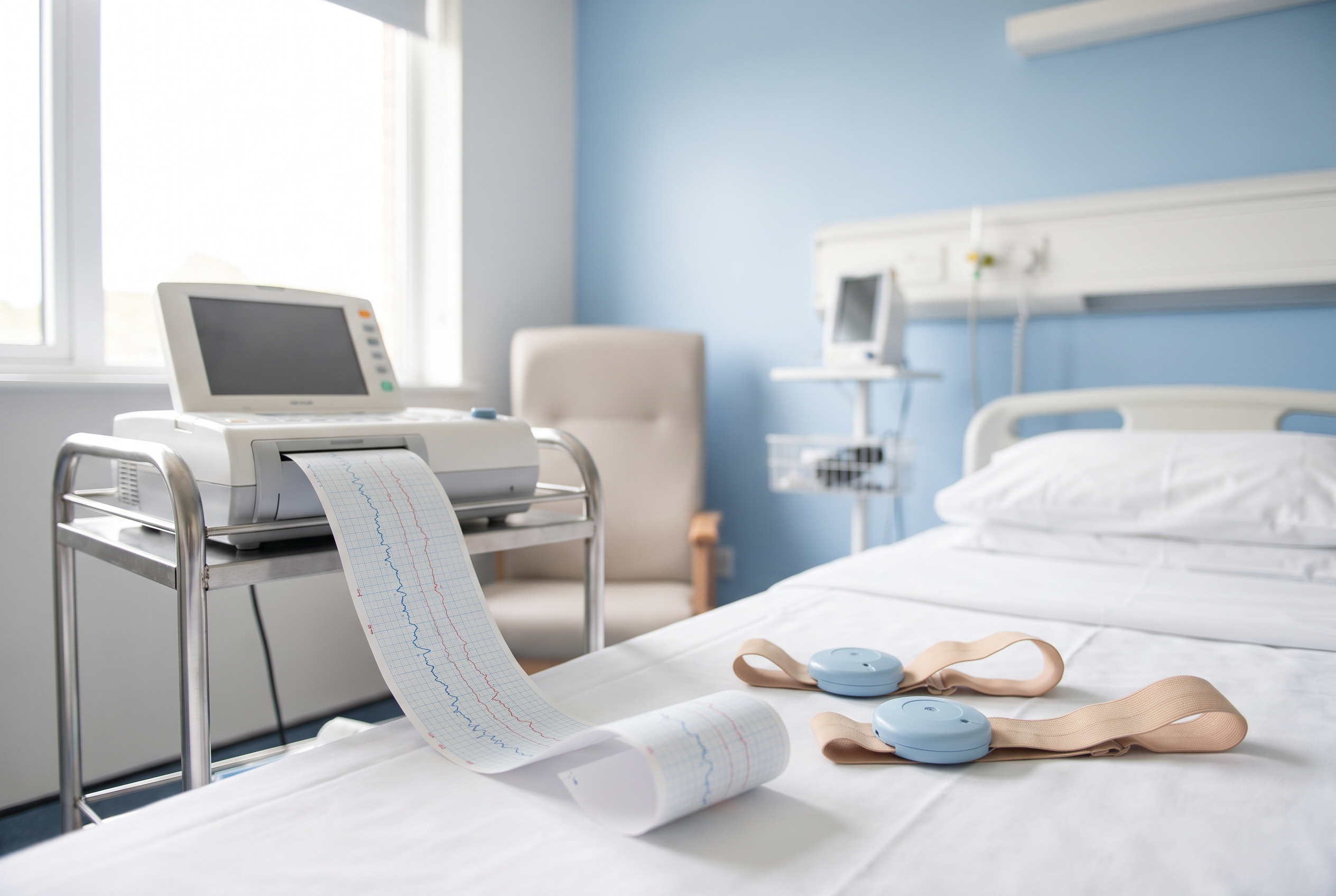
The UK's medicines and devices regulator has issued a safety notice about wireless monitors used to track babies' heartbeats during labour. The Medicines and Healthcare products Regulatory Agency (MHRA) published it on 17 September 2026. It has the reference DSI/2026/012. The machines it covers are called CTG monitors. CTG stands for cardiotocography. A CTG records two things at once: the baby's heart rate, and the mother's contractions. It is one of the main ways staff check on a baby during labour. Older CTG machines are wired. The sensors sit on the mother's bump and connect to the machine by cable. Newer ones can be wireless, which lets a woman move around, walk about or use a birth pool while still being monitored. The wireless ones send their signal by radio. That is where the MHRA found the problem. The agency reviewed wireless CTG systems that use radio telemetry channels. It found three risks: signals crossing over between machines, traces that are simply wrong, and signals dropping out altogether. The crossover one is the most striking. In rare cases, the MHRA says, the heart rate of one baby can end up displayed on a different mother's monitor, if both machines are running on the same radio channel. The reason is technical but simple. Many of these systems work in a shared radio band, and only a limited number of channels are available. If two machines nearby end up on the same channel, they can pick up each other's signal. The MHRA has not asked hospitals to stop using wireless CTG. It has asked them to manage the radio side of it properly.
Why this matters
A CTG trace is used to make decisions. If a baby's heart rate looks worrying, staff may act quickly, sometimes with an emergency caesarean. If it looks reassuring, they may wait. So a trace that belongs to the wrong baby, or a trace that is wrong for any other reason, is a serious thing. The MHRA puts it plainly: these risks may lead to traces being misread and to clinical decisions that are not right for that woman and that baby. That could cut both ways. A healthy-looking trace from another room might mask a baby who is in trouble. An abnormal one might lead to an intervention nobody needed. Fetal monitoring already carries a lot of weight in UK maternity care. Several major reviews of maternity services in recent years have looked closely at how heart rate traces were read and acted on. Anything that makes a trace less trustworthy matters. It is also worth being clear about what this notice is not. It is not a recall. No machines are being taken away. No manufacturer is named. And the MHRA has not described any particular case where a baby came to harm. This is the regulator spotting a weakness in how a technology is set up and used, and telling hospitals to tighten it up, rather than reacting to a disaster after the fact.
What the evidence actually says
It is worth reading what the notice actually contains, because it is more measured than the headline idea of a mixed-up heartbeat suggests. The MHRA says the alert follows its own review, plus incident reports and feedback from people working in the field. It does not publish a count of incidents. It does not say how often crossover has happened, or whether anyone was harmed. It also does not name a single device or manufacturer. The issue is described as belonging to a type of system - classic telemetry working in a shared radio band with few channels - rather than to one faulty product. The word the MHRA uses about crossover is "rare". The advice to hospital staff is practical rather than dramatic. Do not run two devices on the same radio channel unless they are far enough apart; the notice gives around 100 metres as an example of sufficient distance. Keep checking the trace against the woman in front of you, not just the screen. Keep wired systems available as a backup. Make sure sensors are docked and paired correctly. Report any problems through the MHRA's Yellow Card scheme or the relevant incident route. There is more for hospital managers. Check the radio environment before buying a system. Involve a mix of staff - midwives, doctors, medical engineers, IT - when installing one. Keep a register of which device is on which channel. Label equipment clearly. Keep monitoring the radio environment over time. Update training and policies so staff understand the radio risk at all. No deadline is attached. That tells you something about how the MHRA has graded this. It is "device safety information" - guidance aimed at professionals - and sits below the more urgent National Patient Safety Alert, the kind the MHRA issued the day before about patient hoists. For context on the monitoring itself: NICE, which sets clinical standards for the NHS in England, covers this in its guideline on fetal monitoring in labour (NG229). Whether a woman is offered continuous CTG or intermittent listening depends on an assessment of risk at the start of labour, and on what she chooses. CTG traces are kept for 25 years.
Qurexa perspective
We deliver prescriptions and support people with their medicines across Lincolnshire, so maternity equipment is not our field, and we are not going to pretend otherwise. The reason we follow notices like this one is that they come from the same place our own safety alerts do. The MHRA regulates medicines as well as devices. When a batch of tablets is recalled, or a medicine's packaging turns out to be mislabelled, that news arrives by the same route - and it is our job to act on it rather than wait to be told twice. The other reason is that this alert is a good example of how patient safety is supposed to work. Nobody had to die first. A regulator looked at a technology, found a weak point in how it is set up, and wrote it down so that every hospital using it can check its own arrangements this week. That is worth knowing about, whether the equipment in question is on a labour ward or in your own kitchen cupboard.
Practical advice
If you are pregnant, or supporting someone who is, there is nothing you need to do because of this notice. The actions in it are for hospitals and their staff. But a few things are worth holding on to. Ask what is being used, and why. You are allowed to ask whether you are being monitored continuously or intermittently, and whether the equipment is wired or wireless. Staff are used to these questions. Say something if the monitor looks odd. If the trace drops out, or the reading seems wrong, or the number on the screen does not match how things feel, tell your midwife. Staff would far rather check something that turns out to be fine. Remember the machine is not the only check. The MHRA's advice tells staff to keep confirming the trace clinically rather than trusting the screen on its own. That is normal practice, not a sign that anything is wrong. A wired option should still exist. Hospitals are told to keep wired systems available as a backup. If wireless monitoring is not working well for you, it is reasonable to ask about the alternative. You can report a device problem yourself. The MHRA's Yellow Card scheme is open to patients and families, not only to professionals. You do not need to be certain something went wrong to report it.
What to know
The MHRA issued a safety notice on 17 September 2026 about wireless CTG monitors, the machines that track a baby's heart rate in labour. The main risk is signal crossover: in rare cases, one baby's heart rate can appear on another mother's monitor if both machines share a radio channel. Traces that are wrong, and signals that drop out, are also covered. No product has been recalled, no manufacturer has been named, and no specific case of harm has been published. Hospitals have been told to manage radio channels properly, keep wired backups, train staff on the risk and keep checking traces against the woman rather than the screen alone. If you are pregnant, there is nothing you need to do differently. Asking questions and speaking up about anything that looks wrong remains, as ever, the most useful thing anyone in the room can do. Sources: MHRA (GOV.UK), "Radiofrequency (RF) Safety Considerations for Wireless Cardiotocography (CTG) Monitoring Systems (DSI/2026/012)", 17 September 2026, https://www.gov.uk/drug-device-alerts/radiofrequency-rf-safety-considerations-for-wireless-cardiotocography-ctg-monitoring-systems-dsi-slash-2026-slash-012 | Patient.info, "Radiofrequency (RF) Safety Considerations for Wireless Cardiotocography (CTG) Monitoring Systems (DSI/2026/012)", 17 September 2026, https://patient.info/doctor/drug-device-alert/radiofrequency-rf-safety-considerations-for-wireless-cardiotocography-ctg-monitoring-systems-dsi-slash-2026-slash-012 | NICE, "Fetal monitoring in labour (NG229)", published 14 December 2022, https://www.nice.org.uk/guidance/ng229/chapter/Recommendations This article is for general information and does not replace advice from your midwife, doctor, pharmacist or other qualified healthcare professional. If you have any concerns about your pregnancy or your care, speak to your maternity team.
Related articles

One play specialist for every 22,000 child hospital admissions
A children's charity has found that hospitals in the UK have far too few health play professionals. Health play professionals are trained staff who help childr…

33 studies out of 38 pointed the same way: women are offered less active treatment
Researchers at the University of St Andrews have published a review of global research into how men and women are treated for the same illnesses. The answer wa…

800,000 people are waiting. A review may change who gets an ADHD diagnosis
A government review of mental health conditions, autism and ADHD is due to report next week, and early details have caused a row. The review is expected to say…