
England needs 120% of normal rainfall over seven months to leave drought behind
What happened
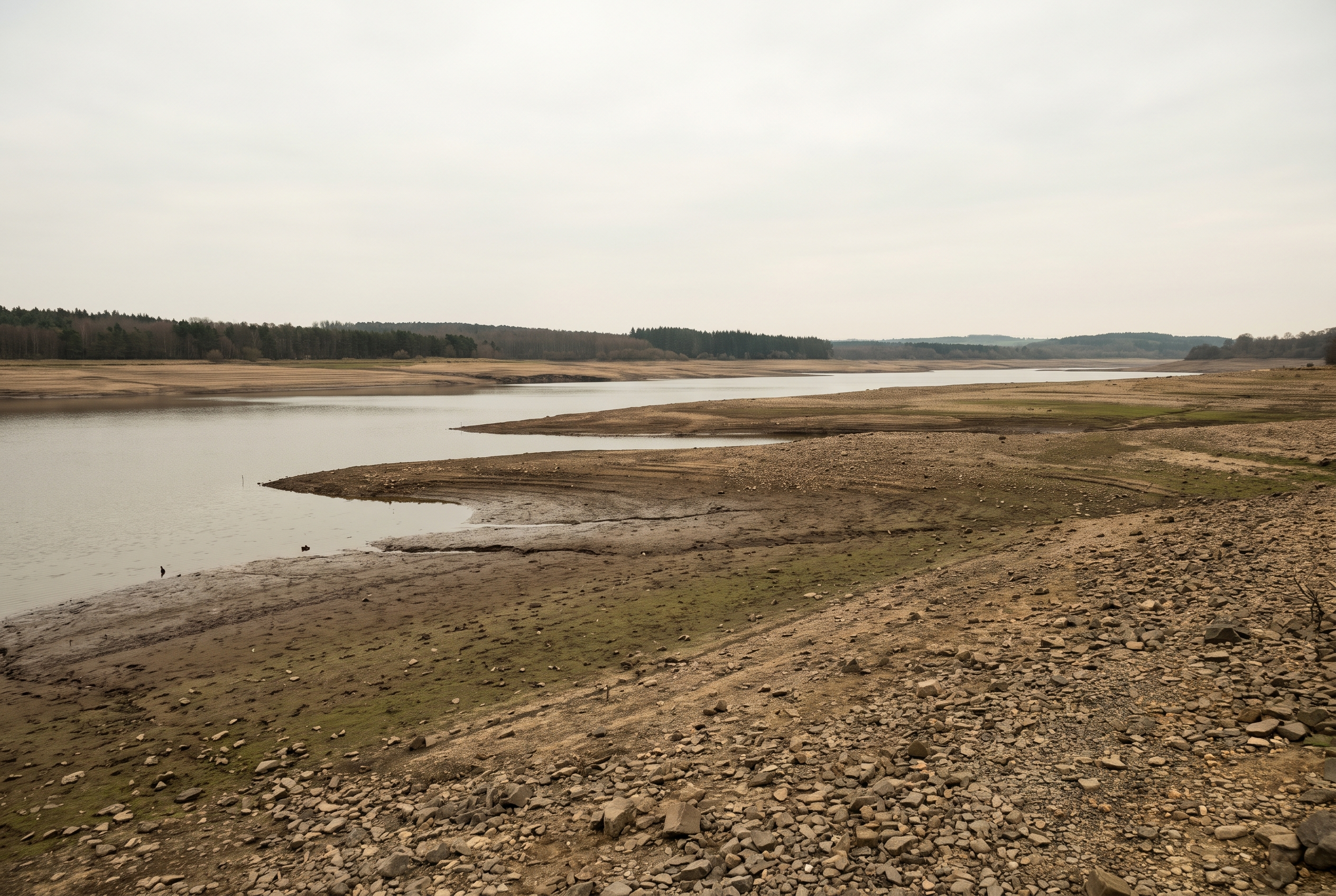
The government, the Environment Agency and water company bosses met on 16 September 2026 to discuss how England gets out of drought. The headline number from that meeting is striking. New research shows England needs 120% of typical rainfall over the next seven months for all areas to be considered out of drought. That is a fifth more rain than normal, sustained through autumn and winter. There were no changes in drought status at the meeting. Almost three-quarters of England remains in drought, after an exceptionally dry spring and summer and a run of heatwaves. The government used the meeting to urge water companies not to lose momentum, and to carry on water efficiency measures until the drought is over. The National Drought Group, which includes the government, the Met Office, regulators, water companies, farmers, the Canal & River Trust, anglers and conservation experts, is now meeting weekly.
Why this matters
Many people assume that once it rains a few times, a drought is over. It is not that simple, and this is the most useful thing to understand from the announcement. Drought is only over when rivers, groundwater and reservoirs are all back to normal levels. Rivers respond quite quickly to rain. Groundwater and reservoirs do not. Both continue to recede, as expected, even after wet spells. Groundwater is water held in rock deep below ground. It takes months of steady winter rain to refill, because summer rain largely evaporates or is taken up by growing plants before it gets down there. That is why autumn and winter rainfall matters so much more than a wet week in August. For readers in Lincolnshire and the wider East of England, there is a specific reason to pay attention. The Environment Agency's outlook says that even in the most likely weather scenario, Devon and Cornwall and East Anglia are expected to still be in drought by the start of April 2027. So for parts of eastern England, this is not a story about this month. It is a story about next spring and possibly next summer.
What the evidence actually says
The Environment Agency presented data on potential rainfall scenarios over the coming seven months. Here is what it found, including the reassuring parts. The outlook for wetter weather in autumn is set to bring some relief to most drought-hit areas. That is genuinely good news for most of the country. But there is roughly a one-in-four chance that around half the country will still be in drought next spring. The risk of a severe drought in the coming months is currently around 1%. That figure deserves context, and the government gave it: this country has not seen a severe drought since 1976. So a severe drought remains unlikely, but it is not impossible. For comparison, between September 2025 and March 2026, England received 130% of its typical rainfall, which led to recovery from last year's drought. So 120% is demanding, but it is not unheard of. It happened last winter. The minister's comments set out where the pressure is being applied: "The recent rainfall is not yet enough to replenish all the water we've used over the last six months, and I will be carefully monitoring the actions of water companies which will be vital as we go through the autumn." And: "They need to maintain momentum. We expect to see leaks fixed quickly, drought plans followed without delay and continued work to reduce demand to help avoid any further restrictions." On longer-term measures, the government pointed to several commitments: nine new reservoirs by 2050, alongside desalination plants and water transfers; a £65 million package to help farmers affected by drought, including up to £15 million to build on-farm reservoirs; £100 million to strengthen the country's capacity to respond to extreme weather and wildfires; changes in the Planning and Infrastructure Act to speed up reservoir approvals; continued work on mandatory water efficiency labelling; and nature-based work such as restoring peatlands, creating wetlands and planting trees to hold more water. A fair note: most of those are long-term. Nine reservoirs by 2050 does nothing for next spring. The things that affect the next seven months are rainfall, leak repairs and how much water people use.
Practical advice
Water saving in autumn feels counterintuitive, especially when it is raining outside. But this is exactly the period when what you save stays saved, because reservoirs and groundwater are refilling. Report leaks when you see them. A leak in the street is your water company's to fix, and they cannot fix what they do not know about. Most companies have a leak reporting form or phone line on their website. This is one of the highest-impact things an individual can do. Check for leaks at home too. A dripping tap or a running overflow wastes a surprising amount. If your water meter is still moving when everything is turned off, you have a leak somewhere. Shorter showers, still. A few minutes less makes a real difference across a household, and it lowers your energy bill as well if you have a combi boiler or electric shower. Use a water butt. Autumn and winter are when they fill. Water collected now can water a garden next summer, when supply is tightest. Only run full loads. Dishwashers and washing machines use close to the same amount of water whether they are half full or full. If you are on a water meter, ask your supplier about free water-saving devices. Many companies give out cistern displacement bags, tap inserts and shower timers at no cost. It is worth asking. Check whether restrictions apply to you before assuming they have lifted. Status varies a lot by region, and almost three-quarters of England is still in drought.
What to know
At the National Drought Group meeting on 16 September 2026, new research showed England needs 120% of typical rainfall over the next seven months for all areas to leave drought. Almost three-quarters of England remains in drought. There were no changes in status at the meeting. A drought is only over when rivers, groundwater and reservoirs return to normal. Groundwater and reservoirs are still receding. Even in the most likely scenario, Devon and Cornwall and East Anglia are expected to still be in drought by April 2027. There is roughly a one-in-four chance half the country still will be. The chance of severe drought is currently about 1%; the last severe drought was in 1976. For comparison, England got 130% of typical rainfall between September 2025 and March 2026, which ended last year's drought. The most useful things you can do are report leaks, fix drips at home, and keep water use down through autumn and winter. Sources: GOV.UK / Defra, "Government, Environment Agency, and water companies step up efforts to prevent England remaining in drought by next spring", 16 September 2026, https://www.gov.uk/government/news/government-environment-agency-and-water-companies-step-up-efforts-to-prevent-england-remaining-in-drought-by-next-spring ; Environment Agency, https://www.gov.uk/government/organisations/environment-agency ; Met Office, https://www.metoffice.gov.uk/ This article is for general information only. It covers water supply and environmental policy and contains no health advice; for any health question, speak to a doctor, pharmacist or other qualified healthcare professional.
Related articles
Microplastics were in every one of 227 farm fields tested across Europe
A five-year research project has found microplastics in the soil of every single agricultural field it tested. The EU-funded project tested 227 farm fields acr…

A wild cat smaller than your pet has just been named for the first time in a century
A small wild cat living in the cloud forests of Bolivia has been confirmed as a species nobody had formally described before. This is rarer than it sounds. It…