
The first study of the Nepal glacier collapse: what the science found
What happened
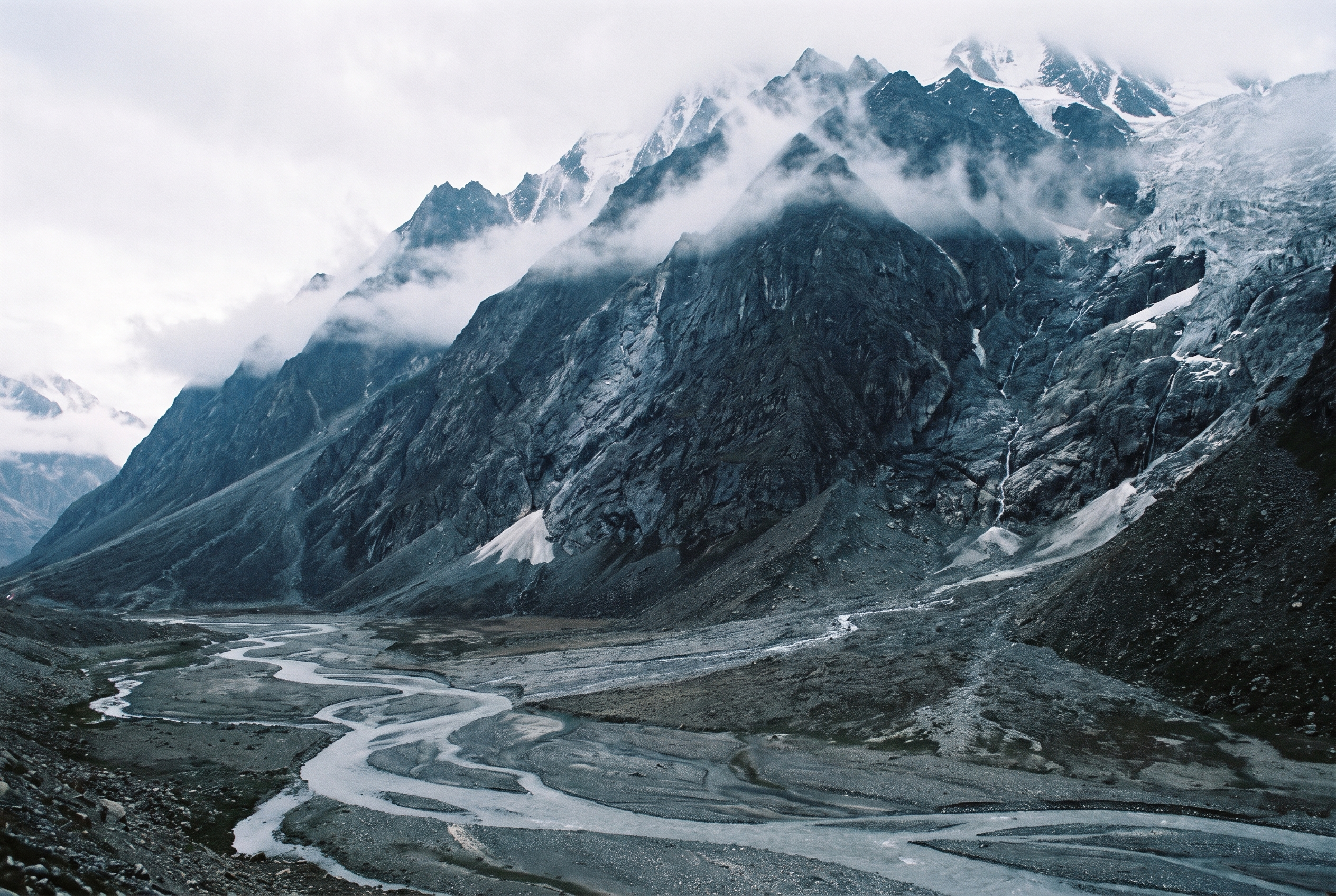
On 26 August 2026, a massive section of overhanging glacier and rock broke away from Langtang Lirung mountain, on the border between Nepal and Tibet. The piece measured roughly 200,000 square metres. It fell about 1,400 metres. It hit the valley floor so hard that the impact registered as an earthquake. The collapse sent an avalanche of 110 million cubic metres of snow and ice into the valley below. The force liquidised the ice and created a freezing flood that raced downriver at speeds above 110 miles per hour. More than 1,300 people were killed. More than 5,000 people remain missing. Homes, settlements, roads and bridges were swept away, leaving survivors stranded and cut off. The first scientific study of the disaster has now been published. It was carried out by World Weather Attribution, a collaboration between Imperial College London and other climate specialists. It was reported on 16 and 17 September 2026. The conclusion: climate breakdown probably weakened the glacier that collapsed.
Why this matters
There is a specific, practical reason this study exists, beyond scientific curiosity. Nepal has filed a formal request with the UN loss and damage fund for financial support to deal with the destruction. That fund was set up so that countries hit by climate-driven disasters can get help from the nations whose emissions caused most of the warming. To claim from it, a country needs proof of a link to the climate crisis. That is what this kind of study provides. So the science here is not abstract. It is evidence in a claim for money that will rebuild bridges and homes. Nepal's foreign minister, Shisir Khanal, has also called on top emitting nations such as China and India to "wake up" and accept shared responsibility. There is a second reason this matters, and it is sobering. The study said: "Rock avalanches of this size are rare, with annual frequency estimates of approximately one event this size every 1,000 to 10,000 years. This event shows that limits to adaptation are already being reached." "Limits to adaptation" is a careful scientific phrase for something stark: there are disasters you cannot prepare your way out of.
What the evidence actually says
This study was unusual, and the researchers were careful about what they claimed. Normally, attribution science asks whether climate change made a specific weather event more likely. Here, that was not possible. The disaster was not one weather event. It was a compound crisis, with several factors combining. So the team did something different. They looked at the long-term changes around the glacier. These were their key findings: In the region where the collapse happened, climate breakdown has caused about 2C of warming since pre-industrial times, and about 1.5C of warming in July and August specifically. July and August 2026 were the warmest on record locally, reaching 5C above the 30-year average in the days before the collapse. The freezing threshold in the Himalayas has risen by about 100 metres per decade since the 1980s. Higher and longer thaw temperatures weaken mountain slopes that were shaped and held together by permafrost. The warming had already driven substantial glacier recession, removing stabilising ice from around the collapse site and adding meltwater. A 7.8 magnitude earthquake in 2015 also contributed to slope failure, though its specific contribution to this collapse could not be confirmed. Now the crucial nuance. The researchers did not say climate breakdown caused the catastrophe. They said it is best understood as a destabilising factor acting on the existing geology. Dr Ben Clarke, who researches extreme weather and climate change at Imperial, said the "fingerprints of climate change" were clear in the long-term changes around the glacier before the collapse. He added: "We found that climate change is transforming the high mountain environment, influencing many of the possible drivers of this collapse." Dr Friederike Otto, a climate science professor at Imperial College London, was blunter about the human consequences. "Communities in Nepal are paying with their lives for a crisis driven by fossil fuel emissions thousands of miles away," she said. She added: "When warming destabilises the roof of the world, no amount of local adaptation can fully shield vulnerable people downstream from this scale of destruction. Without much faster action to transition to zero fossil fuel emissions we will inevitably see more disasters of this scale occurring in the years to come." It is worth respecting the precision here. "Probably weakened" and "destabilising factor" are not hedging for the sake of it. They are what the evidence supports, and the researchers chose not to overstate it even though a stronger claim would have suited the loss and damage case.
Practical advice
Most readers will not be near a Himalayan glacier. But if you are planning a trip to a high mountain region, or you have family in one, a few things follow from this. Check official travel advice before you go. The Foreign, Commonwealth and Development Office publishes country-by-country guidance at gov.uk/foreign-travel-advice, and updates it when conditions change. Check it again close to departure, not just when you book. Take local warnings seriously, even when the sky is clear. This flood hit communities without warning, on a day that did not look dangerous. Mountain hazards are not always visible from the ground. Make sure your travel insurance covers trekking at altitude. Many standard policies do not, and natural disaster cover varies a lot between policies. Read what is actually covered rather than assuming. If you are travelling somewhere remote, tell someone your route and expected return. It sounds obvious. In the aftermath of this flood, survivors were stranded and cut off, and knowing where people were mattered. If you want to help, give money to established relief organisations rather than sending goods. Cash reaches people faster and does not clog the damaged roads that aid needs to travel along.
What to know
On 26 August 2026 a roughly 200,000 square metre section of glacier and rock fell 1,400 metres from Langtang Lirung on the Nepal-Tibet border, triggering a flood that killed more than 1,300 people. More than 5,000 remain missing. The first scientific study, by World Weather Attribution with Imperial College London, found climate breakdown probably weakened the glacier. It identified about 2C of local warming since pre-industrial times, record July and August temperatures locally, a freezing threshold rising 100 metres per decade since the 1980s, and glacier retreat that removed stabilising ice. The researchers described climate change as a destabilising factor rather than the single cause, and noted a 2015 earthquake also played a part. Nepal has applied to the UN loss and damage fund, which requires proof of a climate link. Sources: The Guardian, "Climate crisis probably weakened glacier that caused devastating Nepal-Tibet floods, first study finds", 17 September 2026, https://www.theguardian.com/science/2026/sep/17/climate-crisis-likely-behind-deadly-nepal-tibet-floods ; BBC News, "Nepal to use new flood study to claim millions from UN climate disaster fund", 17 September 2026, https://www.bbc.co.uk/news/articles/cmlyrzve5pwzo ; World Weather Attribution, https://www.worldweatherattribution.org/ This article is for general information only. For travel safety guidance always check the current FCDO advice for your destination, and for any health question speak to a doctor, pharmacist or other qualified healthcare professional.
Related articles
Scientists worked out when black holes 'burp' - and it comes down to one number
Astronomers say they have solved a long-standing puzzle about black holes: when they "burp". Black holes have a reputation as cosmic plugholes that swallow eve…

Half a mouse brain, grown from human cells: what scientists just did, and why
Scientists at Stanford University have created mice whose brains are roughly half human tissue by volume. Here is how. The team first genetically engineered mi…