
Scientists worked out when black holes 'burp' - and it comes down to one number
What happened
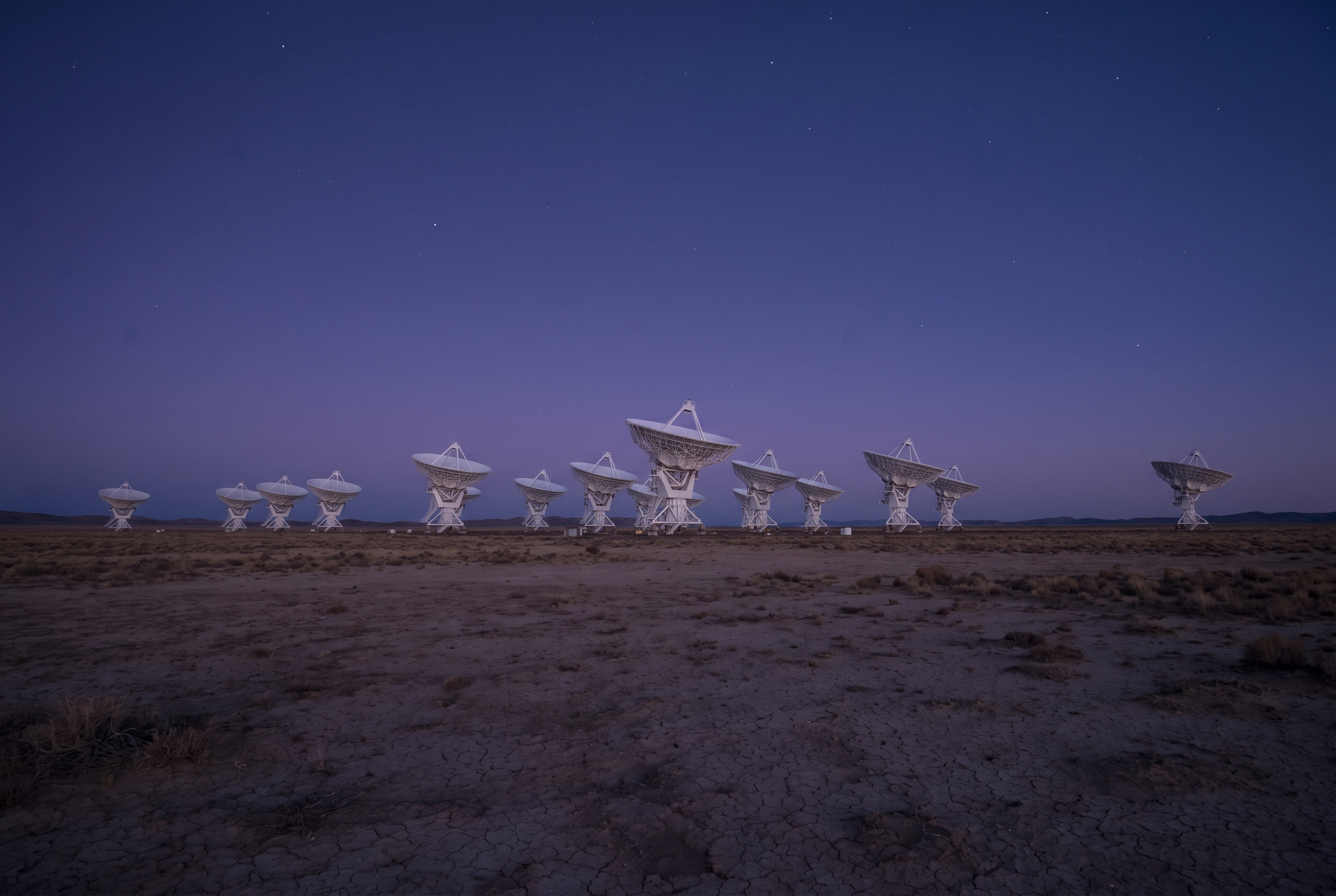
Astronomers say they have solved a long-standing puzzle about black holes: when they "burp". Black holes have a reputation as cosmic plugholes that swallow everything. That reputation is only half right. When a star strays too close, it gets torn apart in a process astronomers call spaghettification, because the star is stretched out like a long strand. But only about half of that star ends up being swallowed. The rest is flung back out into space in powerful jets and outflows. Some of these jets are so enormous they can shape how an entire galaxy develops. The mystery was the timing. Sometimes the jet appeared a year after the star was destroyed. Sometimes three years. Sometimes five. Nobody knew why. New research published in the journal Nature Astronomy, and reported on 17 September 2026, appears to have the answer. Dr Adelle Goodwin, an astrophysicist at Curtin University in Western Australia, and Dr Andrew Mummery of the Institute for Advanced Study used radio telescopes to study 20 of these events.
Why this matters
This might feel a long way from daily life, and in a direct sense it is. Nobody's shopping bill changes because of black hole jets. But it matters for two reasons worth knowing about. The first is that these jets are not a minor detail of the universe. As Goodwin put it, the outflows are sometimes so large they "can influence the entire evolution of a galaxy". Understanding when and how they launch is part of understanding how galaxies, including our own, came to look the way they do. The second is more practical. Telescope time is genuinely scarce. The world's big radio observatories are booked far in advance, and pointing one at the right patch of sky at the wrong moment wastes a resource that thousands of researchers compete for. If you can predict when a jet will fire, you can narrow the observation window. Goodwin said the finding would let scientists do exactly that, freeing up precious telescope time for other work. That is a quiet but real benefit. Better prediction means more science from the same equipment.
What the evidence actually says
Here is the finding in plain terms. The team studied 20 tidal disruption events. That is the technical name for a star being torn apart by a supermassive black hole. They used radio telescopes because, as Goodwin explained, "Radio is the only frequency where we can watch the jets and outflows as they're moving outwards." They found that supermassive black holes fire off powerful jets in two distinct phases of their feeding cycle, not at random. The first phase happens when the black hole is feeding at very high rates, straight after the meal begins. The second happens much later, hundreds to thousands of days after the star is first torn apart. It happens when the feeding rate drops to about 2% of the maximum rate at which a black hole can swallow material. That 2% figure is the interesting part. It is already known to trigger burps from stellar-mass black holes, which are far smaller objects, about 10 to 50 times the mass of our sun. Supermassive black holes range from hundreds of thousands to billions of times the mass of the sun. So the same threshold appears to apply across an enormous range of sizes. As Goodwin said, black holes appear to release jets at the same point in their feeding cycle regardless of size. Goodwin also described black holes in a way that sticks: despite their reputation, they are "actually very messy eaters". She noted that "You have to get really, really close to a black hole to get to the event horizon. Stars get destroyed further out than that." The event horizon is the boundary beyond which not even light can escape. An independent view is useful here. Dr Sara Webb, an astrophysicist at Swinburne University who was not involved in the research, said: "We are still trying to untangle the very fundamentals of the most extreme objects in the universe, supermassive black holes." She said the study showed supermassive black holes "behave rather predictably at two distant periods in their evolution", and that the researchers had tied this back to what had previously been seen in much smaller stellar-mass black holes. That independent assessment is worth weighting. A finding that connects two very different scales, and that an outside expert describes in those terms, is a solid piece of work rather than a one-off curiosity. The honest limit: this is 20 events. That is a decent sample for something this rare, but it is not thousands. Goodwin herself framed the next questions as still open, saying: "We can really start to understand not just when the jets are launched, but also how strong they are and if that is then dependent on the black hole properties."
What to know
Research published in Nature Astronomy and reported on 17 September 2026 found that supermassive black holes launch jets at two specific points in their feeding cycle: once when feeding fastest, and again hundreds to thousands of days later when the feeding rate falls to about 2% of the maximum possible. That 2% threshold already triggers jets in much smaller stellar-mass black holes, suggesting the same rule applies across a vast range of sizes. The work was led by Dr Adelle Goodwin of Curtin University with Dr Andrew Mummery of the Institute for Advanced Study, using radio telescope observations of 20 tidal disruption events. The practical benefit is that astronomers can now predict when to look, which saves scarce telescope time. Only about half of a star that gets too close is actually swallowed. The rest is blasted back into space, sometimes with enough force to influence a whole galaxy's evolution. Sources: The Guardian, "'Very messy eaters': scientists solve the mystery of when black holes 'burp'", 17 September 2026, https://www.theguardian.com/science/2026/sep/17/black-hole-burps-scientists-solve-mystery-astronomy ; Nature Astronomy, https://www.nature.com/natastron/ ; Curtin University, https://www.curtin.edu.au/ This article is for general information only. It covers astronomy research and contains no health advice; for any health question, speak to a doctor, pharmacist or other qualified healthcare professional.
Related articles

The first study of the Nepal glacier collapse: what the science found
On 26 August 2026, a massive section of overhanging glacier and rock broke away from Langtang Lirung mountain, on the border between Nepal and Tibet. The piece…
Half a mouse brain, grown from human cells: what scientists just did, and why
Scientists at Stanford University have created mice whose brains are roughly half human tissue by volume. Here is how. The team first genetically engineered mi…