
Displaying your hygiene rating may stop being optional in England
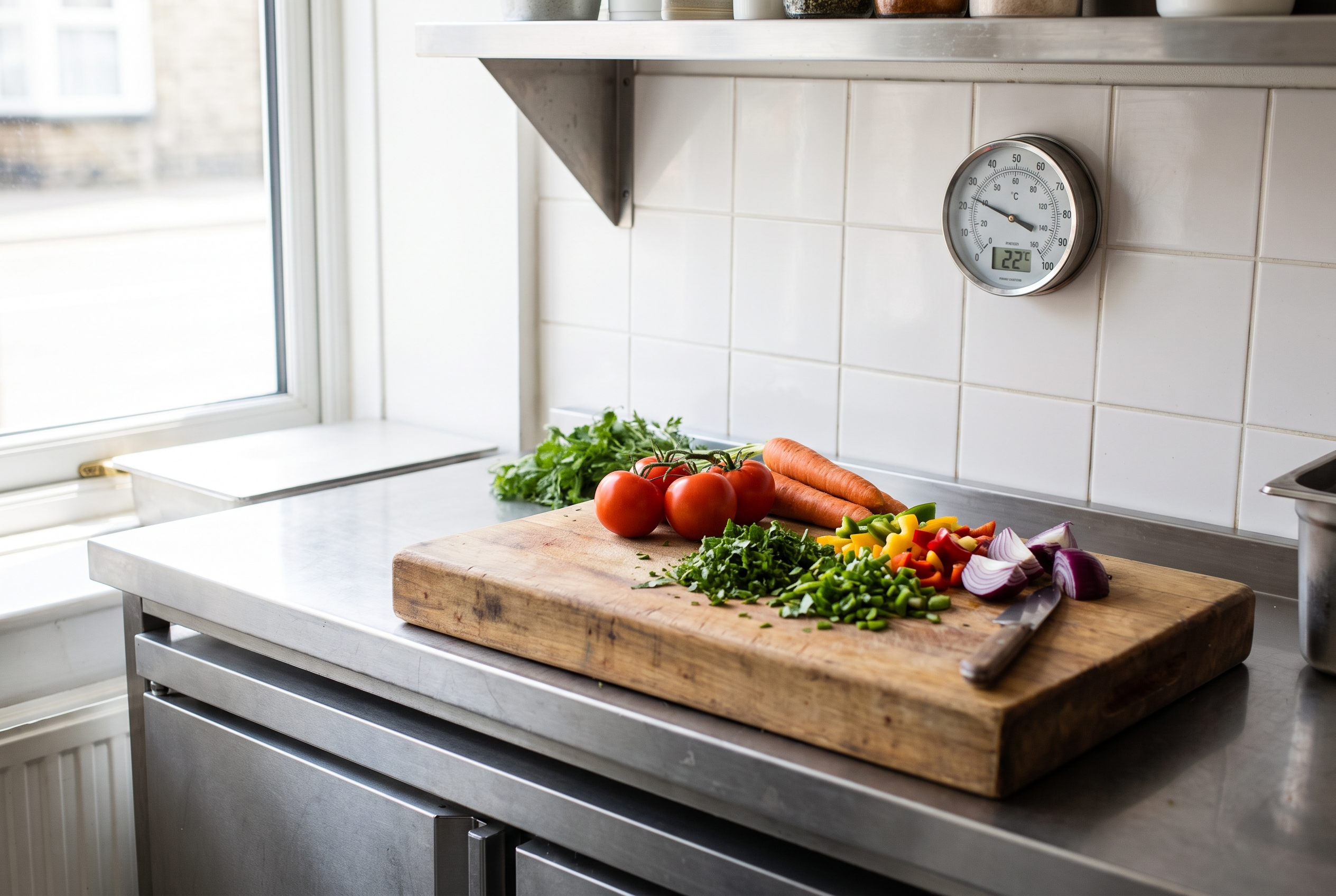
What happened
On 16 September 2026, the Food Standards Agency Board backed plans to redesign how food is regulated in the UK. The work is part of a programme called the Future of Food Regulation. The Board did not pass new rules this week. It agreed to press on with designing them. That is an important distinction, and we will come back to it. The changes being developed include several that would be noticeable to shoppers and to businesses. Food hygiene ratings would become compulsory to display in England, both online and in-store. At the moment, displaying your rating is only required by law in Wales and Northern Ireland. In England it is voluntary, which is why you sometimes see a proud green sticker in a window and sometimes see nothing at all. Local authority food teams would get better tools, more resources and stronger enforcement powers. Food business registration would be improved so it is clearer who is trading. Regulation would be made proportionate to the size and type of business, and the largest national retailers would be scrutinised nationally rather than separately by each local council. The FSA also wants to use data better across supply chains to spot risks that cut across the whole system. Over 1,200 stakeholders were engaged in developing these ideas. Professor Susan Jebb, who chairs the FSA, said: 'The system that protects our food has served us well for many years, maintaining some of the highest food standards in the world.'
Why this matters
Two figures explain most of the thinking here. The first is that 99.5% of food businesses in the UK are micro, small or medium-sized. Corner shops, cafes, takeaways, sandwich bars, village bakeries. Treating them with the same paperwork as a national chain makes little sense for anyone. The second is that 97% of the food in shops comes from just ten national retailers. At the moment, each of those retailers can be inspected separately by hundreds of different local councils. That is a strange way to oversee a handful of very large, very standardised organisations. So the logic is: lighten the load where risk is low, concentrate national scrutiny where the volume is. The hygiene rating change is the one most people will actually notice. The scheme scores businesses from 0 to 5 and the results are already published online. But research has consistently found that people are far more likely to check a rating when it is on the door than when it requires looking up a website. Making display compulsory in England would bring it into line with Wales and Northern Ireland, which have required it for years. The online element matters more than it used to. A great deal of food is now ordered through delivery apps, where you may never see the premises at all.
What the evidence actually says
Be careful about how far along this is. The Board supported developing the plans. The FSA says it will work with its advisory committees and come back to the Board in March 2027 with developed proposals, followed by a public consultation in autumn 2027. That means: nothing changes for you or for any business this year, or next year. Compulsory hygiene rating display in England would then need legislation. Realistically, this is a change for the end of the decade, not for this winter. The evidence for display requirements is reasonably good. Wales introduced mandatory display in 2013 and Northern Ireland in 2016, and evaluations found improvements in hygiene standards afterwards, as businesses had more incentive to score well. That is a fair basis for extending it. The proportionate regulation idea is more contested. In principle, focusing effort where risk is highest is sensible. In practice, 'proportionate' can quietly become 'less', particularly when local authority budgets are under strain. Food safety inspections in England have been under pressure for years, and the number of inspections has fallen. Giving councils stronger powers helps only if they have the staff to use them. It is also worth saying that the FSA's starting position - that UK food standards are among the highest in the world - is broadly fair. This is a reform of a system that mostly works, not a rescue of one that does not.
Qurexa perspective
We deliver groceries as well as prescriptions, so food safety rules apply to us as much as to anyone handling food. The part of this we think is genuinely useful is the push to make ratings visible where people are actually ordering. If you buy food through a screen, a rating that lives on a separate government website is not much use to you at the moment you are choosing. The other point worth making is about the cold chain. When food is delivered rather than carried home, the responsibility for keeping chilled items cold shifts onto the people doing the delivering. It is an unglamorous part of the job and it is the part that matters most, particularly for anyone whose immune system is not at full strength. If you are ordering food for someone who is unwell, elderly or recovering from treatment, it is a fair question to ask any supplier how chilled items are kept cold in transit.
Practical advice
Until the rules change, here is how to use the system as it stands. Check ratings yourself. Every rated business in England, Wales and Northern Ireland is listed free at ratings.food.gov.uk. It takes seconds, and it covers takeaways, restaurants, cafes, shops, schools and care homes. Know what the numbers mean. The rating is about hygiene standards at the time of inspection - cleanliness, food handling, and management of safety - not about how good the food tastes. A 5 is 'very good'. A 0 means urgent improvement is necessary. In England, no sticker does not mean a bad rating, because display is voluntary there. Look it up rather than assuming. In Wales and Northern Ireland, the rating must be displayed. Check the date. Ratings can be years old. A business may have improved or slipped since. If you get food poisoning, report it to your local council's environmental health team, not just to the business. Councils can only spot patterns if people tell them. Most outbreaks are identified because several people reported the same place. And at home, the basics still matter most: keep your fridge at 5C or below, do not wash raw chicken, and use separate boards for raw meat.
What to know
The FSA Board agreed on 16 September 2026 to develop plans that would, among other things, make food hygiene rating display compulsory in England, strengthen local authority enforcement powers, scrutinise the ten largest retailers nationally, and make regulation proportionate to business size. This is the beginning of a process, not the end. Proposals return to the Board in March 2027, with public consultation in autumn 2027, and legislation after that. The case for compulsory display is supported by experience in Wales and Northern Ireland. The risk to watch is that 'proportionate' regulation becomes thinner regulation if councils are not properly resourced. In the meantime, ratings for every business are free to check at ratings.food.gov.uk, and worth two seconds before you order. Sources: GOV.UK, Food Standards Agency, 'FSA Board supports new plans to strengthen the food safety system', 16 September 2026, https://www.gov.uk/government/news/fsa-board-supports-new-plans-to-strengthen-the-food-safety-system. Food Standards Agency, 'Food hygiene ratings', https://ratings.food.gov.uk/. NHS, 'Food poisoning', https://www.nhs.uk/conditions/food-poisoning/. This article is for general information and does not replace advice from a doctor, pharmacist or other qualified healthcare professional.
Related articles
England needs 120% of normal rainfall over seven months to leave drought behind
The government, the Environment Agency and water company bosses met on 16 September 2026 to discuss how England gets out of drought. The headline number from t…
Microplastics were in every one of 227 farm fields tested across Europe
A five-year research project has found microplastics in the soil of every single agricultural field it tested. The EU-funded project tested 227 farm fields acr…

A wild cat smaller than your pet has just been named for the first time in a century
A small wild cat living in the cloud forests of Bolivia has been confirmed as a species nobody had formally described before. This is rarer than it sounds. It…