
£30 million to start: communities are being offered a stake in local energy
What happened
On 17 September 2026, the government announced a scheme called People's Power. It is designed to let local councils and community groups build and own clean energy projects themselves, rather than simply hosting projects owned by someone else. The first round is £30 million. The government says up to £1 billion is planned over time, with a target of more than 1,000 local and community-led clean energy projects across the UK. The £30 million breaks down into several parts: £20 million for a Community Fund, £5 million for a Partnerships Grant, £1.8 million for Scotland, and £2.9 million for advice services. That last item matters more than it sounds, and we will come back to it. The scheme covers England, Wales, Northern Ireland and Scotland. The government says more than 150 renewable projects are already running on public buildings in England's Mayoral Combined Authority areas. Prime Minister Andy Burnham said the aim was to give people 'power' in both senses, and to make sure communities 'feel the benefits of the clean energy transition in their pockets too'. Energy Secretary Miatta Fahnbulleh said communities could 'reap the full benefits of clean energy - reducing emissions, cutting bills and reinvesting profits'.
Why this matters
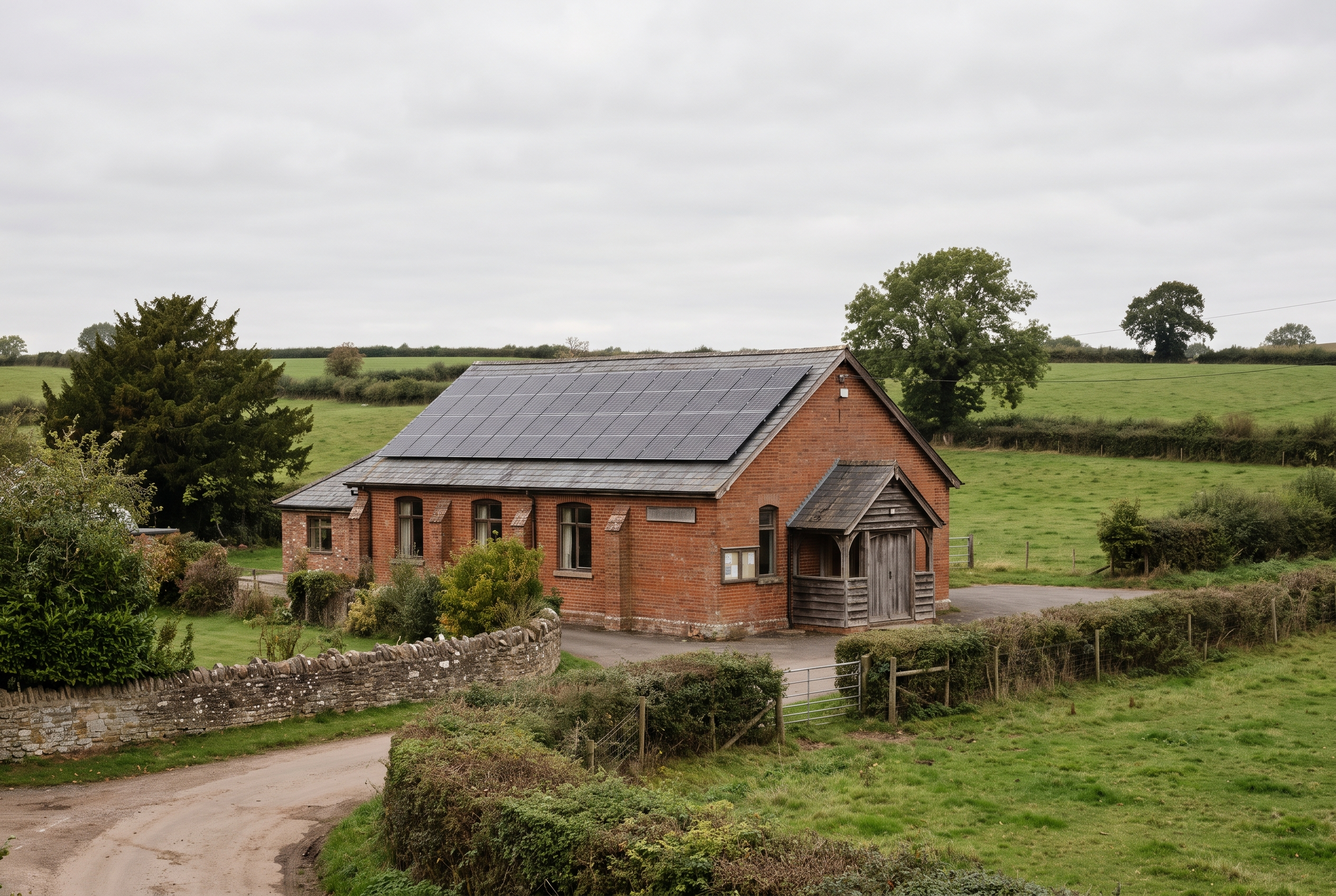
For years, one of the most common complaints about renewable energy has been about who benefits. A village gets a solar farm or a wind turbine on its doorstep, and the profits go to a company registered somewhere else. The village gets the view and not much else. That has soured a lot of local opinion on projects that are, in themselves, sensible. Ownership changes that equation. If a community group owns the solar panels on the village hall roof, the money the panels make stays local, and it gets decided on locally. There is good evidence this works. Community energy schemes have existed in the UK for two decades, often as co-operatives, and the successful ones tend to plough surpluses back into things the area actually wants: insulating draughty homes, funding a community minibus, keeping a village hall open. The link to household bills is real but indirect. Most community schemes do not cut your bill directly. What they often do is generate a surplus that gets spent on local energy advice, or on insulating the homes of people who need it most. That is where the savings tend to land.
What the evidence actually says
A few things are worth holding steady here. £30 million is a genuine amount of money but it is the opening round, not the £1 billion. The larger figure is a stated intention 'up to' that level, over time, and intentions set out by one government can be changed by another. Judge the scheme by what is actually paid out. More than 1,000 projects sounds like a lot until you divide it. Spread £30 million across even a few hundred projects and the average grant is modest. These are village hall roofs and small schemes, not power stations. That is not a flaw - small local schemes are exactly the point - but it does set the scale. Community energy in the UK also has a mixed history. The sector grew quickly when generous subsidies were in place, then shrank sharply when those subsidies were cut after 2015. Groups that had done everything right found their business case had vanished. The lesson most people in the sector draw is that the money matters less than whether the rules stay stable long enough to plan around. The £2.9 million for advice services is the most underrated line in the announcement. The usual reason community energy projects fail is not a lack of enthusiasm. It is that a group of volunteers has to handle grid connection applications, planning rules, legal structures and financial modelling. That is genuinely hard, and paid advice is often what separates the schemes that get built from the ones that quietly fade.
Practical advice
If this is something you would like to see in your area, here is where to actually start. Find out whether a group already exists. Many towns and villages have a community energy group or an environmental group already, and joining one is far easier than starting from scratch. Community Energy England, Community Energy Scotland and Community Energy Wales all keep directories. Talk to your parish or town council early. Community buildings - halls, sports pavilions, schools, churches - are the most common sites for these projects, because they have roofs, a clear owner, and daytime electricity use that matches solar generation. Use the advice funding. It has been set aside precisely so that volunteer groups do not have to work out grid connections on their own. Ask about it before committing to anything. Be realistic about timescales. Between first meeting and switched-on panels, two to three years is common. Grid connection queues are often the slow part. And separately from all of this: if your own energy bills are a worry right now, do not wait for a community scheme. Check whether you qualify for the Warm Home Discount, and contact your supplier early if you are struggling, because they have obligations to help. Citizens Advice offers free, independent guidance.
What to know
The government has opened People's Power with £30 million, and says up to £1 billion is planned, to help councils and community groups build and own clean energy projects, with a target of over 1,000 schemes UK-wide. The case for community ownership is sound: profits stay local, and local support for renewables is much stronger when people have a stake in them. The realistic view is that £30 million spread over many small projects means modest grants, that the £1 billion is an intention rather than a commitment, and that this sector has been badly burned before by sudden policy changes. The £2.9 million for advice may do more good per pound than anything else in the package. If you want a project locally, join an existing group, talk to your parish council, and expect it to take a couple of years. Sources: GOV.UK, Department for Energy Security and Net Zero, 'People's Power projects to give more control over local energy', 17 September 2026, https://www.gov.uk/government/news/peoples-power-projects-to-give-more-control-over-local-energy. Community Energy England, https://communityenergyengland.org/. Citizens Advice, 'Help with your energy bills', https://www.citizensadvice.org.uk/consumer/energy/energy-supply/get-help-paying-your-bills/. This article is for general information and does not replace advice from a doctor, pharmacist or other qualified healthcare professional.
Related articles
The first study of the Nepal glacier collapse: what the science found
On 26 August 2026, a massive section of overhanging glacier and rock broke away from Langtang Lirung mountain, on the border between Nepal and Tibet. The piece…
Scientists worked out when black holes 'burp' - and it comes down to one number
Astronomers say they have solved a long-standing puzzle about black holes: when they "burp". Black holes have a reputation as cosmic plugholes that swallow eve…
Half a mouse brain, grown from human cells: what scientists just did, and why
Scientists at Stanford University have created mice whose brains are roughly half human tissue by volume. Here is how. The team first genetically engineered mi…