
Six places will test a new kind of NHS care. One is in Lincolnshire
What happened
On 16 September 2026, the Department of Health and Social Care named six areas of England that will test a new way of running health and care. It calls them "neighbourhood health trailblazers". One of the six is in Lincolnshire. The idea is simple. At the moment, if you have more than one health problem, you travel to several different services. A GP surgery. A hospital clinic. A community nurse. A mental health team. Social care. Each keeps its own notes and books its own appointments. Neighbourhood health turns that around. Instead of you travelling to the services, they join up around you, close to where you live, and work as one team rather than six. The six sites are: - **Bristol NHS Foundation Trust** - a "1,000 Days Neighbourhood Model" using population health data to improve end-of-life care and support people with frailty outside hospital. - **Lewisham Health and Care Partnership and Healthier Greenwich Partnership** - long-term conditions, frailty, cancer and end-of-life care in one model. - **Navigo Health and Social Care CIC, for North East Lincolnshire Health and Care Partnership** - a Proactive Neighbourhood Care and Coordination Service, joining primary care, community services, mental health and social care to support people with complex needs "before they reach crisis point". - **RM Partners and NCL NHS Cancer Alliance** - cancer prehabilitation and rehabilitation across 19 London boroughs. - **North Nottinghamshire Partnership, led by Sherwood Forest Hospitals NHS Foundation Trust** - severe frailty, cancer and several conditions at once. - **York and Scarborough Teaching Hospitals NHS Foundation Trust** - a frailty model reaching from York into rural and coastal areas. The programme has £1.5 million behind it from the Office for the Impact Economy. Separately, Macmillan Cancer Support has committed £250 million to neighbourhood health across the UK over the next three to five years. Macmillan and Social Finance are delivery partners, and West Hertfordshire Teaching Hospitals NHS Trust mentors the sites. Diana Johnson, Minister of State for Health, said: "Neighbourhood health is about bringing services together within our local communities, helping people get the right care, at the right time, closer to home."
Why this matters
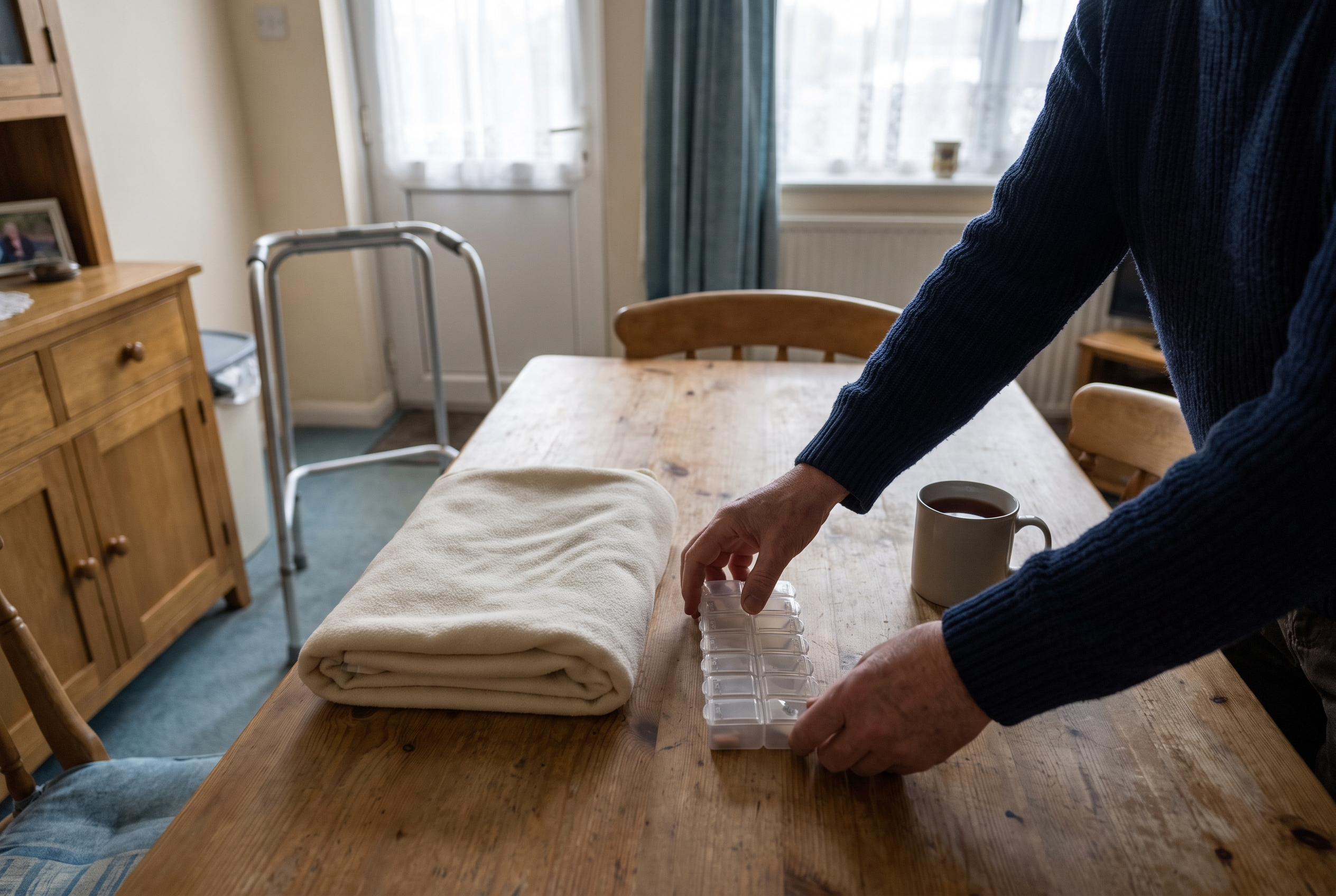
For most people, nothing changes tomorrow. This is a test in six places, not a national switch-on. But the thinking behind it points at a real problem. Most NHS care is reactive. It waits for something to go wrong, then responds. That works well enough for a broken wrist. It works badly for an 82-year-old with heart failure, early dementia and poor balance, managing nine medicines and slowly getting weaker. For that person, the first time the system really notices is often the ambulance call. Look again at the wording of the Lincolnshire site: support for people with complex needs **before they reach crisis point**. That describes a service that goes looking for problems early instead of waiting for them to arrive. The people most affected are those living with several long-term conditions or with frailty, people having cancer treatment or recovering from it, people nearing the end of life and their families, and unpaid carers. That last group is easy to overlook. When services do not talk to each other, somebody still has to hold the whole picture. Very often it is a daughter, a husband or a neighbour, repeating the same story to each new professional. There is a local angle too. Navigo is a not-for-profit social enterprise that grew out of mental health services in North East Lincolnshire, around Grimsby and Cleethorpes, and now employs over 1,000 people. Having one of six national trailblazers led from northern Lincolnshire is unusual, and it means this stretch of coast is helping work out how the model should run elsewhere. One honest tension: half the six sites are led by hospital trusts. Some GPs have questioned that, given the point is to move care out of hospitals and into communities. That is a live debate, not a settled one.
What the evidence actually says
This is the section to read slowly, because the gap between the announcement and the proof is wide. **These are tests, not proven programmes.** The government's own language is about developing and testing models, and about approaches "that could be expanded more widely". Nobody is claiming these six already work. That is the thing being found out. **The sums are smaller than they first look.** The £1.5 million is development and testing money, not service funding. Macmillan's £250 million is a UK-wide commitment over three to five years, and not all of it goes to these six places. Social investment for the sites is anticipated from April 2027. **The timescale is short.** The programme runs about nine months. It was open to the 43 sites already in the National Neighbourhood Health Implementation Programme, and six were chosen from that pool. **No outcome numbers have been published.** The announcement does not say how many people will benefit, or set public targets for how much hospital use should fall. Until those figures exist and are measured independently, "will transform care" is a hope rather than a finding. So what can be said fairly? That the direction has real support behind it. Joining up care around people, rather than around buildings, is a widely shared aim across the NHS, councils and charities such as Macmillan. Six sites and 43 wider ones is genuine momentum, not a press release on its own. What cannot be said is that this is proven to cut hospital admissions, or that it will reach your area.
Qurexa perspective
Qurexa is not part of this programme and has no involvement in it. We are writing about it because we are a Lincolnshire company and one of the six sites is on our doorstep. We do have a view on one practical point, because it is the part of "care closer to home" we see every working day. Care at home only works if the ordinary things actually happen. A care plan is only as good as whether the medicines arrive. A medication review is only as good as whether the person can get the new prescription, understand the change, and still be taking it three months later. A hospital discharge that looks tidy on paper can unravel because nobody could collect a prescription on a Friday afternoon. That is unglamorous work, and it rarely appears in policy announcements. But if neighbourhood health is to keep frail people out of hospital, the logistics underneath it have to be reliable. If you already find it hard to collect prescriptions or keep track of doses, speak to your pharmacy, whoever you use.
Practical advice
There is nothing you need to do today because of this announcement. But a few things are worth doing anyway, wherever you live. **Keep one up-to-date medicines list.** One piece of paper, or one note on your phone: every medicine, the dose, and what it is for. Include inhalers, patches, eye drops and anything you buy over the counter. Take it to every appointment. This single habit prevents a surprising number of mistakes. **Name one main contact.** If several services are involved, ask who is coordinating. A useful question: "Who holds the overall picture of my care?" If nobody can answer, flag that to your GP surgery. **If you care for someone, ask about a care coordinator.** Many areas already have these roles. You may be entitled to a carer's assessment from your council too. **Ask for a medication review.** If you take several medicines, your GP or pharmacist can review them. Medicines that made sense three years ago may not make sense now. **Tell your pharmacy if collecting is difficult.** Delivery, repeat ordering and reminder services exist, but you usually have to ask. **Be cautious about unexpected contact.** If a service rings about a new care programme it may well be genuine, but never give bank details. If unsure, hang up and ring back on a number you looked up yourself. Genuine NHS services will not mind. **Do not stop or change any medicine on your own.** Speak to a pharmacist or your GP first.
What to know
The short version: - On 16 September 2026, the Department of Health and Social Care named six "neighbourhood health trailblazers" in England. - One is Navigo Health and Social Care CIC, for the North East Lincolnshire Health and Care Partnership, supporting people with complex needs before they reach crisis point. - The others are in Bristol, Lewisham and Greenwich, north and west London, north Nottinghamshire, and York and Scarborough. - The focus is frailty, cancer, mental health, several conditions at once, and end-of-life care. - Funding is £1.5 million from the Office for the Impact Economy. Macmillan has separately committed £250 million UK-wide over three to five years. - These are tests. No outcome targets have been published, and social investment is anticipated from April 2027. - Half the sites are hospital-led, which some GPs have questioned. - Nothing changes for most people right now. What helps anyway: keep one medicines list, know who coordinates your care, ask for a medication review, and tell your pharmacy if collecting prescriptions is hard. Sources: Department of Health and Social Care, "Six neighbourhood health trailblazers to transform care", 16 September 2026, https://www.gov.uk/government/news/six-neighbourhood-health-trailblazers-to-transform-care | West Hertfordshire Teaching Hospitals NHS Trust, "Groundbreaking new 'Trailblazer programme' to bring neighbourhood health transformation", 17 June 2026, https://www.westhertshospitals.nhs.uk/about-us/news/groundbreaking-new-trailblazer-programme-bring-neighbourhood-health-transformation | Pulse Today, "Government announces neighbourhood 'trailblazers' - half of which are hospital-led", 16 September 2026, https://www.pulsetoday.co.uk/news/clinical-areas/elderly-care/government-announces-neighbourhood-trailblazers-half-of-which-are-hospital-led This article is for general information and does not replace advice from a doctor, pharmacist or other qualified healthcare professional. If you are worried about your own care or a change to your medicines, speak to your GP surgery or your pharmacist.
Related articles
One baby's heartbeat, the wrong screen: a new MHRA warning on labour monitors
The UK's medicines and devices regulator has issued a safety notice about wireless monitors used to track babies' heartbeats during labour. The Medicines and H…
One play specialist for every 22,000 child hospital admissions
A children's charity has found that hospitals in the UK have far too few health play professionals. Health play professionals are trained staff who help childr…
33 studies out of 38 pointed the same way: women are offered less active treatment
Researchers at the University of St Andrews have published a review of global research into how men and women are treated for the same illnesses. The answer wa…