
Two deaths a year from hoist falls: the MHRA has issued a national alert
What happened
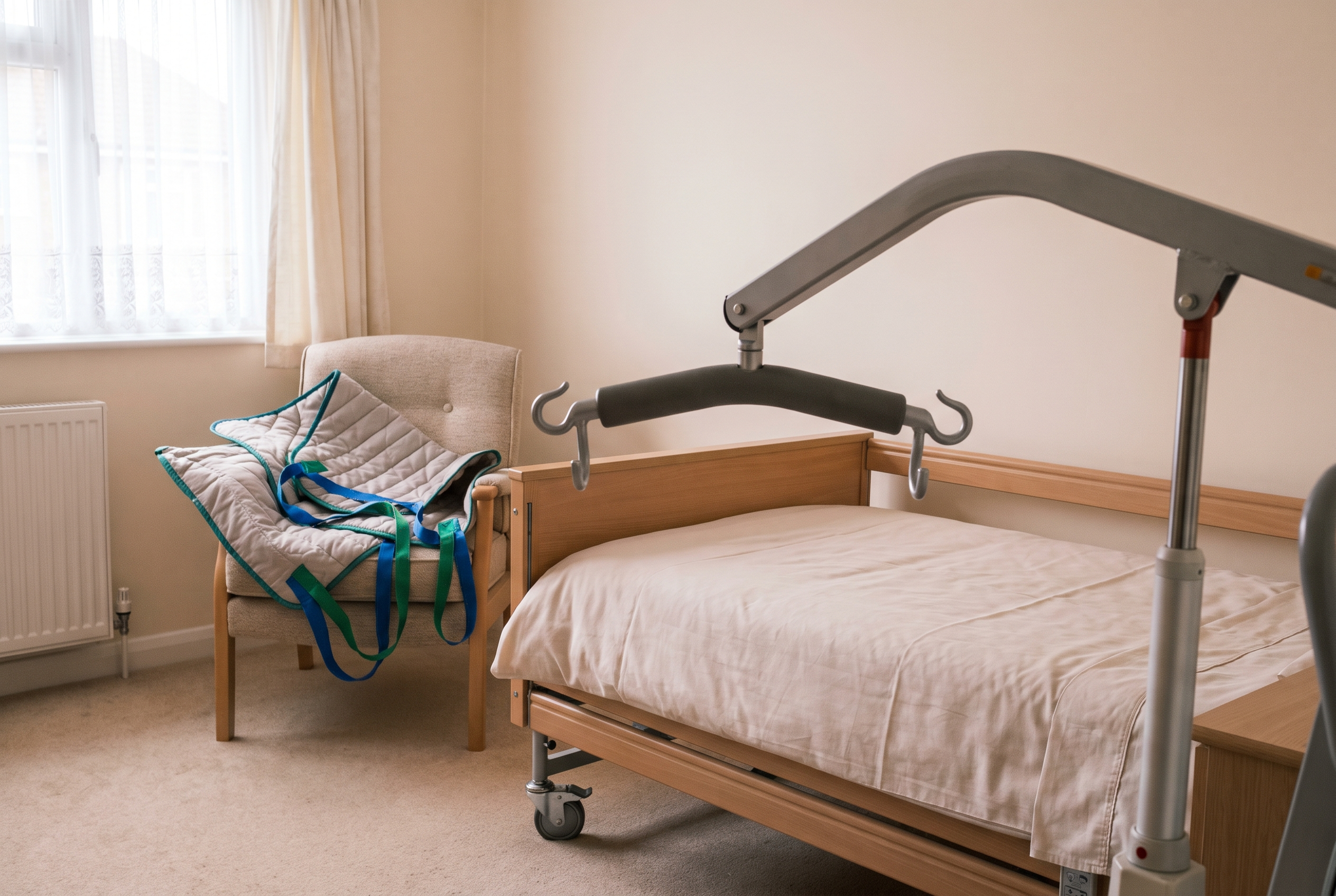
On 16 September 2026, the UK's medicines and devices regulator issued a national warning about patient hoists and slings. A hoist is the machine used to lift someone who cannot stand up on their own. A sling is the fabric support the person sits or lies in while they are lifted. Together they move people from a bed to a chair, on and off a toilet, or up off the floor after a fall. The warning is a National Patient Safety Alert, reference NatPSA/2026/005/MHRA, from the Medicines and Healthcare products Regulatory Agency (the MHRA). These are the most serious warnings the UK issues about medicines and medical equipment. This is only the fifth of 2026. The reason is blunt. The MHRA says people are still falling from hoists and slings, and some of them are dying. Between 1 January 2015 and 31 December 2025, it received 22 reports of incidents where a person died during a routine transfer. That is an average of two deaths a year, every year, for eleven years. The alert applies to acute hospitals, community health services, care homes, nursing homes, and care services that support people in their own homes. It also applies to the companies that supply and maintain the equipment. Organisations have until 16 September 2027 to complete five actions.
Why this matters
Hoisting is not rare or unusual. It is an ordinary part of daily life for a great many people in the UK, and it often happens several times a day. That is what makes this alert worth reading even if you do not work in healthcare. The MHRA is clear that these deaths did not only happen in hospitals. They happened in acute hospitals, in care homes, and in people's own homes. The regulator is also clear that no single manufacturer or model is to blame. In its words, the problem "is not confined to any manufacturer, model, or care setting". So this is not a story about one faulty product being recalled. It is a story about how the equipment is checked, matched, maintained and used. One more detail gives the alert its weight. The MHRA points out that the same themes were raised in earlier safety notices in 2014 and 2015, and that existing guidance "has not been reliably and systematically implemented". The advice already existed. It just was not being followed everywhere, all the time. That is why this alert sets actions with a firm deadline rather than simply repeating it.
What the evidence actually says
It is worth being precise about where the numbers come from, because it changes how you should read them. The 22 deaths are reports the MHRA received through the Yellow Card scheme and from manufacturers. The MHRA says plainly that these figures "are likely to underrepresent the true scale of harm, as not all incidents are reported". So two a year is a floor, not a ceiling, and not a measured national total. What the reports do show reliably is the pattern. The MHRA lists the causes that keep coming up: - Load-bearing parts coming apart: spreader bar hooks, clips, carabiners and fasteners that are missing, worn, damaged or wrongly assembled. - Sling loops slipping off the hook before the person's full weight is on them. The MHRA notes this is more likely when a sling is new and stiff. - Hoists and slings that do not match. A sling from a different maker may physically fit a hoist without being safe on it. - The wrong size or type of sling. Sizes and colour codes differ between makers, so a sling can look right and be wrong. - Pre-use checks not done, or not thorough enough to spot a problem. - Servicing and statutory inspections overdue, or equipment used past its service life. - Staff not trained on the specific hoist and sling they were actually using, and instructions not followed. The supporting document published alongside the alert gives four anonymised real cases. In one, a person in a care home died after carers picked a sling that was the wrong size. It looked very like the correct one, but several brands were in use on site, each with a different colour code. The coroner flagged the lack of a standard colour system across manufacturers. In a hospital case, a weighing scale accessory had been clipped onto the wrong part of a hoist. The weight went onto small retaining clips that only hold a sling in place and are not designed to carry a load. The clips failed. The accessory had been attached that way for a long time without anything going wrong. In a third case, an elderly person died when a hoist's legs collapsed after a locking knob was overtightened, most likely during servicing. A fourth did not involve a patient at all: a care worker was fatally crushed by a hoist while moving it between floors in a passenger lift. Read together, these are not freak accidents. They are small, ordinary mistakes in equipment that is trusted precisely because it is used so often.
Qurexa perspective
We deliver prescriptions and groceries to people's homes across Lincolnshire, and a good number of those homes have a hoist in them. We are not moving and handling trainers, and we would not pretend otherwise. But we want to pass this on, because the alert is written mainly for organisations, and the people doing the lifting at home are often family. If that is you, this alert is on your side. It says training should be offered to "patients and their families or carers where applicable". It says equipment provided for use in the community must still sit on the provider's inventory, with maintenance and inspection dates recorded. If your hoist came from the NHS, your council or a care agency, those duties are theirs, not yours. That is a fair thing to raise at your next review.
Practical advice
If you help lift someone at home: 1. Do the pause-and-check. This is the single clearest new instruction in the alert. Raise the hoist until the sling is taut and the person's weight is only partly taken. Stop there. Look at every attachment point and confirm each one is properly on and fully seated. Only then lift fully. It takes a couple of seconds and it is aimed squarely at the loop-slipping problem. 2. Check the sling is the right one, every time. Match it by the name and size on the label, not by colour or by eye. If more than one brand is in the house, be extra careful, because colour codes do not mean the same thing between makers. And use a toileting sling only for toileting: it gives very little support. 3. Look before you lift. Check for missing caps or clips, worn or damaged hooks, and frayed or stretched sling loops. If anything looks wrong, do not use it. Label it clearly so nobody else uses it either, and report it. 4. Ask when it was last inspected. Under the Lifting Operations and Lifting Equipment Regulations 1998, hoists must have a thorough examination by a competent person at least every six months. Ask who does yours and when it is next due. A daily visual check is not a substitute. 5. Re-check after any change. The alert asks for a fresh risk assessment whenever the equipment changes, or the person does. Weight, posture, muscle tone, pain, sitting balance and how much they can help all matter. 6. Keep the instructions. They are the reference for what may be attached to what, including accessories like weighing scales. If you do not have them, ask the supplier. 7. Report anything that goes wrong, including near misses, through the MHRA's Yellow Card scheme. The MHRA says reporting is what lets it spot problems early. If you run or manage a care service, the alert's five actions are directed at you, and it asks that an executive leader or registered manager coordinate the work.
What to know
- On 16 September 2026 the MHRA issued National Patient Safety Alert NatPSA/2026/005/MHRA on patient hoists and slings. - It follows 22 reported deaths during routine transfers between 2015 and 2025, an average of two a year. The MHRA says the real figure is probably higher. - The deaths happened in hospitals, care homes and people's own homes, across different manufacturers and models. - Five actions must be completed by 16 September 2027: standardised pre-use checks including a pause-and-check step, a documented register of approved hoist and sling combinations, a complete equipment inventory including community equipment, up-to-date servicing and six-monthly LOLER examinations, and role-appropriate staff training. - Nothing is being recalled. No hoist or sling needs to be thrown away because of this alert. - If you lift someone at home, the pause-and-check step and matching the right sling to the right hoist are the two things to take away today. Sources: Medicines and Healthcare products Regulatory Agency, "National Patient Safety Alert: Patient hoists and slings (all types): risk of death and serious harm from falls (NatPSA/2026/005/MHRA)", 16 September 2026, https://www.gov.uk/drug-device-alerts/national-patient-safety-alert-patient-hoists-and-slings-all-types-risk-of-death-and-serious-harm-from-falls-natpsa-slash-2026-slash-005-slash-mhra. Medicines and Healthcare products Regulatory Agency, "National Patient Safety Alert Supporting Information. Patient hoists and slings: incidents and case examples", 16 September 2026, https://www.gov.uk/government/publications/national-patient-safety-alert-supporting-information-patient-hoists-and-slings-incidents-and-case-examples. Health and Safety Executive, "Moving and handling in health and social care", https://www.hse.gov.uk/healthservices/moving-handling/index.htm. This article is for general information and does not replace advice from a doctor, pharmacist, occupational therapist or other qualified healthcare professional. If you have concerns about a specific hoist or sling, speak to the organisation that supplied it before using it again.
Related articles

"It makes you feel helpless": why patients and doctors are questioning standard endometriosis care
Women with endometriosis and the doctors who treat them are raising doubts about the standard approach to care. The Guardian reported on 15 September 2026 on r…
One in five ethnic minority NHS managers plan to leave. A new survey explains why
A new survey has found deep problems with racism among NHS managers in England. The NHS Alliance asked 950 Black, Asian and minority ethnic managers about thei…
Alzheimer's blood tests are trending online. Researchers say healthy people should think twice
Researchers in Australia have raised the alarm about how Alzheimer's blood tests are being sold online. The study was published in the Journal of the American…