
Twenty hours outdoors: the new natural history GCSE has a teacher problem
What happened
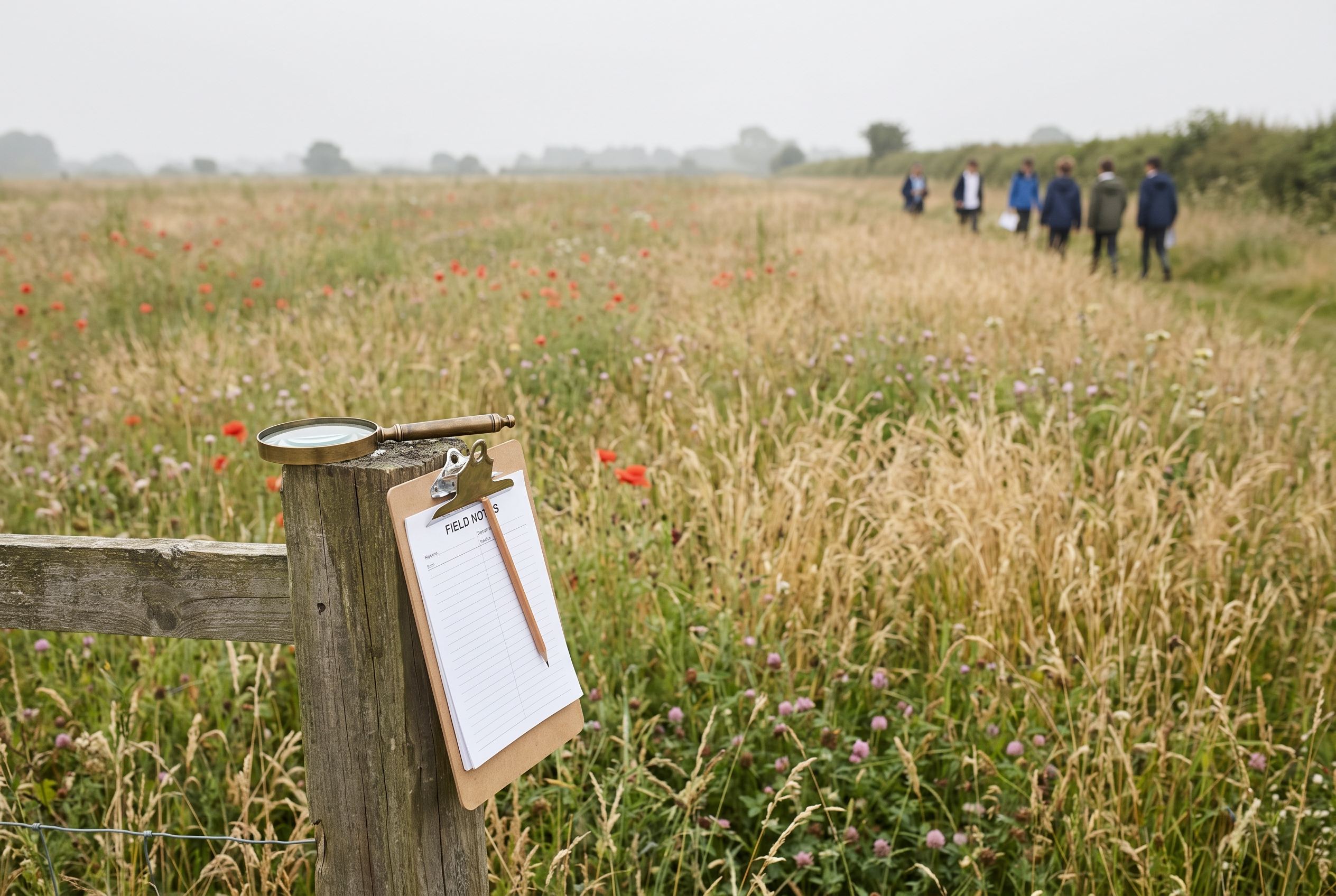
England is getting a new GCSE in natural history, and experts have raised concerns about whether schools will be able to staff it. The qualification has been in development for some time. The government's consultation on the proposed subject content closed on 4 September 2026. Ofqual will consult separately on how it should be assessed. First teaching is expected in September 2028, alongside the revised GCSEs. The headline requirement is the fieldwork. Schools must deliver at least 20 hours of it, so that pupils can observe, engage and relate with the natural world. Schools are encouraged to use their own grounds where they can. That is where the concerns start. Reported worries include whether enough teachers have the right background, whether the content overlaps too much with biology and geography, and whether all schools have fair access to somewhere suitable to do fieldwork.
Why this matters
A GCSE is not just a syllabus. It is a promise that a school can actually deliver something for two years running. There is no large existing pool of natural history teachers in England, because the subject has not existed as a GCSE before. Schools will mostly need to draw on staff from biology and geography departments. Many of those teachers will have relevant knowledge. Fewer will have specific training in field identification, ecological survey methods or species recording. The fieldwork requirement also raises a fairness question that is hard to dodge. A school with playing fields, a pond and a wood nearby can meet 20 hours without much difficulty. An inner-city school on a tight site, with no green space and a budget that does not stretch to coach hire, faces a very different task. If the qualification ends up being offered mainly by schools that already have grounds, it will widen a gap rather than close one. That would be the opposite of what a subject about connecting young people to nature should achieve.
What the evidence actually says
It is worth separating what is decided from what is still being argued about. Decided: the qualification is going ahead, fieldwork of at least 20 hours is a compulsory part of it, and first teaching is expected from September 2028. Still open: the assessment arrangements, which Ofqual is consulting on separately. On teacher supply, the picture is genuinely mixed rather than bleak. Commentary in the sector has pointed out that many teachers already in schools have the right background and could adapt, particularly biology specialists with ecology training. The suggestion has been made that departments work across subject boundaries, drawing on geography and science staff together. But the same commentary notes that training routes need thinking about for the longer term, not just for the first cohort. The subject overlap concern is real but not necessarily a flaw. Ecology already appears in biology, and physical geography covers habitats and landscapes. Whether that counts as useful reinforcement or wasteful duplication depends on how the final content is written. One genuine unknown: nobody yet knows how many schools will offer it. A GCSE that only a few hundred schools run looks very different from one that becomes a mainstream option.
Practical advice
If you have a child who might take this, or you work in a school considering it, here is what is useful now. **There is no rush.** First teaching is 2028. Pupils currently choosing options will not be affected yet. **Ask the school whether they intend to offer it.** Schools will be making that decision over the next two years, and parental interest is a legitimate input. **Encourage the interest regardless of the qualification.** Wildlife Trusts, the RSPB and the National Trust all run activities for young people, and local nature reserves are usually free. None of that needs a GCSE attached. **Try species recording.** Apps and schemes such as iNaturalist and the Big Garden Birdwatch let anyone contribute real data, and they build exactly the observation skills the qualification is aiming at. **If access to green space is your school's barrier, say so during consultations.** Ofqual's assessment consultation is an opportunity for schools to raise practical problems before the rules are fixed. **Bear in mind careers.** Ecology, conservation and environmental consultancy are real career paths, and a GCSE is only the first step on them.
What to know
A new natural history GCSE is coming to England, with first teaching expected in September 2028. It will include a compulsory minimum of 20 hours of fieldwork, with schools encouraged to use their own grounds. The government's consultation on subject content closed on 4 September 2026. Ofqual will consult separately on assessment. Experts have raised concerns about teacher supply, overlap with biology and geography, and unequal access to suitable outdoor space between schools. Sources: Schools Week, 'GCSE natural history: what schools need to know', 2026, https://schoolsweek.co.uk/gcse-natural-history-what-schools-need-to-know/; GOV.UK, 'New natural history GCSE to grow next generation of green careers', https://www.gov.uk/government/news/new-natural-history-gcse-to-grow-next-generation-of-green-careers; GOV.UK Department for Education, 'Natural history GCSE: proposed subject content', June 2026, https://consult.education.gov.uk/gcse-and-a-level-policy-team/gcse-natural-history-proposed-subject-content/. This article is for general information and does not replace advice from a doctor, pharmacist or other qualified healthcare professional.
Related articles

£54.53: what parents actually spent on school uniform this year
Parents spent noticeably less on school uniform this year, and the figures show how they did it. Average spend per shopper on school uniform was £54.53, accord…
Locked away all day: more secondaries are putting pupils' phones in pouches
Secondary schools in England are increasingly locking pupils' phones away for the school day, and the trend is accelerating. The reason is a change in the law.…