
Watch, then have a go: chimpanzee mothers are teaching their young to use tools
What happened
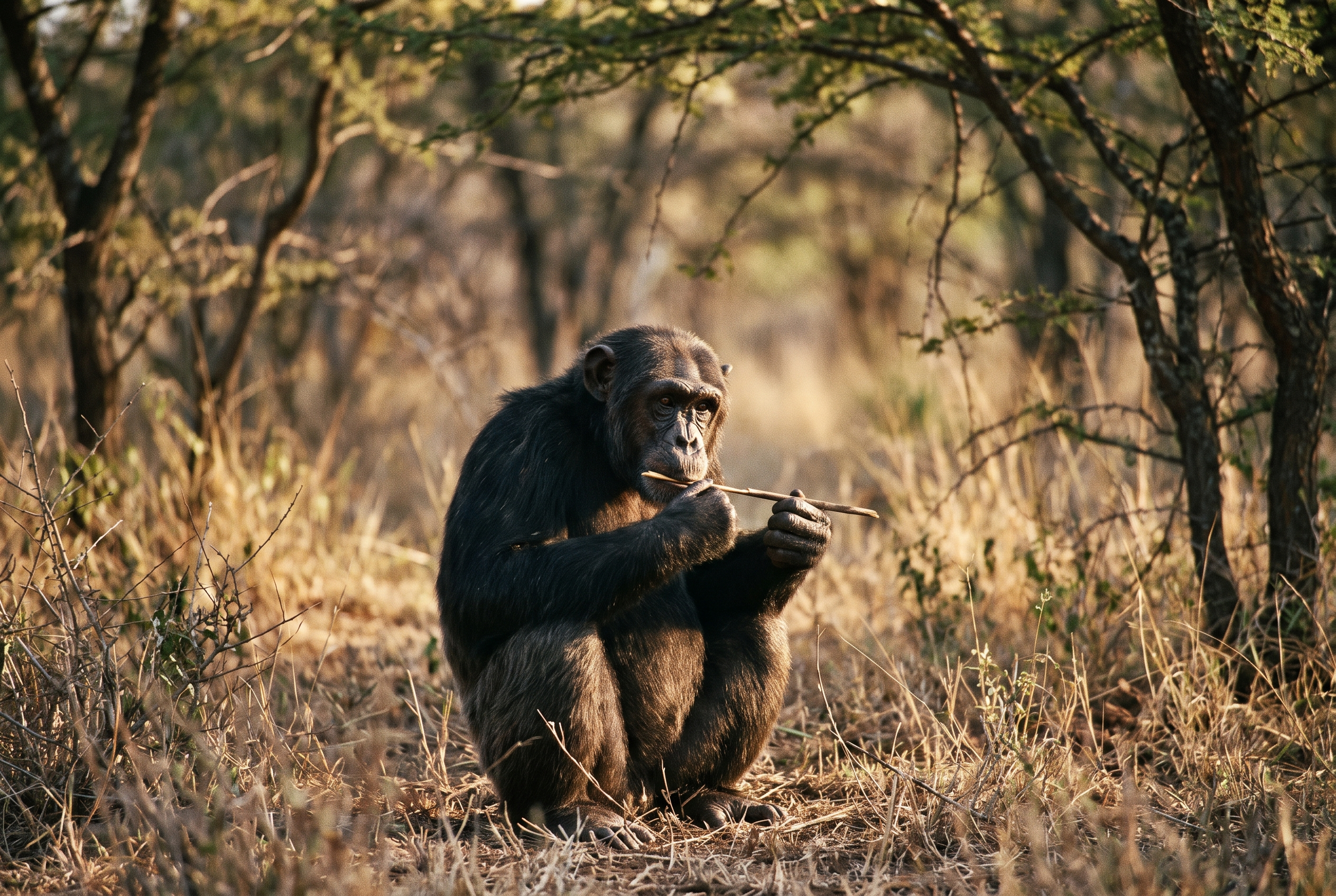
Researchers studying wild chimpanzees in Senegal have recorded adults deliberately teaching youngsters how to use tools. The study was published in the journal Frontiers in Psychology and announced on 16 September 2026. The team watched western chimpanzees handing over stick tools and baobab fruit to younger members of the group. Most of these handovers happened between relatives, and mothers were the most common givers. Two cases stood out as new. In those, an adult first demonstrated what to do, and then passed the object to an infant. The infant went on to copy the action. The researchers describe this as complex behaviour that had not been documented before in this way. The work was supported by several research bodies including the la Caixa Foundation, the Leakey Foundation and the Generalitat de Catalunya.
Why this matters
Teaching sounds like an ordinary word until you try to define it. Animals learn from each other all the time. A young bird watching an adult is learning, but the adult is not teaching. It is just getting on with its day. Teaching in the scientific sense means something narrower. The experienced individual changes what it does because an inexperienced one is watching, and that change makes learning easier for the learner, usually at some cost to the teacher. By that definition, clear teaching is rare in the animal kingdom. It has been documented in only a handful of species. So evidence of demonstration followed by handover is significant. It suggests the adult is not simply tolerating an infant taking something. It suggests a sequence aimed at getting the young one to succeed. That matters for understanding where human teaching came from. Our own species passes on skills across generations in a way no other animal matches, and this is a clue about how that began. There is a conservation point too. Western chimpanzees are critically endangered, and the ones in Senegal live in dry savanna woodland at the very edge of where chimpanzees can survive at all. If skills are passed down within families rather than rediscovered by each generation, then losing a few older individuals can take knowledge with them that the group cannot easily replace.
What the evidence actually says
It is worth being careful with this one, because it is the kind of finding that gets overstated quickly. The headline cases number two. Two observations of demonstration followed by transfer, in wild animals that are difficult and slow to observe. That is genuinely valuable, because these behaviours are rare and hard to catch. But two events cannot tell you how common the behaviour is, or whether it is typical of chimpanzees generally. The broader pattern in the study is stronger. Object transfers happened regularly, and they clustered among relatives, which fits what we would expect if the behaviour helps pass on skills within a family. There is also an interpretation question that honest researchers acknowledge. When a mother demonstrates and then hands over a stick, we cannot know what she intends. We can only record what she did and what happened next. Describing it as teaching is a reasonable reading of the behaviour. It is not a claim about what the animal was thinking. This also sits within a longer research history. Chimpanzee tool use has been studied for decades, and tool transfers have been reported before. What is new here is the demonstration step preceding the handover.
Practical advice
There is a human takeaway buried in this, and it is a reasonable one. **Show, then hand over.** The pattern the researchers recorded is one many parents and teachers arrive at instinctively. Do it once where they can see, then let them try. Explaining alone is usually weaker than demonstrating. **Let them struggle a bit.** The infants in the study copied the action themselves. Taking over when someone is fumbling feels helpful and often is not. **If wildlife interests your children**, autumn is a good season for it in the UK. Fungi, migrating birds and deer are all easier to find now than in high summer. **Support the observation work if you can.** Long-term field studies like this one depend on funding that is often precarious, and the research charities involved publish updates that are free to follow. **Be wary of anthropomorphic headlines**, including cheerful ones. Animals doing something that resembles a human behaviour is interesting precisely because it is not identical to it.
What to know
Researchers studying western chimpanzees in Senegal recorded adults, mostly mothers, transferring stick tools and baobab fruit to youngsters. In two previously undescribed cases, an adult demonstrated the technique first and then handed the object over. The infant copied the action. Transfers mainly occurred between relatives, consistent with skills being passed down within families. Two observations cannot show how common this is. It is an important addition to a long research record, not a settled conclusion. Sources: EurekAlert / Frontiers, 'Chimpanzees give youngsters the tools to learn tricky techniques', 16 September 2026, https://www.eurekalert.org/news-releases/1143218; Frontiers in Psychology, 2026, https://www.frontiersin.org/journals/psychology; The Leakey Foundation, https://leakeyfoundation.org/. This article is for general information and does not replace advice from a doctor, pharmacist or other qualified healthcare professional.
Related articles

Do you feel guilty calling in sick? Almost everyone does, and here is why
The BBC looked on 15 September 2026 at a question most of us have asked ourselves: why does calling in sick feel so uncomfortable? As many as half of people re…

Nine new sponges, and hundreds still unnamed: a glimpse of Alaska's deep sea
Scientists have described nine species of deep-sea sponge that had never been formally named before. All nine were found off the coast of Alaska. The discovery…