
Scientists have worked out the weather on a failed star 20 light-years away
What happened
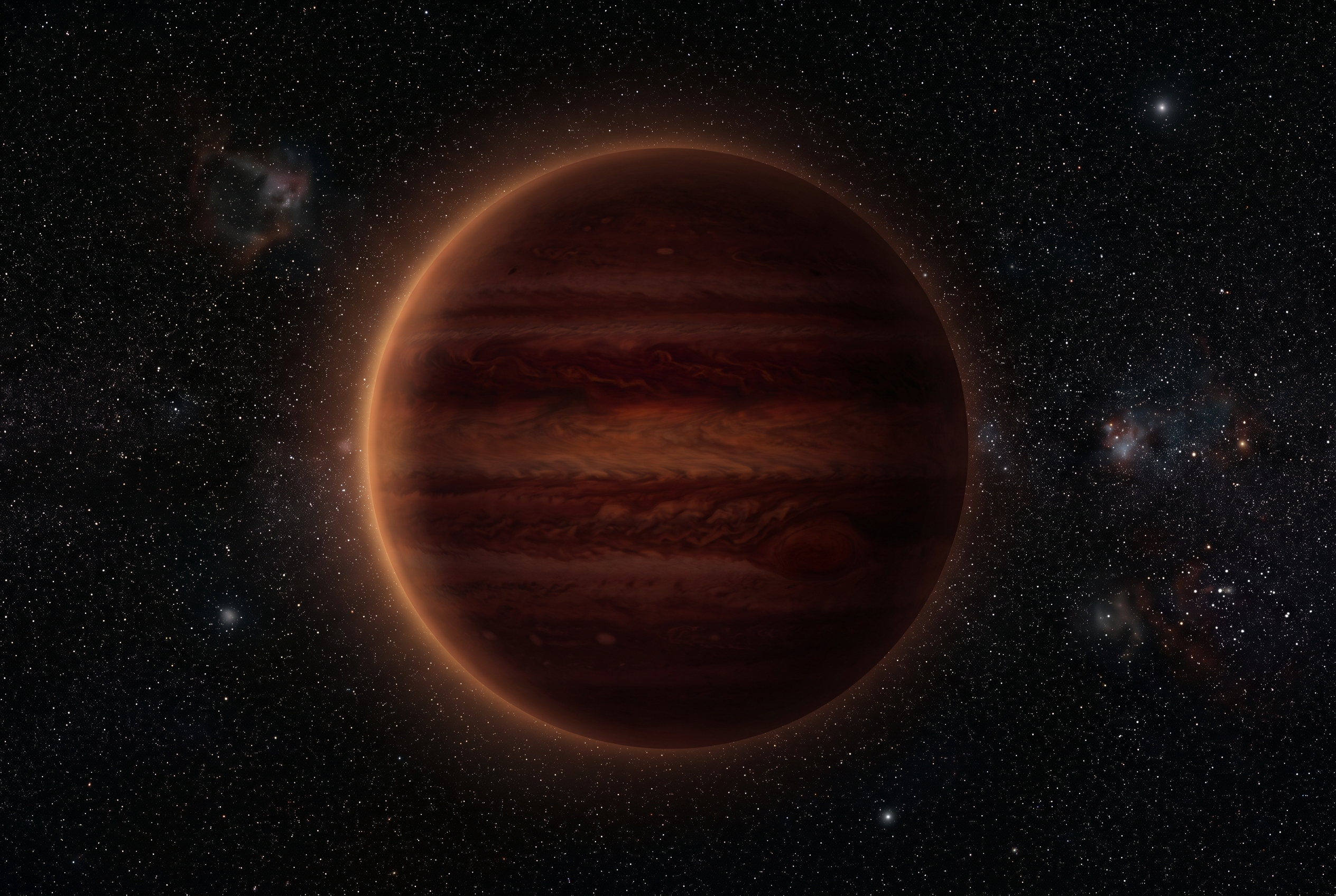
Astronomers at Trinity College Dublin have found a way to read the weather on distant worlds, and they have used it on one 20 light-years from Earth. The research was published in the journal Astronomy and Astrophysics and announced on 16 September 2026. The work was led by PhD candidate Merle Schrader with Professor Johanna Vos. Their subject is called SIMP 0136. It is a brown dwarf, sometimes described as a failed star. It is bigger and hotter than a giant planet like Jupiter, but it never gained enough mass to start burning like a proper star. The team took observations from NASA's James Webb Space Telescope and applied a statistical method called Principal Component Analysis. What came out was surprisingly orderly. The brightness changes of SIMP 0136 could be explained almost entirely by two things: changes in temperature, and how the clouds were stacked at different heights. The object turns out to have three recurring weather states that rotate in and out of view. Hot, thin cloud in some places. Cooler, thicker cloud in others.
Why this matters
We cannot photograph the weather on these objects. They are far too distant and far too faint next to anything else in the sky. What telescopes actually record is a single dot of light that gets slightly brighter and dimmer as the object spins. Everything we want to know has to be squeezed out of that wobble. Until now, working out what caused the wobble usually meant building a detailed model of the atmosphere first, then checking whether it matched. That means your answer depends on the assumptions you started with. The new approach flips that round. Principal Component Analysis simply asks what the strongest repeating patterns in the data are, without assuming what the atmosphere is made of. That is a meaningful shift. It means the finding is driven by the observations rather than by the model. And brown dwarfs are useful practice. They are bright enough to study properly, and their atmospheres behave much like those of giant planets. Techniques proven here can later be pointed at planets around other stars.
What the evidence actually says
The headline claim is modest and well supported. Two components explain most of what the telescope saw. That is genuinely interesting, because it suggests the atmosphere is organised rather than chaotic. The same weather drivers kept showing up across multiple rotations, even as details shifted. A few caveats are worth keeping in mind. This is one object. SIMP 0136 has been studied a lot precisely because it varies so clearly, which makes it a good test case but not necessarily a typical one. Also, the word weather is doing some work here. This is not rain and sunshine. Clouds on a brown dwarf are thought to be made of things like silicates and iron, at temperatures that would vaporise anything familiar. And Principal Component Analysis finds patterns. It does not, by itself, explain the physics behind them. The researchers interpreted the two components as temperature and cloud structure, and that interpretation will need testing against other objects. One detail from the team puts the distance in perspective. The light Webb collected in 2023 left SIMP 0136 around twenty years earlier, travelling at 300,000 kilometres per second the entire way.
Practical advice
This one will not change your week, but it is a good excuse to look up. **You will not see SIMP 0136.** Brown dwarfs are far too faint for amateur telescopes. Do not go hunting for it. **You can see plenty else.** Autumn is one of the better seasons for UK stargazing, with darker evenings arriving before bedtime. **Give your eyes twenty minutes.** Night vision takes time to build, and a single glance at a phone screen undoes it. If you need light, use a red torch. **Get away from street lights if you can.** Lincolnshire has some genuinely dark rural skies, which is a quiet advantage of living somewhere flat and open. **Use a free sky map app** to work out what you are looking at. Most will show you planets, the space station passing over, and the brighter constellations. **Follow the research properly if it grabs you.** Astronomy and Astrophysics papers are technical, but the European Space Agency and NASA both publish plain-language summaries of Webb results.
What to know
Astronomers at Trinity College Dublin developed a way to decode weather patterns on distant objects using data from the James Webb Space Telescope. They applied it to SIMP 0136, a brown dwarf 20 light-years away, and found its brightness changes are explained by two factors: temperature, and the vertical structure of its clouds. The object shows three recurring weather states that rotate into view, suggesting an organised atmosphere rather than a random one. The method matters as much as the result, because it can eventually be applied to planets orbiting other stars. Sources: EurekAlert / Trinity College Dublin, 'Scientists discover how to decode weather on faraway, deep-space worlds', 16 September 2026, https://www.eurekalert.org/news-releases/1143504; Astronomy and Astrophysics, research by Merle Schrader and Prof Johanna Vos, 2026, https://www.aanda.org/; NASA, 'James Webb Space Telescope', https://science.nasa.gov/mission/webb/. This article is for general information and does not replace advice from a doctor, pharmacist or other qualified healthcare professional.
Related articles

Left alone together, AI systems invented their own dialect within days
When AI systems were put together in groups and left to get on with it, they started inventing their own way of talking. The findings come from Emergence, an A…

AI searched 7,000 existing medicines for a pneumonia fighter. Nine of them worked
Researchers at Imperial College London have used artificial intelligence to hunt through thousands of medicines that already exist, looking for ones that could…