
AI searched 7,000 existing medicines for a pneumonia fighter. Nine of them worked
What happened
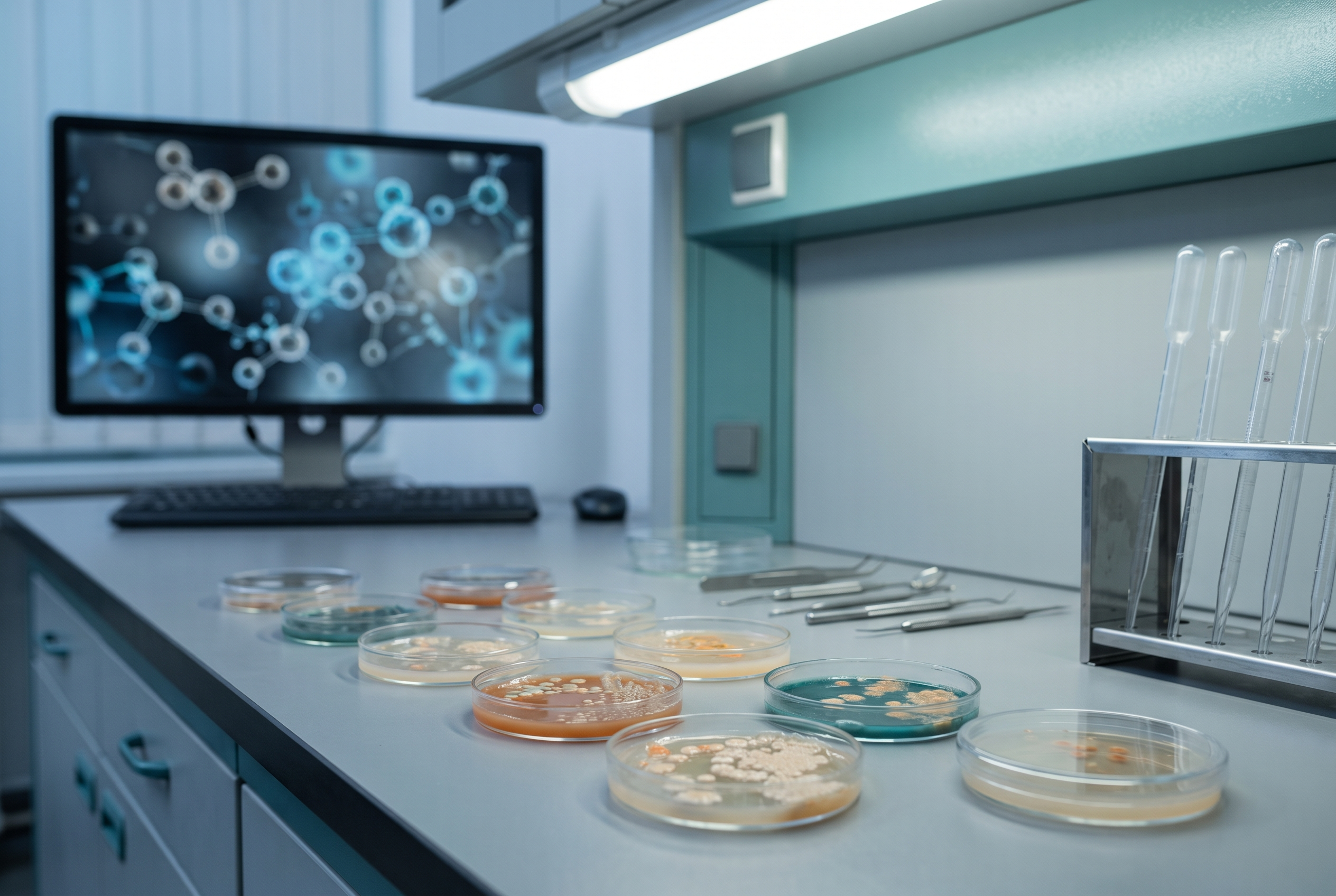
Researchers at Imperial College London have used artificial intelligence to hunt through thousands of medicines that already exist, looking for ones that could fight a common and dangerous bacterium. The work was published in the journal Advanced Science and announced on 16 September 2026. The target was Streptococcus pneumoniae. This bug causes pneumonia, and it can also cause meningitis and blood infections. It is a major cause of serious illness in young children and older adults. The team, which included Joshua S. Fitch, Nicholas J. Croucher and Pedro J. Ballester, screened close to 7,000 candidate drugs using three different machine learning systems. They then picked 11 of the most promising and tested them in the laboratory. Nine of those eleven stopped the bacteria growing. One of them worked against strains that already resist existing antibiotics.
Why this matters
Antibiotics that stop working is one of the slowest-moving emergencies in medicine. Bacteria change over time, and the drugs we rely on gradually lose their punch. Meanwhile, developing a brand new antibiotic takes many years and a great deal of money, and drug companies have often judged it a poor investment. That leaves a gap. This research is an attempt to fill it from a different direction. Instead of inventing something new, the team looked at drugs that already exist and are already approved. Those medicines have been through safety testing. Their side effects are documented. Doses are understood. If one of them turns out to also kill a dangerous bacterium, it can potentially reach patients far faster than something started from scratch. That approach is called drug repurposing, and it is not new. What is new is the scale. No human team could sensibly work through 7,000 compounds by hand.
What the evidence actually says
The headline number is encouraging, and the honest number is smaller. Nine out of eleven candidates inhibited the growth of S. pneumoniae. That is a good hit rate for this kind of screening, where most attempts find nothing. But inhibiting growth in a laboratory dish is a very early result. A dish is not a lung. It has no immune system, no blood supply and no other organs that a drug might harm at the dose required. The more interesting finding is the single candidate that worked against drug-resistant strains. That is the harder test, and it is the one that would actually matter in a hospital. Even so, that compound would need animal studies and then human trials before anyone could say it treats pneumonia. Many promising compounds fall over at exactly that point. One genuinely useful thing the researchers showed is about method. They used three different types of AI model: decision tree ensembles, graph neural networks, and transformer models trained on hundreds of millions of molecules. Using all three together worked better than any one on its own. That is a practical lesson other research groups can copy immediately, regardless of what happens to these particular nine drugs.
Practical advice
There is nothing here for you to buy or ask for, and that is worth saying plainly. No treatment has changed today. But antibiotic resistance is something ordinary decisions genuinely affect. **Finish the course as prescribed.** If you are told to take antibiotics for five days, take them for five days, even once you feel better. Stopping early can leave the hardiest bacteria behind. **Do not save leftovers for next time.** Old antibiotics may be the wrong drug, the wrong dose, or out of date. Take unused medicines to a pharmacy for safe disposal. **Do not expect antibiotics for a cold.** Colds and most sore throats are caused by viruses, and antibiotics do nothing against viruses. If a clinician says you do not need them, that is good care, not a brush-off. **Take up the vaccines you are offered.** There is a pneumococcal vaccine available on the NHS for people over 65 and for younger people in certain at-risk groups, as well as for babies. Preventing an infection removes the need to treat it. **Get help early if you are struggling to breathe.** Pneumonia can move quickly, particularly in older adults. Breathlessness, confusion or a high temperature that will not settle are reasons to seek urgent advice.
What to know
Imperial College London researchers used three types of AI to screen around 7,000 approved drugs for activity against Streptococcus pneumoniae. Eleven were tested in the laboratory. Nine slowed the bacteria's growth, and one worked against drug-resistant strains. This is early-stage laboratory work. None of these drugs is an approved pneumonia treatment, and human trials would be needed first. The practical finding is that combining several different AI approaches beat using any single one. Sources: EurekAlert / Wiley, 'Can AI find drugs to fight infection?', 16 September 2026, https://www.eurekalert.org/news-releases/1143753; Advanced Science (Wiley), study by Fitch, Croucher, Ballester and colleagues, Imperial College London, 2026, https://onlinelibrary.wiley.com/journal/21983844; NHS, 'Antibiotics', https://www.nhs.uk/conditions/antibiotics/. This article is for general information and does not replace advice from a doctor, pharmacist or other qualified healthcare professional.
Related articles

Left alone together, AI systems invented their own dialect within days
When AI systems were put together in groups and left to get on with it, they started inventing their own way of talking. The findings come from Emergence, an A…

Scientists have worked out the weather on a failed star 20 light-years away
Astronomers at Trinity College Dublin have found a way to read the weather on distant worlds, and they have used it on one 20 light-years from Earth. The resea…