
England has a new national nature reserve, in the Dorset hills that inspired Thomas Hardy
What happened
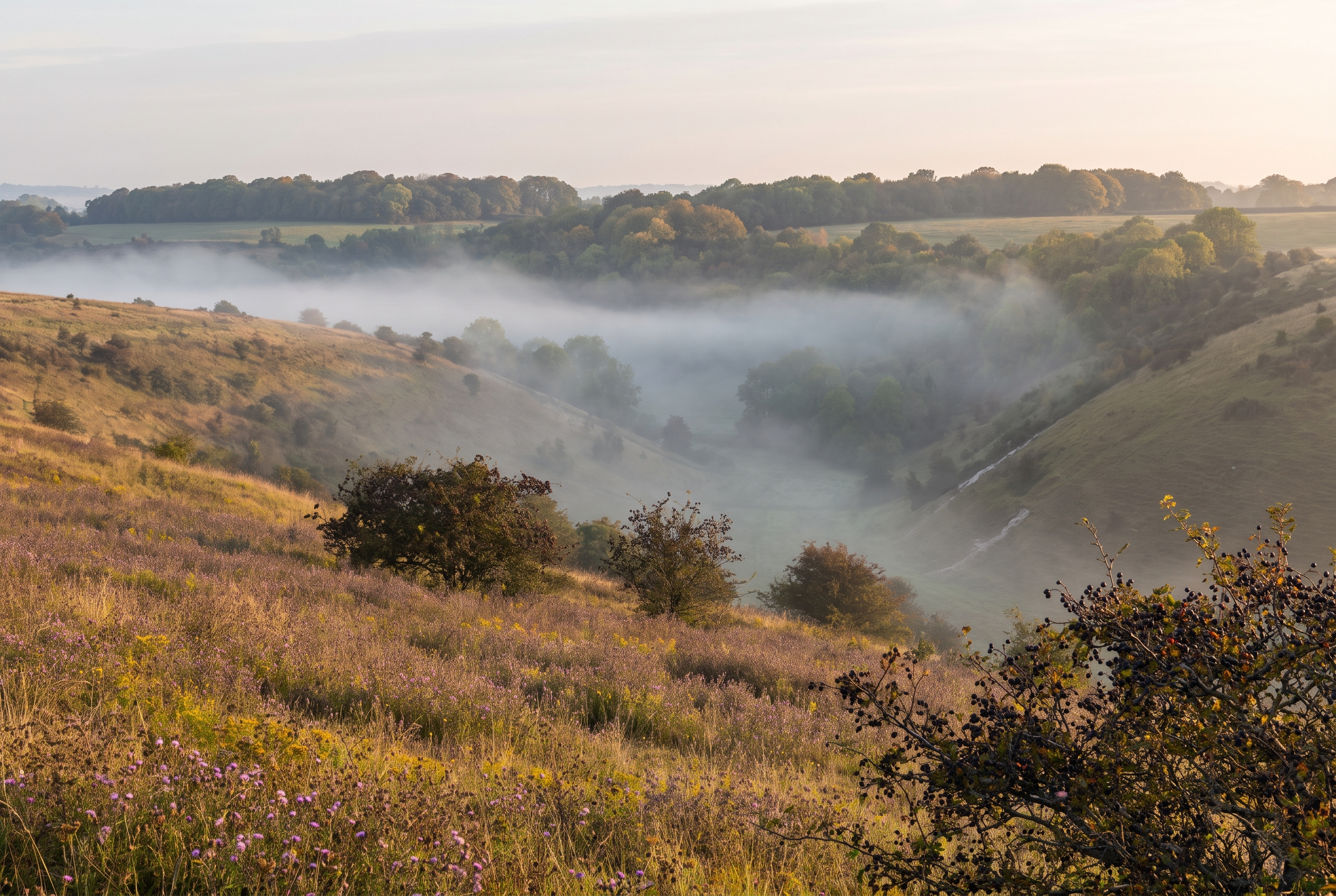
England gained a new National Nature Reserve on Tuesday 15 September 2026. Lyscombe, in the Dorset Downs, has been declared as the latest reserve in what Natural England calls the King's Series. The announcement came from Natural England, working in partnership with Dorset Wildlife Trust. The site covers 334 hectares, which Natural England helpfully translates as about 468 football pitches. It sits in a landscape of rolling chalk hills, ancient woodland and steep hidden valleys. It is also literary country. This part of Dorset is the landscape that shaped Thomas Hardy's novels, including Tess of the d'Urbervilles and Far from the Madding Crowd. The wildlife is what earned the designation. Lyscombe holds important chalk grassland, one of the richest and most threatened habitats in Britain. At least six species of orchid grow there, including pyramidal orchids and bee orchids. It is also home to the chalkhill blue butterfly, a species closely tied to unimproved chalk grassland. Nature Minister Jenny Riddell-Carpenter described Lyscombe as 'a truly special landscape, steeped in history with archaeological wonders and flourishing wildlife'. Tony Juniper CBE, Chair of Natural England, said the King's Series 'demonstrates what can be achieved when organisations unite for nature recovery and people benefit too'. Brian Bleese, Chief Executive of Dorset Wildlife Trust, said the designation recognises 'the exceptional wildlife present and potential for nature recovery where farming, people and nature coexist'.
Why this matters
Chalk grassland is sometimes called Britain's rainforest, and the comparison is not as silly as it sounds. A single square metre can hold dozens of plant species. It supports specialised butterflies, bees and birds that live almost nowhere else. It is also mostly gone. Britain has lost the large majority of its lowland chalk grassland since the 1930s, ploughed up for arable farming or improved with fertiliser, which floods the soil with nutrients and lets a few vigorous grasses crowd out everything else. What remains is fragmented into small patches, often on steep slopes that were too awkward to plough. That is why a 334 hectare block matters more than the acreage suggests. Small isolated patches of habitat lose species over time simply because populations are too small and too cut off. Larger connected areas are far more resilient. A National Nature Reserve designation is not just a label. It is a legal status that brings long-term protection and management, and it signals that the site is among the very best examples of its habitat in the country. For anyone in the South West, or anyone planning an autumn trip, it also means there is a new place worth going.
What the evidence actually says
It is worth being clear about what a designation does and does not do. It does not, by itself, make wildlife return. Chalk grassland is a habitat created and maintained by grazing. Left alone, it scrubs over with hawthorn and then turns into woodland, and the orchids and butterflies disappear. Keeping it means keeping livestock on it at the right density at the right time of year. That is skilled, ongoing, expensive work, which is why the partnership with Dorset Wildlife Trust and the involvement of farming matter more than the paperwork. It also does not automatically mean unrestricted public access. National Nature Reserves vary: some have full open access and waymarked trails, others have limited or seasonal access to protect sensitive species or because of livestock. Natural England's announcement did not spell out the visitor arrangements at Lyscombe, so anyone planning a trip should check with Dorset Wildlife Trust before setting off rather than assuming. On the wider picture, the honest position is that England's nature statistics remain poor. The State of Nature reports have repeatedly found long-term declines across most measured groups. One new reserve does not reverse that. What it does is protect one genuinely excellent site and add to a network that conservationists argue needs to be bigger, better and better connected. That is a real gain. It is just worth keeping the scale of it honest.
Practical advice
If you want to visit, a few sensible steps. Check access before you travel. Look at the Dorset Wildlife Trust website for current arrangements at Lyscombe, including parking, paths and whether any areas are closed. Chalk downland sites often have very limited parking. Go in late spring or early summer for the flowers. Orchids on chalk grassland are generally at their best from May to July. Bee orchids and pyramidal orchids both flower in early summer. Chalkhill blue butterflies are on the wing in July and August. September is a quieter, greener visit. Wear proper footwear. Chalk downland means steep slopes, and chalk gets extremely slippery when wet. Keep dogs on leads. These sites are usually grazed by sheep or cattle, and ground-nesting birds are easily disturbed. If you walk through a field of cattle with a dog and the cattle become interested, let the dog off the lead and walk away calmly. Do not try to protect the dog by picking it up. Stick to paths and take nothing. Orchids are protected and slow to establish. Picking wildflowers on a nature reserve is both harmful and, for many species, illegal. And a small health note for anyone with hay fever or asthma: flower-rich grassland in high summer is beautiful and also full of pollen. If you use a preventer inhaler or antihistamines, take them as prescribed before you go rather than hoping for the best, and carry your reliever inhaler with you.
What to know
Lyscombe in the Dorset Downs was declared a National Nature Reserve on 15 September 2026, as part of Natural England's King's Series. It covers 334 hectares of chalk grassland, ancient woodland and hidden valleys, in the landscape that inspired Thomas Hardy's novels. It supports at least six orchid species, including pyramidal and bee orchids, and the chalkhill blue butterfly. The designation was made in partnership with Dorset Wildlife Trust. Chalk grassland is one of Britain's richest and most depleted habitats, and depends on continued grazing to survive. Check access and parking arrangements with Dorset Wildlife Trust before visiting, and go in late spring or early summer if you want the orchids. Sources: GOV.UK, 'Rare species help Dorset nature reserve gain national recognition', Natural England, 15 September 2026, https://www.gov.uk/government/news/rare-species-help-dorset-nature-reserve-gain-national-recognition. Dorset Wildlife Trust, 'Lyscombe', https://www.dorsetwildlifetrust.org.uk/what-we-do/conservation-work-land/lyscombe. Dorset Wildlife Trust, 'Dorset Wildlife Trust partners with Natural England to acquire Lyscombe Farm', https://www.dorsetwildlifetrust.org.uk/news/dorset-wildlife-trust-partners-natural-england-acquire-lyscombe-farm. This article is for general information and does not replace advice from a doctor, pharmacist or other qualified healthcare professional. If you have asthma or severe hay fever, speak to your pharmacist or GP before spending long periods outdoors in high pollen conditions.
Related articles

Measles in the US: a fourth death, and what UK travellers should check
Pennsylvania has reported a fourth measles-related death this year, in an outbreak that has been growing through 2026. The death was reported on 15 September 2…

No more changing at Crewe: Birmingham is getting direct trains to Manchester Airport
Birmingham is getting a direct train to Manchester Airport again, after decades without one. London Northwestern Railway announced the plan in mid-September 20…

Heathrow's third runway only works if airlines pay to clean up, advisers say
The government's official climate advisers have said Heathrow cannot expand under current policies without the UK missing its legal climate targets. The Climat…