
Over 200 Britons are in foreign jails over cannabis from Thailand. Most were recruited online
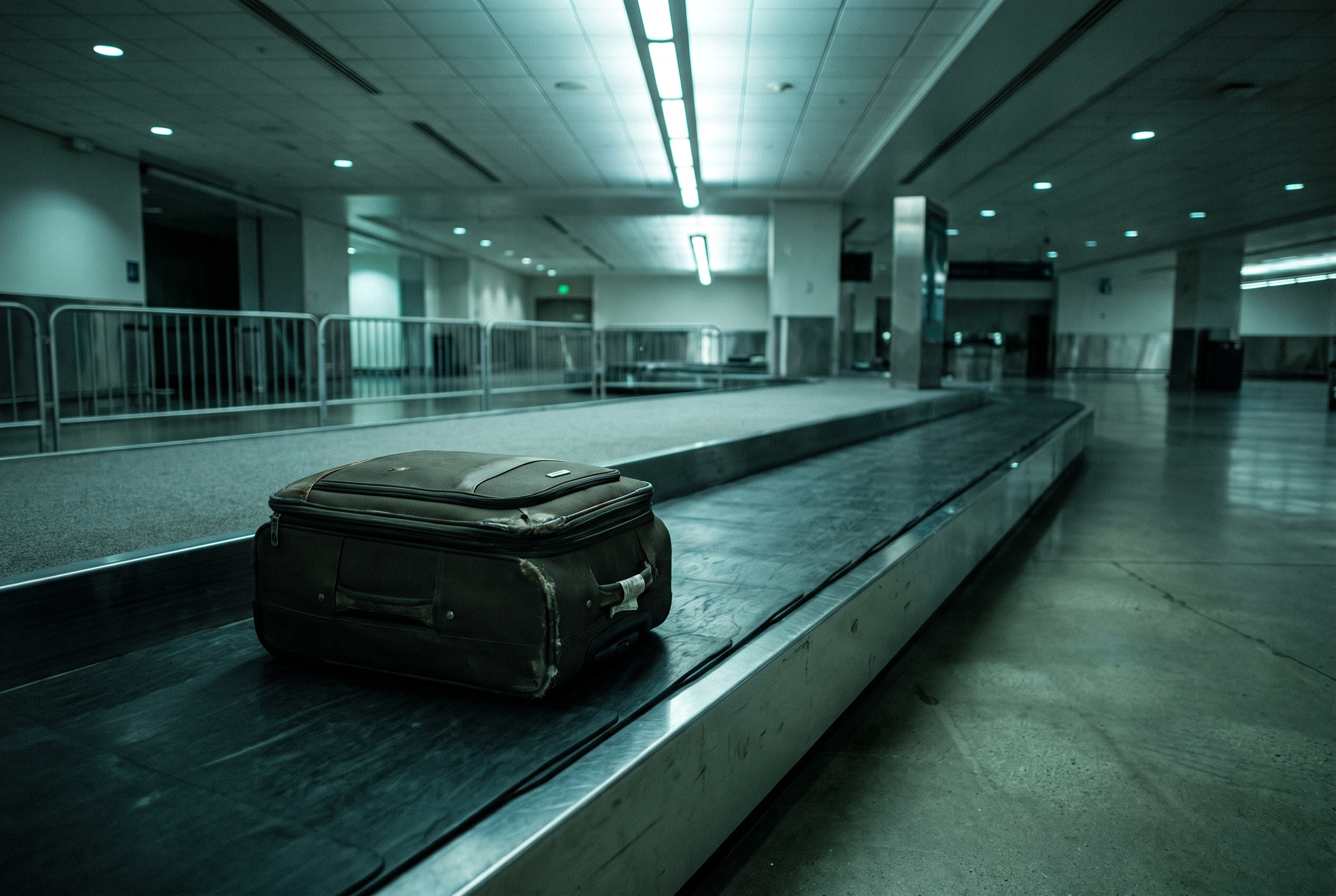
What happened
The Foreign, Commonwealth and Development Office issued a warning on 14 September 2026 about a sharp rise in young British travellers being arrested abroad for smuggling drugs. The figures are stark. Consular cases involving British nationals arrested overseas for drug smuggling rose from just over 80 in 2023 to more than 340 in 2025. That is more than four times as many in two years. There have already been more than 160 cases in 2026. More than 200 British nationals are currently detained abroad in connection with cannabis originating from Thailand. Around 60 per cent of those affected since 2024 were aged between 16 and 30. The rise has been driven by arrests in South East Asia, including Thailand, Malaysia, Cambodia and Laos. UK Border Force figures give a sense of the scale. Between June and July 2026 alone, Border Force detected 7.7 tonnes of cannabis carried by air passengers, of which 6.5 tonnes came from Thailand. Stephen Doughty MP, the Minister for Consular and Crisis, said: 'Far too many British nationals are being lured into drug smuggling schemes by criminal gangs that promise free travel or a quick way to make cash.' The National Crime Agency has also warned that Thailand has introduced new fines for cannabis smuggling, with offenders facing Thai customs charges of around 30,000 Baht, roughly £680, per kilogram, and up to two years in prison.
Why this matters
The people being caught are not, for the most part, hardened criminals. They are largely young, often in their late teens or twenties, and they have usually been recruited through social media. The pitch is designed to sound harmless. A free holiday. Flights and a hotel paid for. A few hundred pounds for carrying a suitcase home. Sometimes it is dressed up as a modelling trip or a courier job. The person doing the asking may be someone the traveller knows, or a contact who seems friendly and legitimate. What the recruiter does not explain is the law at the other end. Penalties for drug smuggling in parts of South East Asia are severe in a way that has no equivalent in the UK. The FCDO's Travel Aware campaign warns that penalties abroad can include decades in prison, life sentences, corporal punishment such as whipping, and in some countries the death penalty. And there is a hard truth the FCDO repeats every time: the British government cannot get you out. Consular staff can visit you, contact your family and provide a list of local lawyers. They cannot interfere in another country's legal system, cannot get you released, and cannot get you moved to a British prison on request. If you are convicted abroad, you serve the sentence under that country's law. The survey work behind the campaign suggests why people get caught out. Around a third of young travellers surveyed did not recognise that carrying someone else's luggage was risky at all. Thirty per cent said they would consider travelling with items whose legality they were not sure about.
What the evidence actually says
There is an important detail behind these numbers that explains a lot of the confusion. Cannabis was decriminalised for various uses in Thailand in 2022, and for a while it was sold openly in shops in tourist areas. That created a widespread and understandable impression among young travellers that cannabis is simply legal there and therefore not a serious matter. That impression is wrong in two ways. First, Thailand's own rules have been tightened considerably since, and possession and sale are more restricted than they were at the peak. The new customs fines announced by Thai authorities are part of that. Second, and far more importantly, the legal status of cannabis in the country you bought it in has no bearing whatsoever on the crime of exporting it. Taking cannabis out of Thailand is a smuggling offence in Thailand. Bringing it into the UK is a smuggling offence here. And carrying it through a transit airport in a third country, Malaysia or Singapore for instance, exposes you to that country's law, which may be far harsher than either. The gangs know this. That is precisely why they recruit tourists rather than moving the drugs themselves. A young British traveller with a clean passport and a plausible holiday story is less likely to be stopped, and if they are stopped, it is the traveller who goes to prison, not the organiser. It is also worth noting what 'carrying for someone else' means legally. Claiming you did not know what was in the bag is a defence you have to prove, in a foreign court, in a foreign language. It very often fails.
Practical advice
The rules here are simple and absolute. They are worth going through with any young person travelling without you. Never carry anything for anyone else. Not a bag, not a package, not a 'gift for my cousin', not a sealed box from someone you met on the trip. Not even from a friend. This is the single rule that would prevent most of these cases. Pack your own bags and keep them with you. Do not let anyone else put anything in your luggage. Use a lock. If your bag has been out of your sight, check it before you check in. Be suspicious of free travel. A stranger or loose acquaintance offering paid flights and accommodation in exchange for a small favour is not being generous. That is the recruitment script. Understand that local legality is irrelevant to export. Something you can legally buy on holiday can still put you in prison for taking it home, or through a transit airport. Check the FCDO travel advice for every country you will set foot in, including places you are only changing planes. Laws on drugs, medicines and even some everyday items vary enormously. On prescription medicines, a related point worth knowing: some medicines that are entirely routine in the UK, including certain strong painkillers, sleeping tablets and ADHD medicines, are controlled or banned in other countries. Carry them in their original pharmacy packaging, keep a copy of your prescription or a letter from your GP, and check the embassy's rules before you fly. If you or someone you know is approached with an offer like this, you can report it anonymously to Crimestoppers on 0800 555 111.
What to know
The FCDO warned on 14 September 2026 that British nationals arrested abroad for drug smuggling have more than quadrupled, from just over 80 cases in 2023 to more than 340 in 2025, with over 160 already in 2026. More than 200 Britons are currently detained abroad over cannabis linked to Thailand. Around 60 per cent of those affected since 2024 were aged 16 to 30. Border Force detected 7.7 tonnes of cannabis carried by air passengers in June and July 2026 alone, 6.5 tonnes of it from Thailand. Recruitment happens mainly online, offering free travel or quick money. Penalties abroad can include decades in prison, life sentences, whipping and in some countries the death penalty. The British government cannot get you out of a foreign prison. The one rule that prevents almost all of this: never carry anything for anyone else. Sources: GOV.UK, 'Young Brits recruited as drug mules as overseas drug smuggling arrests quadruple in three years', Foreign, Commonwealth & Development Office and Stephen Doughty MP, 14 September 2026, https://www.gov.uk/government/news/young-brits-recruited-as-drug-mules-as-overseas-drug-smuggling-arrests-quadruple-in-three-years. National Crime Agency, 'Huge new fines for Brit cannabis smugglers in Thailand or up to two years in prison', https://www.nationalcrimeagency.gov.uk/news/huge-new-fines-for-brit-cannabis-smugglers-in-thailand-or-up-to-two-years-in-prison. FCDO foreign travel advice, https://www.gov.uk/foreign-travel-advice. This article is for general information and does not replace advice from a doctor, pharmacist or other qualified healthcare professional. If you take prescription medicines, check the rules of your destination with its embassy before you travel, and speak to your pharmacist about carrying them safely.
Related articles
Measles in the US: a fourth death, and what UK travellers should check
Pennsylvania has reported a fourth measles-related death this year, in an outbreak that has been growing through 2026. The death was reported on 15 September 2…
No more changing at Crewe: Birmingham is getting direct trains to Manchester Airport
Birmingham is getting a direct train to Manchester Airport again, after decades without one. London Northwestern Railway announced the plan in mid-September 20…
Heathrow's third runway only works if airlines pay to clean up, advisers say
The government's official climate advisers have said Heathrow cannot expand under current policies without the UK missing its legal climate targets. The Climat…