
School dinners are being rewritten: no fruit juice, more fibre, and a governor in charge of food
What happened
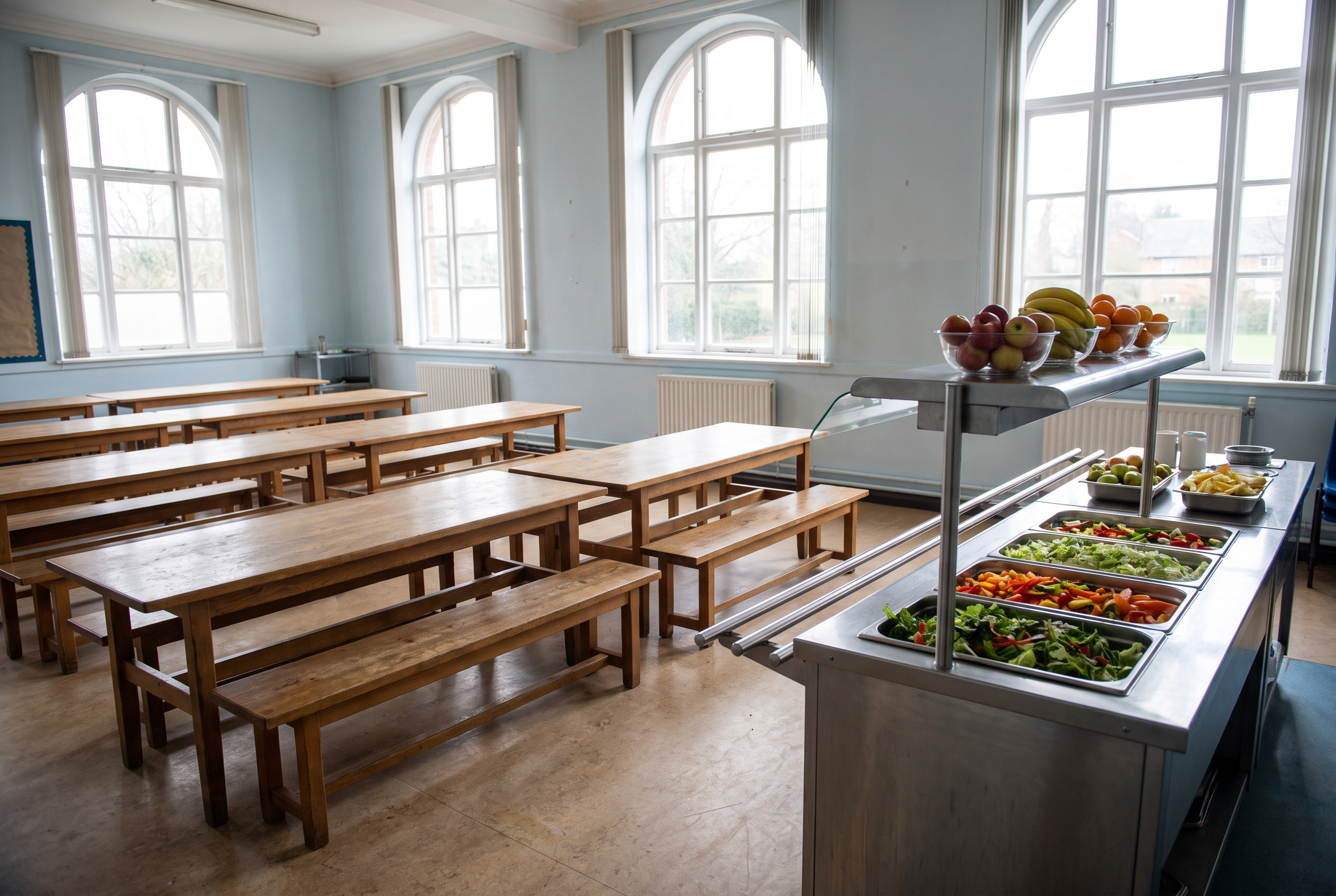
On 14 September 2026 the government announced the biggest change to school food in England for more than a decade. The School Food Standards are the legal rules setting out what schools must and must not serve. They had not been properly updated in over ten years. The new version follows a public consultation. The headline changes are these. Every main meal must come with vegetables or salad. Every dessert must come with fruit, and primary schools must have at least one day a week where the only dessert on offer is fruit. Starchy foods must shift towards higher fibre. That means wholegrain or higher-fibre bread, and at least half of all rice and pasta served must be wholewheat or higher fibre. Fruit juice and fruit-juice-based drinks will no longer be allowed, because of how much they add to children's free sugar intake. Schools Week, which has gone through the detail, reports that deep-fried foods will be banned and that honey is off the breakfast menu. There are two changes that are not about food at all. Schools will have to publish their food policy and their menus online, and every school will have to nominate a school food governor to take responsibility for it. The Food Standards Agency will develop the monitoring system. Enforcement is expected to begin in September 2027.
Why this matters
The government set out the reasons bluntly. One in three children in England now leave primary school overweight or obese. Tooth decay, driven largely by sugar, is the leading cause of hospital admission for children aged five to nine. Both of those are largely preventable, and both track closely with family income. For a lot of children, school lunch is the most substantial and most reliable meal of their day. Around three million children from families on Universal Credit now qualify for free school meals following the recent expansion of eligibility. What is on that plate is not a minor detail for those families. There is also a straightforward learning argument. Children who are hungry, or who have eaten a lunch that spikes and then drops their blood sugar, do not concentrate well through the afternoon. The government's stated aim is meals that keep children 'focused, energised and ready to learn'. It is worth noting that this has been asked for. Government surveys of parents found 38 per cent wanted limits on fatty foods, 36 per cent wanted more fruit and vegetables, and 33 per cent wanted less sugary food. The reforms have been publicly backed by chef Jamie Oliver, actor Dame Emma Thompson, the Royal College of Paediatrics and Child Health, the Food Foundation and School Food Matters.
What the evidence actually says
A few things are worth understanding before anyone expects transformation next term. This is not happening now. Implementation is proposed from September 2027 for primary schools, with most secondary requirements starting then too, and some elements phased in fully by September 2028. Enforcement begins in September 2027. Your child's lunch this week is governed by the old rules. The fruit juice decision may surprise people, so it is worth explaining. A glass of orange juice contains roughly the same amount of sugar as a glass of cola. The difference is that it also contains some vitamins. But because the fibre has been removed and the sugar is released from the fruit's cell structure, it counts as 'free sugar' in the same way table sugar does, and it behaves similarly on teeth. Whole fruit is different, because the fibre is still there. This is why UK dietary guidance has long limited juice to a small glass a day, with meals. The fibre changes are on firm ground. Most children and adults in the UK eat well below the recommended amount of fibre, and higher fibre foods are more filling, better for gut health and better for steady energy. The part that will decide whether this works, though, is money and kitchens. Standards on paper are not the same as food on plates. Schools have to be able to afford the ingredients and have staff who can cook them. The government says it has tested the standards with schools and caterers and will provide training, resources and guidance. Whether that is enough is the question caterers are asking. And there is a simple practical truth about school food: children have to actually eat it. A lunch that is nutritionally perfect and ends up in the bin helps nobody. Example meals published alongside the announcement, such as sweet chilli stir fry, lasagne and curries, suggest that point has been taken.
Practical advice
For parents, a few things are worth doing. Check whether your child is eligible for free school meals. Eligibility now covers every child in a household receiving Universal Credit in England. Many families who qualify do not claim, often because they assume they earn too much. It is worth checking with your school or council even if you think you are not eligible, because registering also brings extra funding to the school. When the new rules arrive, use the transparency. Schools will have to publish their menus and food policy online. That gives you something concrete to look at, and something specific to raise if it does not match what your child describes. Find out who your school food governor is. From the point these rules take effect, there will be a named person responsible. If lunches are poor, that is who to speak to, alongside the head. If your child has a food allergy or intolerance, keep that conversation active. Every school in England now needs an allergy policy, and changes to menus are exactly the moment when mistakes can creep in. And if you pack lunches rather than buying them, the same principles apply and cost nothing: a vegetable or salad item, whole fruit rather than juice, wholemeal bread, and water or milk to drink.
What to know
On 14 September 2026 the government published updated School Food Standards for England, the first major overhaul in more than a decade. Main meals must include vegetables or salad, desserts must come with fruit, and primary schools must have a weekly fruit-only dessert day. Fruit juice and juice-based drinks will no longer be permitted. Bread, rice and pasta must shift towards wholegrain and higher fibre options. Schools must publish menus and food policies online and nominate a school food governor. The Food Standards Agency will monitor compliance, with enforcement from September 2027 and some elements phased in by September 2028. Sources: GOV.UK, 'Healthier school dinners as government delivers major reforms', Department for Education, 14 September 2026, https://www.gov.uk/government/news/healthier-school-dinners-as-government-delivers-major-reforms. Schools Week, 'New school food standards: 13 key changes you need to know', 14 September 2026, https://schoolsweek.co.uk/. Public Sector Catering, 'Industry welcomes healthier school dinners as Government delivers major reforms', September 2026, https://www.publicsectorcatering.co.uk/news/industry-welcomes-healthier-school-dinners-government-delivers-major-reforms. This article is for general information and does not replace advice from a doctor, pharmacist, dietitian or other qualified healthcare professional. If your child has a food allergy or a medical condition affecting their diet, speak to your school and your healthcare team.
Related articles
£54.53: what parents actually spent on school uniform this year
Parents spent noticeably less on school uniform this year, and the figures show how they did it. Average spend per shopper on school uniform was £54.53, accord…
Twenty hours outdoors: the new natural history GCSE has a teacher problem
England is getting a new GCSE in natural history, and experts have raised concerns about whether schools will be able to staff it. The qualification has been i…

Locked away all day: more secondaries are putting pupils' phones in pouches
Secondary schools in England are increasingly locking pupils' phones away for the school day, and the trend is accelerating. The reason is a change in the law.…