
From today, your phone can prove your age at the bar
What happened
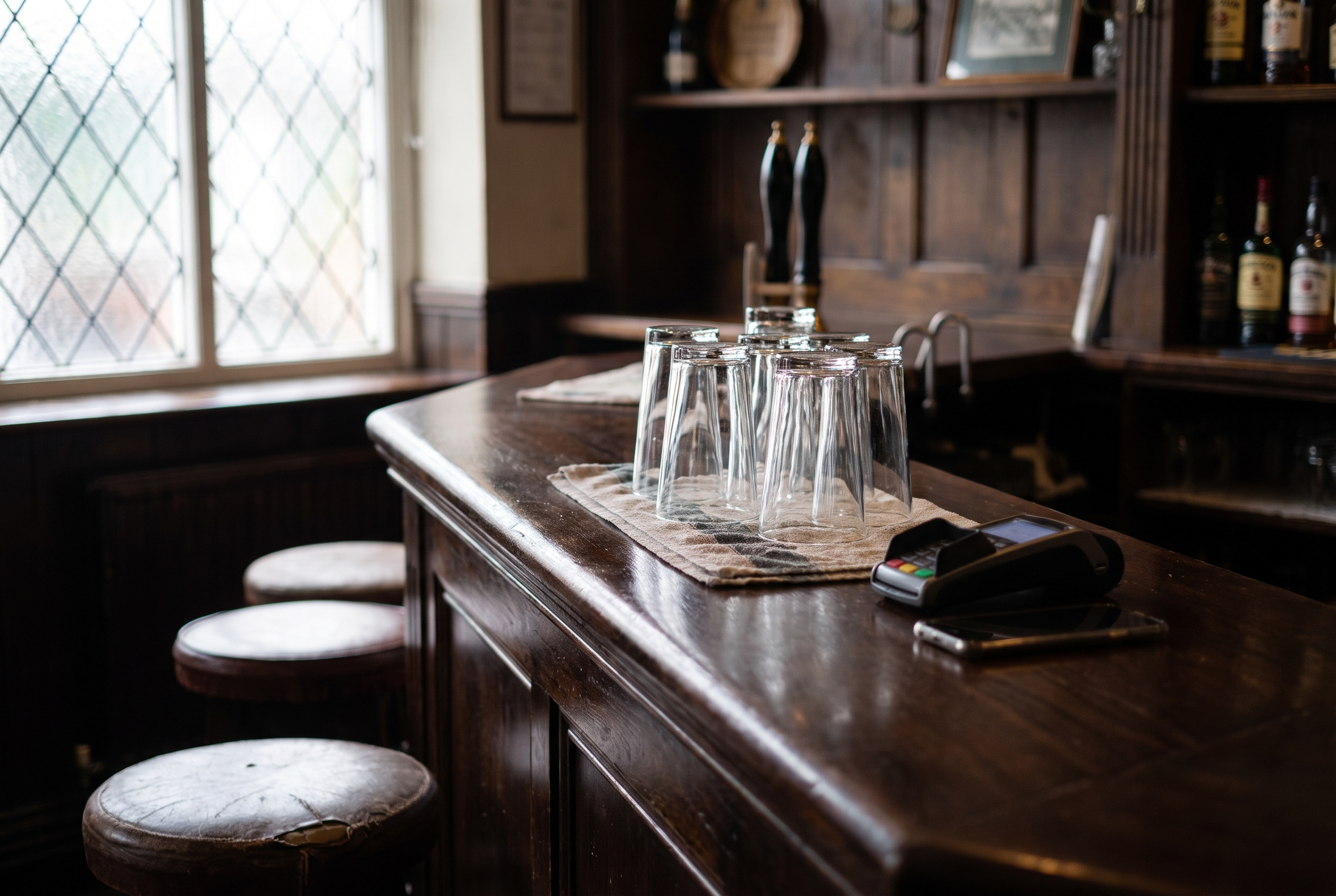
From today, Tuesday 15 September 2026, pubs, bars, restaurants, music venues and other licensed premises in England and Wales can accept digital proof of age when they sell alcohol. Until now, if you looked under 25 and wanted a drink, you needed a physical document: a passport, a driving licence or an approved photo ID card. From today a venue can choose to accept a certified app on your phone instead. In practice that usually means showing a QR code or tapping your phone against a reader. The change comes through the Licensing Act 2003 (Mandatory Licensing Conditions) (Amendment) Order 2026, which was approved by both the House of Commons and the House of Lords on 8 September 2026. The announcement came from the Department for Digital, Culture, Media and Sport, the Home Office and the Office for Digital Identities and Attributes. Stephanie Peacock, the Digital Government Minister, said: 'This groundbreaking change means you needn't carry physical ID or share sensitive personal information just to prove your age.' Two important limits are worth noting straight away. Businesses do not have to do this. It is entirely their choice, and physical ID checks remain perfectly valid. And the legal drinking age has not changed, nor have the rules about not serving under-18s.
Why this matters
For most people this is a small convenience. You go out without your wallet, and your phone is enough. But there is a genuine privacy point underneath it, and it is the more interesting part. When you hand over a driving licence to prove you are over 18, you also hand over your full name, your date of birth, your address and a photograph. The person behind the bar does not need any of that. They need one fact: is this person old enough? A properly built digital proof of age can answer just that question. It confirms you are over 18 without revealing your home address to a stranger in a crowded pub, and without you having to carry a passport into a venue where it might get lost. There is also a practical safety angle. Losing a passport or driving licence on a night out is an expensive nuisance, and a lost driving licence with your address on it is a small identity theft risk. Leaving it at home removes that. Allen Simpson, Chief Executive of UKHospitality, welcomed the change, saying digital proof of age 'provides greater flexibility and convenience for customers and businesses'.
What the evidence actually says
Any scheme like this stands or falls on the safeguards, so they are worth understanding. Not just any app will do. A venue can only accept digital proof of age from a certified Digital Verification Service that appears on a statutory register published on GOV.UK. Those services have to meet the standards set out in the UK digital verification services trust framework. Screenshotting a photo of your passport does not count, and neither does an app that has not been certified. Yoti is one example of a provider already used for age checks in other settings, such as buying age-restricted cinema tickets. Julian David OBE, Chief Executive of techUK, described the change as 'a practical example' of the value of robust digital identity services 'while maintaining security and privacy standards'. A few honest limits. This is not a national identity card, and it is not compulsory for anyone. It applies to alcohol sales at licensed premises in England and Wales; Scotland and Northern Ireland have their own licensing law. And there is no guarantee that the pub you walk into tomorrow will have set it up. Many will not for a while, because staff need training and tills or readers may need updating. It is also worth being realistic about phones. A flat battery is now a reason you cannot buy a drink. Until digital ID is widespread and reliable, carrying physical ID as well is the sensible habit.
Practical advice
If you want to use digital proof of age, check the provider first. Look for services listed on the GOV.UK register of certified digital verification services. If an app is not on that register, a venue cannot lawfully rely on it, and you should be wary of handing your passport details to it. Set it up before you need it. Verification usually involves photographing an identity document and taking a selfie, and it may take a little while to be approved. Doing that at the door of a pub at nine on a Friday evening will not go well. Keep physical ID with you for now. Not every venue will accept digital proof yet, and if your phone dies you have no fallback. Be careful who you show. Show the app to the member of staff. Do not hand your unlocked phone over, and never send a screenshot of your ID to anyone who asks for it by message. Legitimate age checks happen at the point of sale, not over WhatsApp. If you are a parent of a teenager, this is worth a short conversation. A digital ID is easier to carry, which is good, but it also lives on a device that gets lent to friends. The rules on buying alcohol under 18 have not changed, and nor have the penalties. And if you run a licensed business, remember this is optional. If you do adopt it, staff training matters as much as the technology: the person at the door still has to make the judgement call.
What to know
From 15 September 2026, licensed premises in England and Wales may accept certified digital proof of age for alcohol sales. The change was made under the Licensing Act 2003 (Mandatory Licensing Conditions) (Amendment) Order 2026, approved by Parliament on 8 September 2026. It is voluntary for businesses, and physical ID remains completely valid. Only certified Digital Verification Services listed on the GOV.UK statutory register can be used. The legal drinking age and the rules on serving under-18s are unchanged. For now, carrying physical ID as a backup is still the practical choice. Sources: GOV.UK, 'New rules pave the way for businesses to adopt digital proof of age for alcohol sales', Department for Digital, Culture, Media and Sport, Home Office and Office for Digital Identities and Attributes, 15 September 2026, https://www.gov.uk/government/news/new-rules-pave-the-way-for-businesses-to-adopt-digital-proof-of-age-for-alcohol-sales. The Drinks Business, 'Digital proof of age to be accepted for alcohol sales in England and Wales', 2026, https://www.thedrinksbusiness.com/2026/07/digital-id-to-be-accepted-for-uk-alcohol-sales/. Identity Week, 'Alcohol licensing Act allows digital age checks in England and Wales', https://identityweek.net/alcohol-licensing-act-allows-digital-age-checks-in-england-and-wales/. This article is for general information and does not replace advice from a doctor, pharmacist or other qualified healthcare professional. If you are worried about your drinking, your GP or pharmacist can help, and support is available through the NHS.
Related articles

Do you feel guilty calling in sick? Almost everyone does, and here is why
The BBC looked on 15 September 2026 at a question most of us have asked ourselves: why does calling in sick feel so uncomfortable? As many as half of people re…

Watch, then have a go: chimpanzee mothers are teaching their young to use tools
Researchers studying wild chimpanzees in Senegal have recorded adults deliberately teaching youngsters how to use tools. The study was published in the journal…

Nine new sponges, and hundreds still unnamed: a glimpse of Alaska's deep sea
Scientists have described nine species of deep-sea sponge that had never been formally named before. All nine were found off the coast of Alaska. The discovery…