
Wildfire smoke is quietly thinning out birdsong, a 15-year study finds
What happened
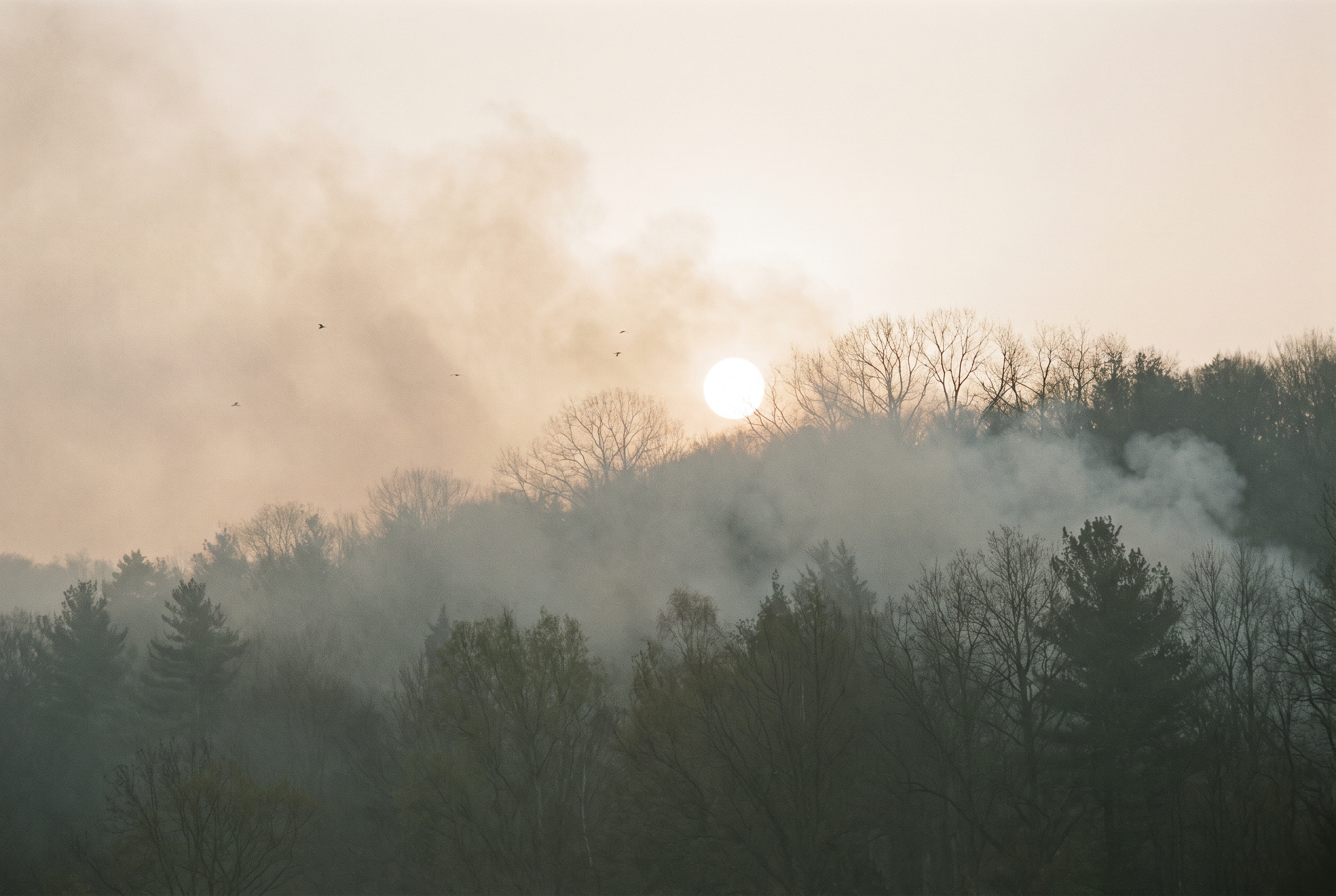
We already knew wildfires kill birds by destroying the places they live. A new study asked a different question: what does the smoke on its own do, in places the fire never reached? The answer is that it thins them out. Sarah Meier at ETH Zurich and Eric Strobl at the University of Bern published their findings on 11 September 2026 in the Journal of Environmental Economics and Management. They used 15 years of bird survey data, from 2008 to 2022, gathered along roughly 2,800 survey routes across the United States. They matched this against measurements of the fine particle pollution produced by wildfire smoke. The scale of the data is what makes the study unusual. Bird surveys of this kind involve volunteers stopping at fixed points along a route and recording every bird they see or hear. Thousands of routes, repeated every year for 15 years, add up to an enormous picture. When smoke exposure rose from average levels to substantially higher ones, the number of bird species recorded fell by around 3 per cent. On a typical route where 55 species would normally be counted, that is a loss of one or two species. The most heavily affected sites saw much steeper declines. The effect also lingered. Bird numbers were still reduced in the following breeding season, not just during the smoky period itself. And the researchers separated smoke from other explanations, accounting for weather, habitat destruction and migration patterns, so this is not simply the fire damage showing up under another name. Meier's warning was measured: "even a small decline can, in the worst-case scenario, cause an ecosystem to become unbalanced".
Why this matters
Three per cent sounds small. It is worth thinking about why the researchers did not treat it that way. Birds do jobs. They spread seeds, they pollinate plants, and they eat very large quantities of insects, including the ones that damage crops and gardens. When species disappear from an area, those jobs do not simply get redistributed, because different birds do different things. Losing one or two species from a wood is not the same as losing 3 per cent of the birdsong evenly. The lasting effect into the next breeding season is the part that should give most pause. It suggests smoke is not just making birds temporarily quieter or harder to spot. Something is affecting whether they survive, whether they breed, or whether they return. There is a human parallel here that is hard to miss. Wildfire smoke is already known to harm human lungs and hearts, and the particles involved are the same ones. Birds have famously sensitive respiratory systems. Canaries were once carried into coal mines for precisely that reason. This is also a study about a problem that is growing rather than shrinking. Smoke travels enormous distances. Canadian wildfire smoke has reached the UK in recent years, and smoke from fires in southern Europe regularly drifts north. A study of American routes is not only about America.
What the evidence actually says
The design of this study is its main strength. Fifteen years, 2,800 routes, and a deliberate effort to separate smoke from everything else that could explain the pattern. That last part matters most. The obvious objection to any finding like this is that fires destroy habitat, so of course birds decline. The researchers specifically isolated smoke exposure from habitat destruction, from weather and from migration behaviour. That is what makes the result interesting rather than obvious. The honest limits are these. This is observational data, not an experiment. Nobody exposed birds to smoke and watched what happened. Statistical methods can strip out known confounding factors, but there is always a possibility that something unmeasured is doing part of the work. The study also cannot say why birds decline. It measures the pattern, not the mechanism. The birds might be dying, or breeding less successfully, or moving away, or singing less so that surveyors record fewer of them. Those have very different implications, and untangling them will take different research. It is US data. The species, the fire seasons and the landscapes are American. The general principle, that smoke harms birds away from the fire itself, is likely to travel. The exact figure may not. Finally, the study was published in an economics journal, which occasionally surprises people. That is normal for work of this kind: the field of environmental economics specialises in measuring the real costs of pollution using large datasets, and its statistical methods are well suited to separating one cause from many.
Practical advice
**If you are somewhere smoky, take it seriously for yourself too.** The fine particles that affect birds also affect people, especially anyone with asthma, COPD or heart disease. Keep windows closed, limit hard exercise outdoors, and follow local air quality alerts. In the UK, the Defra air quality index gives daily readings by area. **Keep your inhalers to hand in poor air quality.** If you have asthma and air pollution is high, this is exactly the situation preventer inhalers are for. Do not wait until you are wheezing to start using them properly. **Help the birds where you live.** Fresh water in a shallow dish, left out and cleaned regularly, matters more than most people realise, particularly in dry or smoky spells. So does leaving some of the garden untidy, since insects live in the mess and birds eat the insects. **Consider taking part in a bird survey.** The research in this study exists only because ordinary people spent years counting birds along the same routes. In the UK, the British Trust for Ornithology runs the Breeding Bird Survey, and the RSPB's Big Garden Birdwatch takes an hour in January. Both produce data scientists genuinely use. **Do not panic about UK birdsong.** This study is about heavy smoke exposure in a country with a severe wildfire season. UK bird declines have their own causes, mainly habitat loss and changes in farming.
What to know
Researchers matched 15 years of bird survey data from around 2,800 routes across the United States with measurements of wildfire smoke pollution. Where smoke exposure rose well above average, species counts fell by around 3 per cent, or one to two species on a typical route, and the effect carried into the following breeding season. The most exposed sites fared considerably worse. The analysis separated smoke from habitat loss, weather and migration. It is observational work, and it cannot yet say whether the birds are dying, failing to breed or simply leaving. But it makes a case that has been hard to demonstrate before: the harm from a wildfire does not stop where the flames stop. The same particles harm human lungs. If your air turns hazy, that advice applies to you as much as to the birds. Sources: EurekAlert / ETH Zurich, "Forest fire smoke reduces bird diversity", 14 September 2026, https://www.eurekalert.org/news-releases/1143642 ; Journal of Environmental Economics and Management, Meier S and Strobl E, Volume 139, article 103379, 11 September 2026, https://doi.org/10.1016/j.jeem.2026.103379 ; Defra UK Air Information Resource, daily air quality index, https://uk-air.defra.gov.uk/ This article is for general information and does not replace advice from a doctor, pharmacist or other qualified healthcare professional. If poor air quality worsens your breathing, follow your asthma or COPD action plan and seek medical help if symptoms do not settle.
Related articles

Do you feel guilty calling in sick? Almost everyone does, and here is why
The BBC looked on 15 September 2026 at a question most of us have asked ourselves: why does calling in sick feel so uncomfortable? As many as half of people re…
Watch, then have a go: chimpanzee mothers are teaching their young to use tools
Researchers studying wild chimpanzees in Senegal have recorded adults deliberately teaching youngsters how to use tools. The study was published in the journal…
Nine new sponges, and hundreds still unnamed: a glimpse of Alaska's deep sea
Scientists have described nine species of deep-sea sponge that had never been formally named before. All nine were found off the coast of Alaska. The discovery…