
Nepal travel advice updated: what trekkers and visitors need to check now
What happened
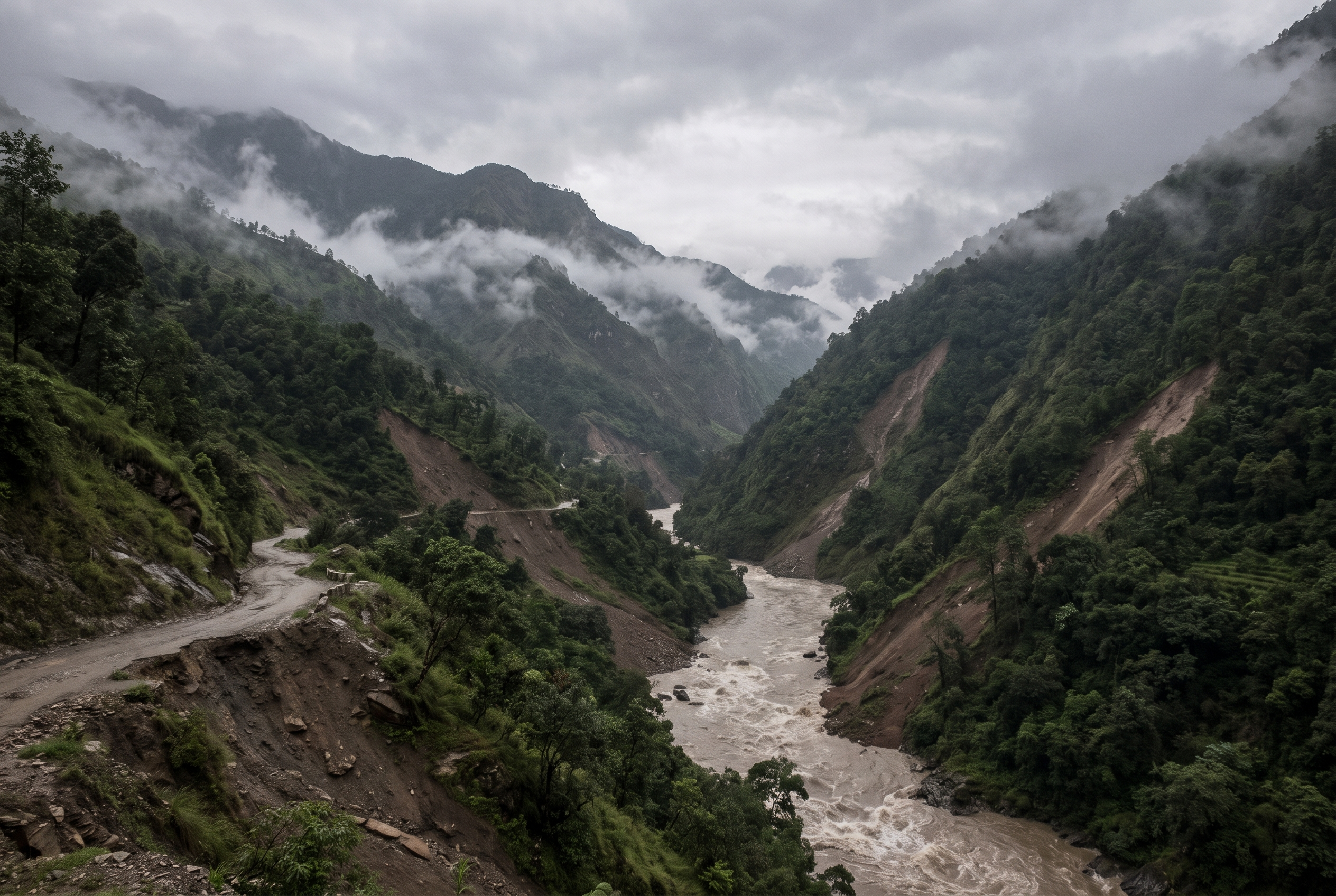
The Foreign, Commonwealth and Development Office updated its travel advice for Nepal on 11 September 2026. Two things changed. The first was information about flooding in the Rasuwa district and the Nepal-China border area. The second was details of a Family Assistance Centre operating at the British Embassy in Kathmandu. The flooding itself happened on 26 August 2026. It caused significant damage in Rasuwa and along the border region, with effects reaching nearby districts including Gorkha, Nuwakot and Dhading. The key line in the updated advice is about what comes next rather than what already happened. Areas affected by flooding and landslides may remain unstable. Further rainfall, or seismic activity, can trigger rockfalls and new landslides in mountainous terrain. That is the part travellers tend to underestimate. The immediate emergency passes. The slope stays loose for weeks or months afterwards. The FCDO advises anyone in affected areas to follow the instructions of the Nepalese government and local authorities, and to monitor local media. The advice also notes that escalation in the Middle East has caused widespread travel disruption, which can affect flights to and from Nepal through airspace closures and cancellations, even for journeys nowhere near the region.
Why this matters
Nepal is a popular destination for British travellers, and a particular kind of one. Many go for trekking, often in exactly the sort of steep river valleys that flooding and landslides affect most. Autumn is peak trekking season. It runs from roughly late September through November, when the monsoon has passed and the skies are clearest. So this update lands just as thousands of people are finalising plans. The presence of a Family Assistance Centre at the embassy is worth noticing too. Those are set up when an incident has affected British nationals and their families, and they are not opened routinely. It is a signal about scale. There is also a practical insurance dimension. Travel insurance policies generally follow FCDO advice. If you travel against advice against travel, your cover can be void. Most of Nepal is not under such advice, but the position can change, and the position on the day you travel is what counts, not the position when you booked. Finally, the Middle East note matters for routing. Many flights from the UK to Kathmandu connect through Gulf hubs.
What the evidence actually says
It is important to be precise about what this update does and does not say, because travel headlines frequently overstate. The FCDO has not told people to avoid Nepal. This is an information update about specific affected areas and the continuing instability of terrain there, not a blanket warning. Rasuwa is a specific district north of Kathmandu, on the route towards the Tibetan border and the Langtang trekking region. Gorkha, Nuwakot and Dhading are neighbouring districts. Much of Nepal, including the main Annapurna and Everest trekking regions, is not in the area described. The note about instability is a standard and accurate piece of geology rather than an alarm. Slopes saturated by monsoon rain and then scoured by flooding do take time to settle, and Nepal is also seismically active, which is why the advice mentions earthquakes as a trigger. On the Middle East disruption, the FCDO is describing knock-on effects on air travel rather than a risk in Nepal itself. In short: check your specific route, not the country as a whole. That is almost always the right way to read travel advice.
Qurexa perspective
Long trips to remote places are where medicines go wrong, and we see the consequences when people get home. The common problems are dull and avoidable. People run out because they packed exactly enough and then got delayed. They put everything in hold luggage that then went missing. They took medicines that need refrigeration without thinking through a week on a trail. A few things are worth doing before a trip like this. Order your repeat prescription early. Do not leave it to the week before you fly, because that is when a supply problem or a bank holiday will find you. If getting to a pharmacy is difficult, a delivery service removes that risk entirely. Take more than you need. A sensible rule is your full trip plus at least a week, in case you are delayed. Split it between bags, keep medicines in original labelled packaging, and carry a copy of your prescription. Some countries restrict medicines that are routine here, and the label is what gets you through a conversation at a border. And if you take anything that must stay cold, ask your pharmacist about travel storage before you book, not after.
Practical advice
Before you go, sign up for FCDO email alerts for Nepal. They are free and they tell you when advice changes, which is more reliable than remembering to check. Check that your travel insurance covers trekking at the altitude you plan to reach. Many standard policies stop at a certain height, and an awful lot of people discover this after an incident rather than before. If your route goes through Rasuwa, Langtang, Gorkha, Nuwakot or Dhading, speak to your trekking company directly about current ground conditions. Local operators know which trails and roads are usable in a way that no website does. Altitude sickness remains the most likely thing to affect you in Nepal, well ahead of anything in the news. Ascend slowly, know the symptoms, and be willing to go down. Your pharmacist or a travel clinic can advise on preventive medication. Check your vaccinations at least six to eight weeks before travel. Travel clinics book up in autumn. And register your trip details with someone at home, including where you expect to be and when.
What to know
The FCDO updated its Nepal travel advice on 11 September 2026, adding information about flooding in Rasuwa district and the Nepal-China border area, and about a Family Assistance Centre at the British Embassy in Kathmandu. The flooding occurred on 26 August 2026 and also affected Gorkha, Nuwakot and Dhading. Affected slopes may stay unstable, with rockfalls and landslides possible after further rain or earthquakes. This is not advice against travelling to Nepal. It concerns specific districts, and the main trekking regions are largely elsewhere. Separately, Middle East airspace disruption can affect flights routing through the region. Sign up for FCDO alerts, check your insurance covers your trekking altitude, and order repeat prescriptions well before you fly. Sources: Foreign, Commonwealth and Development Office, 'Nepal travel advice', updated 11 September 2026, https://www.gov.uk/foreign-travel-advice/nepal ; British Embassy Kathmandu, Family Assistance Centre information, September 2026, https://www.gov.uk/world/organisations/british-embassy-kathmandu ; NHS, 'Travel vaccinations', https://www.nhs.uk/conditions/travel-vaccinations/ This article is for general information and does not replace advice from a doctor, pharmacist or other qualified healthcare professional. Always check the current FCDO advice for your destination before you travel.
Related articles
Heading to Kosovo? Large demonstrations are planned in Pristina this month
The Foreign, Commonwealth and Development Office updated its travel advice for Kosovo on 11 September 2026. The change was the addition of information about la…
Jordan travel advice has changed. What UK travellers should do now
The Foreign, Commonwealth and Development Office updated its travel advice for Jordan on 10 September 2026. Information about Iranian missile strikes on Jordan…
Ten minutes: the Riviera's tsunami problem, and what holidaymakers can do
Scientists working on Mediterranean tsunami risk have set out how quickly a wave could reach the French Riviera, and how that compares with how quickly an offic…