
Researchers found a way to win at Wordle 99% of the time. The trick is counterintuitive
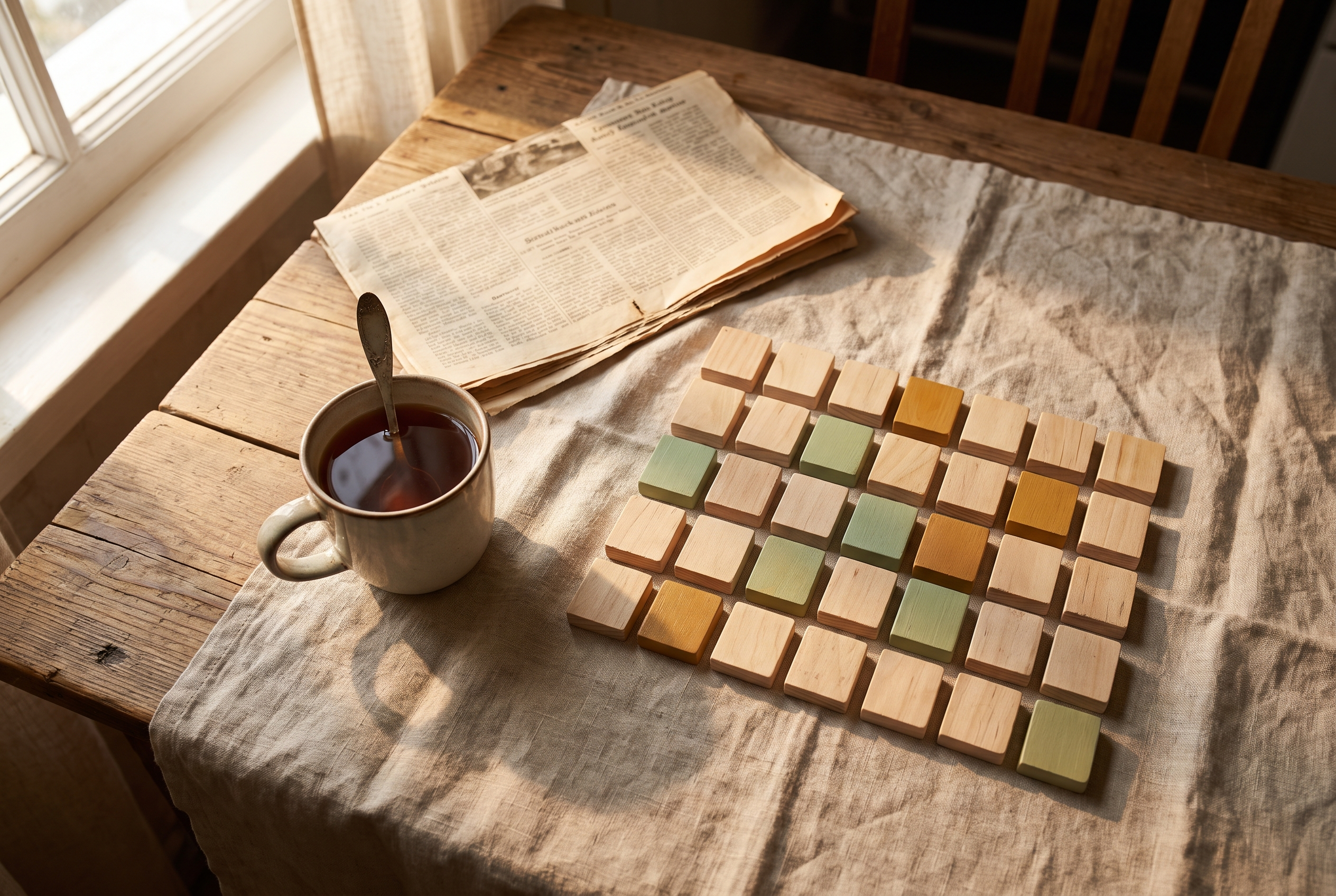
What happened
Researchers at Binghamton University, part of the State University of New York, have published a mathematical strategy for the word game Wordle that succeeds in 99 per cent of simulated games. The work appeared in the Northeast Journal of Complex Systems, volume 8, issue 1, on 12 September 2026. It was led by Assistant Professor Congyu Wu, known as Peter, with co-authors Talal Aladaileh, Donald Stephens and Mallak Alqaisi. It began as a classroom assignment before turning into published research. The method uses an idea called Shannon entropy, borrowed from information theory. Information theory is the branch of mathematics behind data compression, error correction and most of modern telecommunications. It is about measuring how much you learn from a message. Applied to Wordle, the logic is simple to state. Each guess should be chosen not because it is likely to be the answer, but because it eliminates the largest number of remaining possibilities. As one of the researchers put it: a guess does not have to be the most likely answer, it simply has to be informative. That is the counterintuitive bit. The best move is often a word you are fairly sure is wrong.
Why this matters
On the face of it, this is a story about a puzzle. Look slightly sideways and it is about how people make decisions with incomplete information, which is most decisions. The instinct in Wordle, and in life, is to guess what you think the answer is. The mathematically better move is often to make the choice that teaches you the most, even if you expect it to be wrong. Doctors do a version of this constantly. A test is not always ordered because the clinician expects a particular result. It is ordered because whatever it shows will narrow things down. A test that would not change what happens next is not usually worth doing. Engineers do it. So do people troubleshooting a boiler. There is also a smaller, gentler point. Daily puzzles have become a genuine habit for millions of people. The evidence that puzzles prevent dementia is weak and often overstated. The evidence that a small, pleasant daily routine is good for mood and structure is rather better, particularly for people who live alone. That is not nothing.
What the evidence actually says
The headline figure is 99 per cent, and it deserves unpacking. That number comes from simulations, not from watching human players. The method was run against the game computationally, many times over. The comparison is the more interesting number. Conventional strategies, the kind most of us use by instinct, which focus on getting common letters into play early, achieved around 90 per cent in the same simulations. So the information theory approach adds roughly nine percentage points. There is a large practical catch. To use the method properly, you need to run a separate program alongside the game, entering the colour-coded feedback after each guess so it can calculate the most informative next word. In other words, this is not a tip you can hold in your head. It is a piece of software that plays for you. It is also published in a small specialist journal rather than a major one, which is entirely appropriate for the scale of the work, but worth knowing. And there is a fair objection: if a program plays the game, you are not really playing the game. The 90 per cent you manage unaided may be the more satisfying number.
Qurexa perspective
One small, genuine connection, and we will keep it brief. The most reliable way to remember a daily medicine is to attach it to something you already do without thinking. Pharmacists call it habit stacking, and it is one of the few adherence techniques that consistently works. If you already do a puzzle with your morning tea, that is a ready-made anchor. Tablets next to the kettle, puzzle after. The order does not matter. The pairing does. We mention it because missed doses are the single most common medicines problem we see, and the fixes that work are usually this ordinary. Not an app, not a reminder that gets ignored, just a cue that already exists in your day. If remembering is a struggle for you or someone you care for, ask your pharmacy about a compliance aid or a blister pack, and about having medicines delivered on a regular cycle so there is never a gap.
Practical advice
If you want to play better without outsourcing the game, the underlying principle still helps. Open with a word carrying several common letters and a good spread of vowels. You are not trying to be right. You are trying to learn. When you are down to a few candidates that differ by one letter, consider spending a guess on a word that tests several of those letters at once, even if it cannot be the answer. That is the core of the research method, done by hand. Resist the urge to lock in a guess just because it feels plausible. Plausible and informative are not the same thing. And if you enjoy the game precisely because you do it unaided, ignore all of the above. There is no health benefit to a higher win rate. If you are worried about your memory, that is a separate matter and a real one. Puzzle performance is not a diagnostic test. Speak to your GP about anything that is changing.
What to know
Researchers at Binghamton University built a Wordle strategy based on Shannon entropy, choosing guesses that eliminate the most possibilities rather than guesses most likely to be correct. It won 99 per cent of simulated games, against about 90 per cent for conventional approaches. Using it properly requires running a program alongside the game. The results are from simulations rather than human play, published in a small specialist journal on 12 September 2026. The transferable idea is worth more than the trick: when you are stuck, choose the move that teaches you the most, not the move you most hope is right. And if you play daily, that routine is a useful place to anchor a daily medicine. Sources: ScienceDaily, 'Researchers Find a Wordle Strategy That Wins 99% of the Time', 12 September 2026, https://www.sciencedaily.com/releases/2026/09/260911204910.htm ; Northeast Journal of Complex Systems, volume 8, issue 1, study by Wu, Aladaileh, Stephens and Alqaisi, Binghamton University, 12 September 2026, https://orb.binghamton.edu/nejcs/ This article is for general information and does not replace advice from a doctor, pharmacist or other qualified healthcare professional. If you are concerned about your memory, speak to your GP.
Related articles

Some bats live 50 years. A new study looked at why, and the answer is surprising
Bats should not live as long as they do. In the animal world there is a rough rule: small things die young. A mouse weighs about the same as a small bat and li…
Where have all the wasps gone? A strange summer for a much-hated insect
Something odd has happened in British gardens this summer. The wasps largely have not turned up. By late August most of us are usually batting them away from a…