
Some bats live 50 years. A new study looked at why, and the answer is surprising
What happened
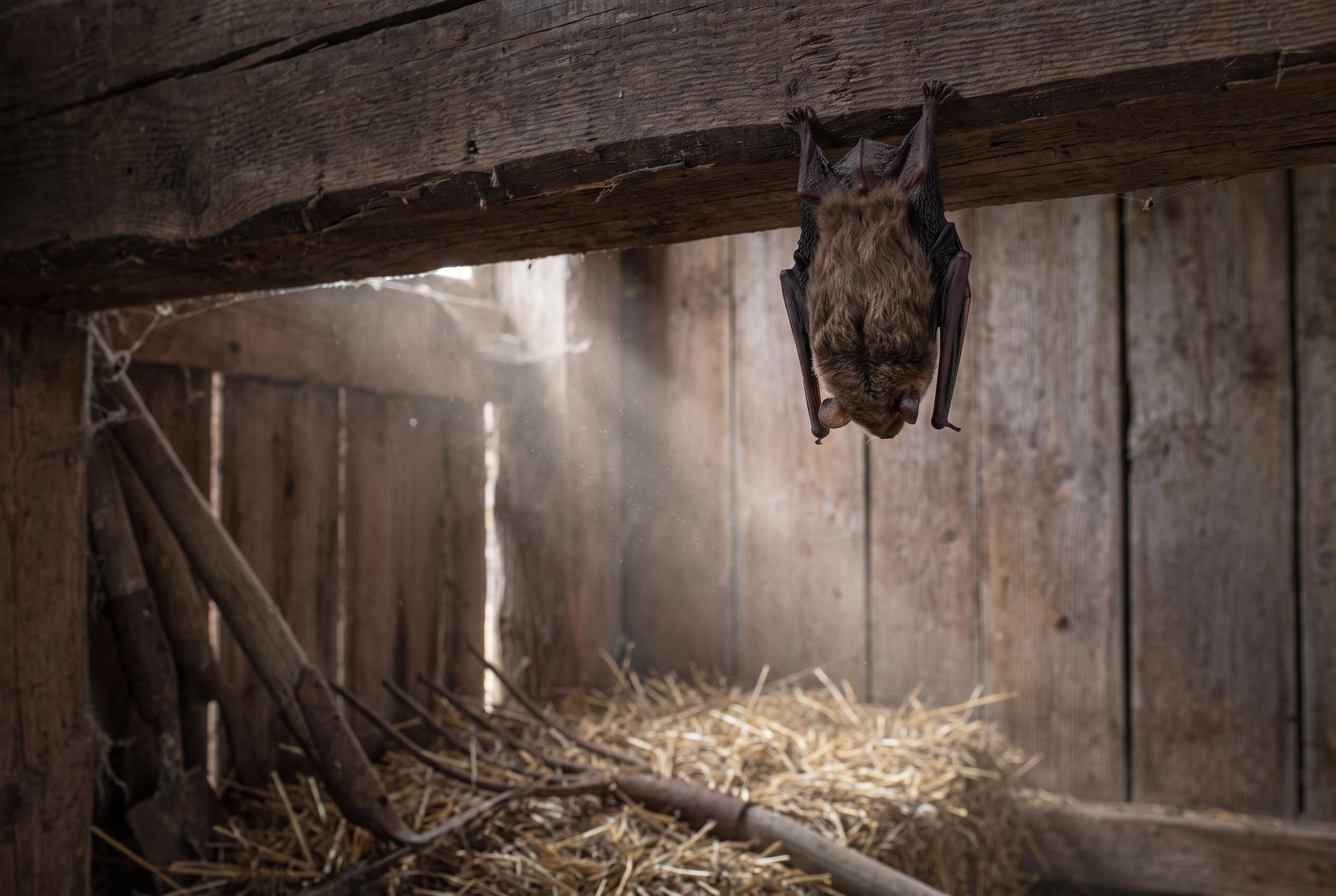
Bats should not live as long as they do. In the animal world there is a rough rule: small things die young. A mouse weighs about the same as a small bat and lives around two years. Yet Brandt's myotis, a bat you could hold in a teaspoon, can reach 50. A study published in the journal Nature on 11 September 2026 has examined why, and the answer is not the one most people would guess. Researchers at the University of California, Berkeley analysed the genomes of eight bat species from the genus Myotis. The lead author was Juan Manuel Vazquez, now at Pennsylvania State University, working with Peter Sudmant, Elise Lauterbur, Lucie Etienne and David Enard. The species they compared are closely related but have wildly different lifespans. Brandt's myotis reaches 50 years. The black myotis lives about seven. The team found that longer-lived bats carried higher levels of genes associated with fighting cancer. They also found something stranger. When cells from the little brown bat, the longest-lived species in the study, were exposed to toxic chemicals, they did not try harder to repair their damaged DNA. They increased the activity of genes that cause the cell to kill itself.
Why this matters
That last detail is the interesting part, because it runs against the intuitive idea of how to live longer. Most of us assume longevity means better repair. Fix the damage, keep the machinery running. What these bats appear to do is closer to ruthless quality control. A damaged cell is not mended. It is removed. That makes sense once you think about cancer. Cancer starts when a damaged cell survives and keeps dividing. An animal that destroys damaged cells rather than patching them up has far fewer chances to go wrong. There is a second finding that matters just as much. The genes linked to longevity overlapped substantially with genes involved in dealing with viruses, and more than you would expect by chance. Bats are famous for carrying viruses without becoming ill. This suggests those two things, viral tolerance and long life, may be linked rather than coincidental. The same immune arrangements that let a bat live alongside viruses may also be what keeps it alive for decades. That is a genuinely new way of looking at ageing, and it comes from an animal most people never think about.
What the evidence actually says
It is worth being clear about what this study is and is not. It is a comparative genomics study, with cell experiments alongside it. Eight genomes were analysed. The research group maintains cell cultures from 259 individual bats across 32 species, which is an unusually good resource for this kind of work. What it does not include is any human data. Nobody has shown that these mechanisms operate the same way in people, and there is no treatment, supplement or intervention attached to it. There is also a natural trap in ageing research, which is assuming that a mechanism found in one long-lived animal will transfer. Naked mole rats, whales and bats all live far longer than their size predicts, and they appear to do it in different ways. There is no single secret. And the cell-death finding comes from laboratory cells exposed to toxic chemicals. That is a deliberately harsh test, useful for revealing how a system responds, but not the same as normal ageing over 50 years in a barn. So: a well-designed study, in a top journal, offering a genuinely fresh idea. Not a route to a longer human life, and the authors do not claim it is.
Practical advice
Nothing here translates into something you can take or do. But the framing is useful. If the bat strategy is real, it suggests that longevity is less about repair and more about not accumulating damaged cells in the first place. The human equivalents of that are unglamorous and well known: not smoking, staying a healthy weight, moving regularly, limiting alcohol, and turning up for screening when you are invited. Cancer screening in particular does exactly the job those bat cells appear to do. It finds abnormal cells and removes them before they become a problem. Bowel screening, cervical screening and breast screening are all free on the NHS, and uptake in England is lower than it should be. If you have a screening invitation sitting unopened, that is the practical version of this research. And be sceptical of anything sold as a longevity supplement on the back of animal studies. If a bat gene made a pill work, it would be in a trial, not in an advert.
What to know
Researchers at UC Berkeley compared eight bat genomes and found that longer-lived species carry more genes linked to fighting cancer. Cells from the longest-lived species responded to damage by dying rather than repairing themselves. Genes linked to long life also overlapped heavily with genes involved in handling viruses, suggesting the two may be connected. The study was published in Nature on 11 September 2026. It involves no human data and offers no treatment. The closest human equivalent to what these bats do is removing abnormal cells early, which is what NHS screening programmes exist to do. If you have an invitation waiting, use it. Sources: Nature, study by Juan Manuel Vazquez and colleagues, University of California Berkeley, 11 September 2026, DOI 10.1038/s41586-026-10932-7, https://doi.org/10.1038/s41586-026-10932-7 ; ScienceDaily, 'The Secret to Longer Life May Be Hidden in Bat DNA', 11 September 2026, https://www.sciencedaily.com/releases/2026/09/260911003852.htm ; NHS, 'NHS screening', https://www.nhs.uk/conditions/nhs-screening/ This article is for general information and does not replace advice from a doctor, pharmacist or other qualified healthcare professional.
Related articles

Researchers found a way to win at Wordle 99% of the time. The trick is counterintuitive
Researchers at Binghamton University, part of the State University of New York, have published a mathematical strategy for the word game Wordle that succeeds in…
Where have all the wasps gone? A strange summer for a much-hated insect
Something odd has happened in British gardens this summer. The wasps largely have not turned up. By late August most of us are usually batting them away from a…