
A pain-relief patch the size of a plaster, controlled from a phone
What happened
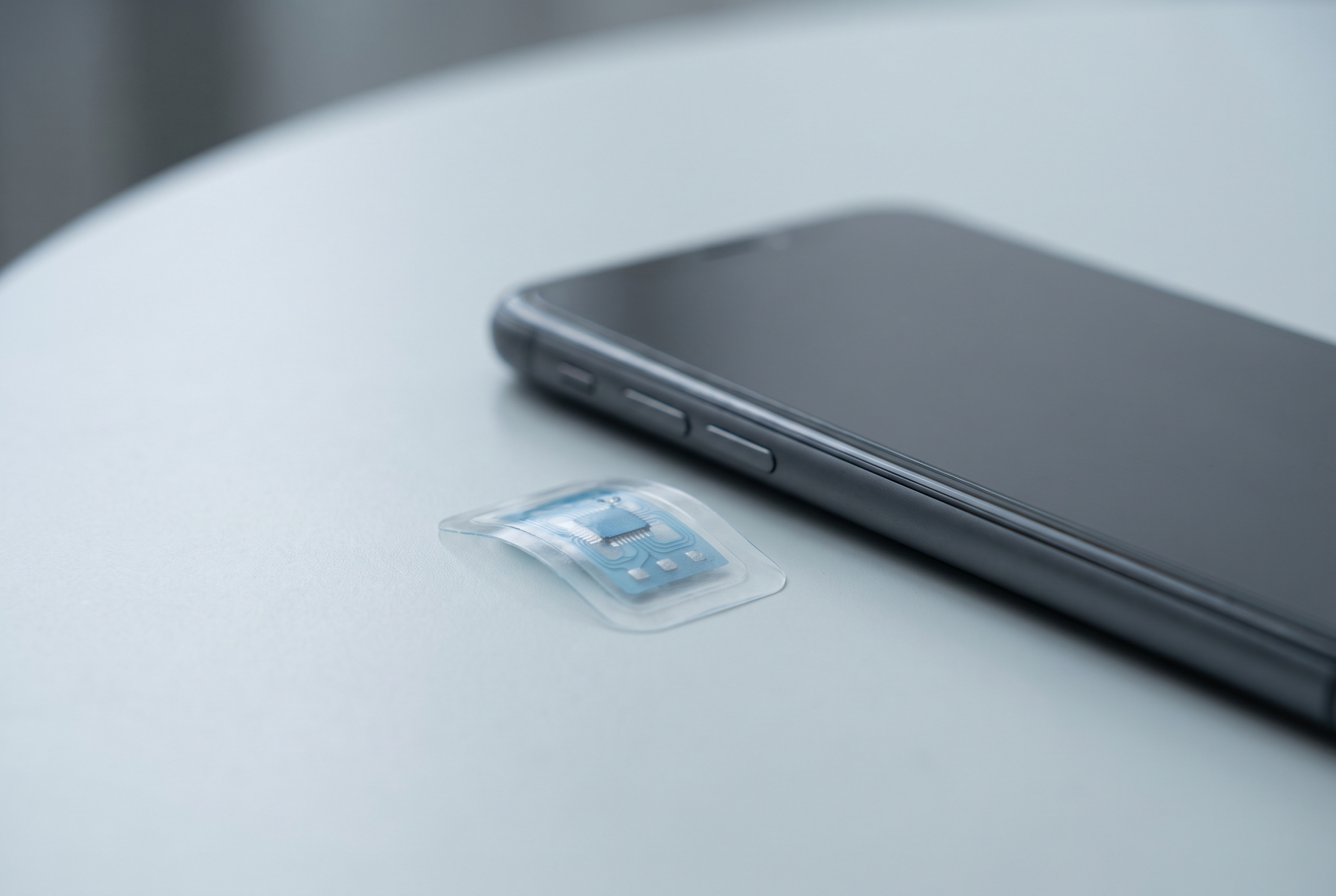
A research team in South Korea has built a small wearable device that delivers electrical pain relief through the skin, and can be controlled remotely from a smartphone. The work was published in the journal Nature Communications, and announced by the Korea Advanced Institute of Science and Technology, known as KAIST, on 13 September 2026. The team was led by Professor Jae-Woong Jeong of KAIST's School of Electrical Engineering, working with Dr Sanghun Lee of the Korea Institute of Oriental Medicine. The device has a slightly awkward name. They call it a thermoresponsive, electrically conductive adhesive microneedle, shortened to TEAM. In plainer terms, it is a small patch that sticks to the skin and carries an array of microneedles. Microneedles are exactly what they sound like: needles, but tiny. They are short enough that they do not reach the nerves that register a needle prick, so they are not painful going on. What they do achieve is good electrical contact with the skin, which is the hard part in this kind of device. The patch then connects wirelessly, so stimulation can be adjusted by phone rather than by fiddling with a box on your belt.
Why this matters
Chronic pain is one of the great unglamorous problems in healthcare. Estimates suggest between a third and a half of UK adults live with some form of long-term pain. It does not show up on scans, it does not respond neatly to medicines, and it wears people down. The medicines available are also under scrutiny. Opioids carry real risks of dependence and are now prescribed far more cautiously. Gabapentinoids have their own problems. For many people, drug treatment does less than they hoped and costs more in side effects than they expected. So anything that offers relief without a tablet is worth a look. Electrical stimulation of nerves is not a new idea, and TENS machines have been sold for decades with mixed evidence behind them. What is new here is the engineering. Older devices rely on sticky gel pads that dry out, shift and lose contact. Contact quality is a large part of why results have been inconsistent. Microneedles solve that problem in a fairly elegant way. The remote control element also matters. It points at a future where a clinician can adjust a pain treatment without the patient travelling to a clinic.
What the evidence actually says
This is a device paper, not a treatment trial, and the distinction is important. What the researchers have demonstrated is that the device works as designed. It achieves low-impedance contact with the skin, delivers stable electrical stimulation, holds its position, and can be driven remotely from a phone. It can also adjust stimulation automatically in response to the body's physiological state. That is good engineering, published in a serious journal. What has not been shown is that it reduces pain better than existing options in real patients over real periods of time. The researchers say so themselves, describing clinical validation as future work. That gap is where a lot of promising medical technology quietly dies. Plenty of devices perform beautifully on a bench and then fail to beat a placebo in a properly blinded trial. Pain research is especially prone to this, because placebo effects in pain are large and genuine. So the fair reading is: a clever solution to a known technical problem, with the clinical question still entirely open. It is not available to buy, and it is not licensed in the UK.
Qurexa perspective
We deliver prescriptions to people across Lincolnshire, and a large share of them are for pain. We see what that means in practice: repeat medicines that have to arrive on time, regimens that are easy to muddle, and people who would rather not increase a dose but do not know what else to try. Two honest observations from that vantage point. First, technology like this is only useful if it reaches people who cannot easily travel. The remote-adjustment idea matters most for someone housebound, or thirty miles from the nearest pain clinic. That is exactly the population that usually gets new technology last. Second, none of it replaces the basics. The single most common avoidable problem we encounter is not a lack of clever devices. It is people running out of medicine, or taking it inconsistently, because collecting it is difficult. If that is you, a delivery service and a medication review will do more for your pain this month than any prototype. We would rather tell you that than sell you a future.
Practical advice
If you live with long-term pain, a few things are worth doing regardless of what happens to this device. Book a medication review with your pharmacist. It is free, it takes about twenty minutes, and it is one of the few interventions in pain care that reliably helps. Bring everything you take, including anything bought over the counter. Ask your GP about referral to a pain management programme. These focus on function and coping rather than cure, and the evidence behind them is stronger than for most single treatments. If you use a TENS machine, use it properly. Read the instructions, replace the pads when they stop sticking, and do not use one over the front of the neck, on broken skin, or if you have a pacemaker without checking first. Be cautious about pain devices sold online with dramatic claims. If a product could genuinely treat chronic pain, it would have a clinical trial behind it and a regulator's marking on the box. And if pain is new, changing, or waking you at night, get it assessed rather than managed.
What to know
Researchers at KAIST and the Korea Institute of Oriental Medicine have built a wireless microneedle patch that delivers electrical pain relief and can be controlled from a smartphone. It was published in Nature Communications and announced on 13 September 2026. The engineering solves a genuine problem: keeping stable electrical contact with skin. The clinical question, whether it actually relieves pain better than what we already have, has not yet been tested. It is not available in the UK and is not licensed here. If you have long-term pain now, a free pharmacy medication review and a referral to a pain programme are the practical next steps. Sources: Nature Communications, 'Wireless IoT-enabled microneedle electroceutical for personalized and connected pain management', 2026, https://www.nature.com/articles/s41467-026-76527-y ; EurekAlert, news release from Korea Advanced Institute of Science and Technology, 12 September 2026, https://www.eurekalert.org/news-releases/browse?view=summaries&date=09/12/2026 ; Mirage News, 'KAIST, KIOM Create Wearable Pain-Relief Device', September 2026, https://www.miragenews.com/kaist-kiom-create-wearable-pain-relief-device-1743168/ This article is for general information and does not replace advice from a doctor, pharmacist or other qualified healthcare professional. Never change a prescribed pain medicine without speaking to your clinician or pharmacist first.
Related articles

Something dark is hiding in Venus's clouds, and scientists just narrowed down what it can be
Venus has a mystery that has sat unsolved for roughly a century. Seen in ordinary light, the planet is a smooth, featureless cream-yellow ball. Look at it in ul…

Scientists looked a quarter of a proton deep inside an atom - and found something odd
Physicists working on the ALICE experiment at CERN's Large Hadron Collider have managed to look deeper inside atomic nuclei than anyone has before. What they fo…