
Something dark is hiding in Venus's clouds, and scientists just narrowed down what it can be
What happened
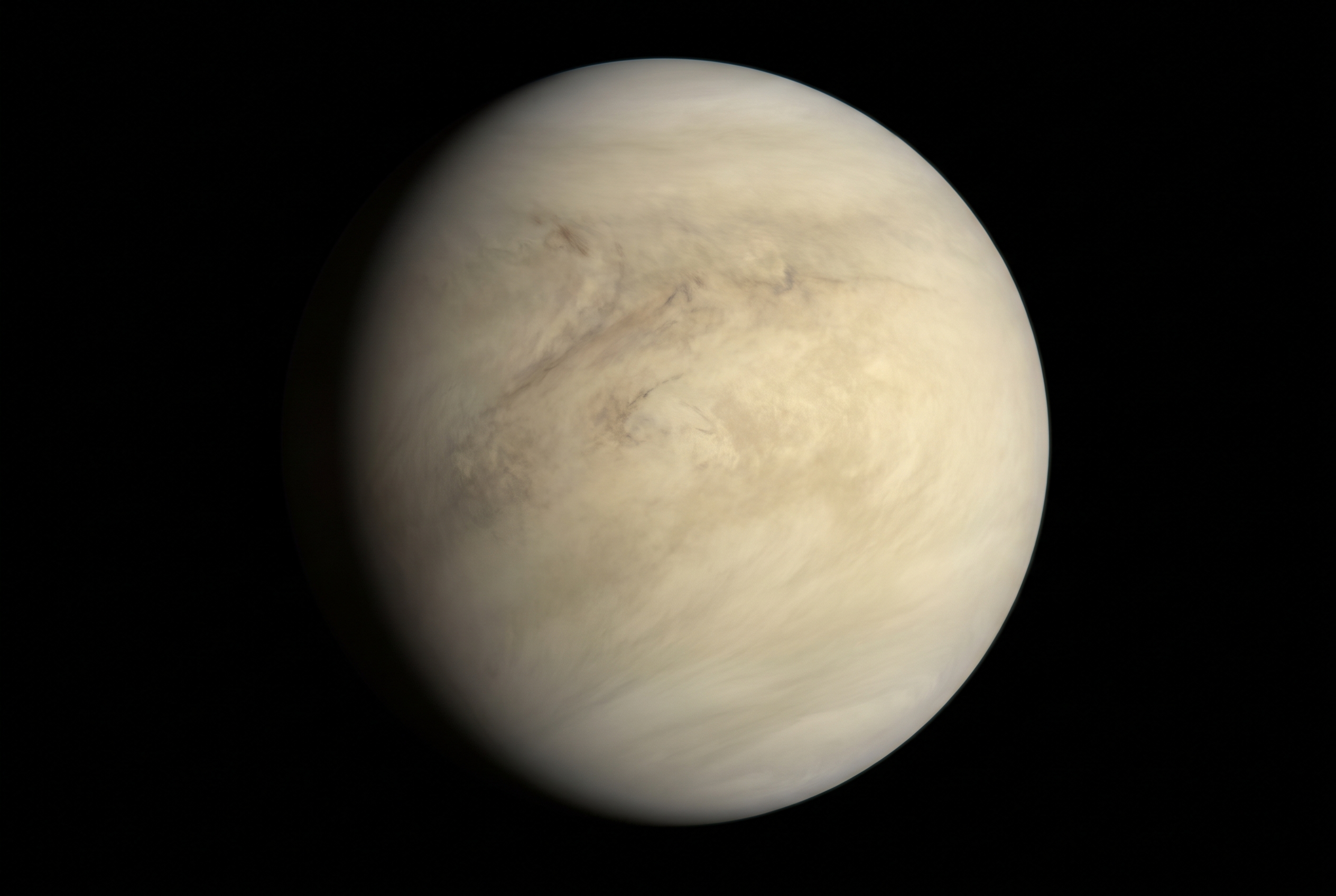
Venus has a mystery that has sat unsolved for roughly a century. Seen in ordinary light, the planet is a smooth, featureless cream-yellow ball. Look at it in ultraviolet light, and dark patterns appear across the cloud tops. Something up there is soaking up ultraviolet light. Nobody knows what it is. A study published in the journal Astrobiology in September 2026 has now put hard numbers on the problem. Rather than guessing what the substance is, the team worked backwards. They asked: whatever it is, how strongly must it absorb light in order to produce the patterns we see? The answer is a very specific figure. The unknown absorber must reach an absorption coefficient of about 1,278 per centimetre at a wavelength of 375 nanometres, across a band from roughly 365 to 455 nanometres. The research was coordinated through the Institute for Basic Science in South Korea. It was led by Jan Spacek of the Foundation for Applied Molecular Evolution in the United States, working with Paul Rimmer at the University of Cambridge, Janusz Petkowski at Wroclaw University of Science and Technology, and Yeon Joo Lee at the Institute for Basic Science.
Why this matters
Venus has become one of the most argued-over places in the solar system. It is roughly Earth's size, and in some ways Earth's twin, but its surface is hot enough to melt lead and its clouds are made of sulfuric acid. A few years ago, the argument got sharper. Some researchers suggested that the dark ultraviolet patches might be biological, because certain microbes on Earth absorb ultraviolet light in a similar way. That idea has never been proved and remains a minority view, but it made the mystery famous. This study is useful precisely because it does not take sides. It sets a test that any explanation has to pass. And that is how good science narrows things down. Instead of adding another candidate to a long list, you work out the rules the answer must obey, then start crossing candidates off. There is a wider point here too. We are surprisingly good at studying planets we have never landed on, using nothing but light. The same methods are now being turned on planets around other stars.
What the evidence actually says
The findings are demanding, and they make the problem harder rather than easier. Whatever this material is, it must either absorb light extraordinarily efficiently, or be present at very high concentrations, or both. For an organic molecule, the required concentration works out at roughly 10 grams per litre. That is a lot of anything to have floating in a cloud. The absorption pattern is also sharper than you would normally expect from organic compounds dissolved in sulfuric acid. Most organic material, dropped into concentrated acid, degrades into a messy tar-like mixture with smeared, broad absorption. What Venus shows looks more like a chemically defined substance that somehow resists turning into that tar. Many inorganic candidates struggle too. Several would need concentrations that are simply implausible. So the study does not name the culprit. It sets a bar that most existing suggestions fail to clear, including some of the more excitable biological explanations. The honest summary is that this is a constraint, not an answer. It is also, quietly, one of the more useful kinds of scientific result: the kind that tells you where not to look.
Practical advice
This one asks nothing of you, so treat it as a small exercise in patience. If you want to see Venus for yourself, you do not need a telescope. It is the brightest thing in the sky after the Sun and Moon, and it appears low in the west after sunset or in the east before dawn, depending on where it is in its orbit. A clear evening and a low horizon are all you need. If you follow space news, keep an eye out for the Morning Star Missions programme. It plans to send instruments directly into the Venusian atmosphere, including a device called an autofluorescence nephelometer aboard a planned Rocket Lab mission. Measuring the clouds in place will settle in days what a century of telescope work has not. And when you next see a headline suggesting life has been found somewhere, remember the shape of this study. The serious work usually consists of ruling things out, slowly, and publishing the numbers that let other people check you.
What to know
Something in Venus's clouds absorbs ultraviolet light, and has done so for as long as we have been looking. A study published in Astrobiology in September 2026 calculated exactly how strongly that substance must absorb light. The requirements are severe: either extreme absorbing efficiency, very high concentrations, or both. The sharpness of the pattern also argues against ordinary organic material dissolved in sulfuric acid. No culprit has been identified. Several popular candidates now look less likely. Direct measurements from planned atmospheric missions should finally resolve it. Sources: ScienceDaily, 'Venus's Pale Yellow Clouds May Hide Something Surprisingly Dark', 12 September 2026, https://www.sciencedaily.com/releases/2026/09/260912220022.htm ; Astrobiology, volume 26, issue 9, study by Spacek, Rimmer, Petkowski and Lee, September 2026, https://www.liebertpub.com/journal/ast ; Institute for Basic Science, research coordination and announcement, September 2026, https://www.ibs.re.kr/eng.do This article is for general information only. It contains no medical advice, and does not replace advice from a doctor, pharmacist or other qualified healthcare professional.
Related articles
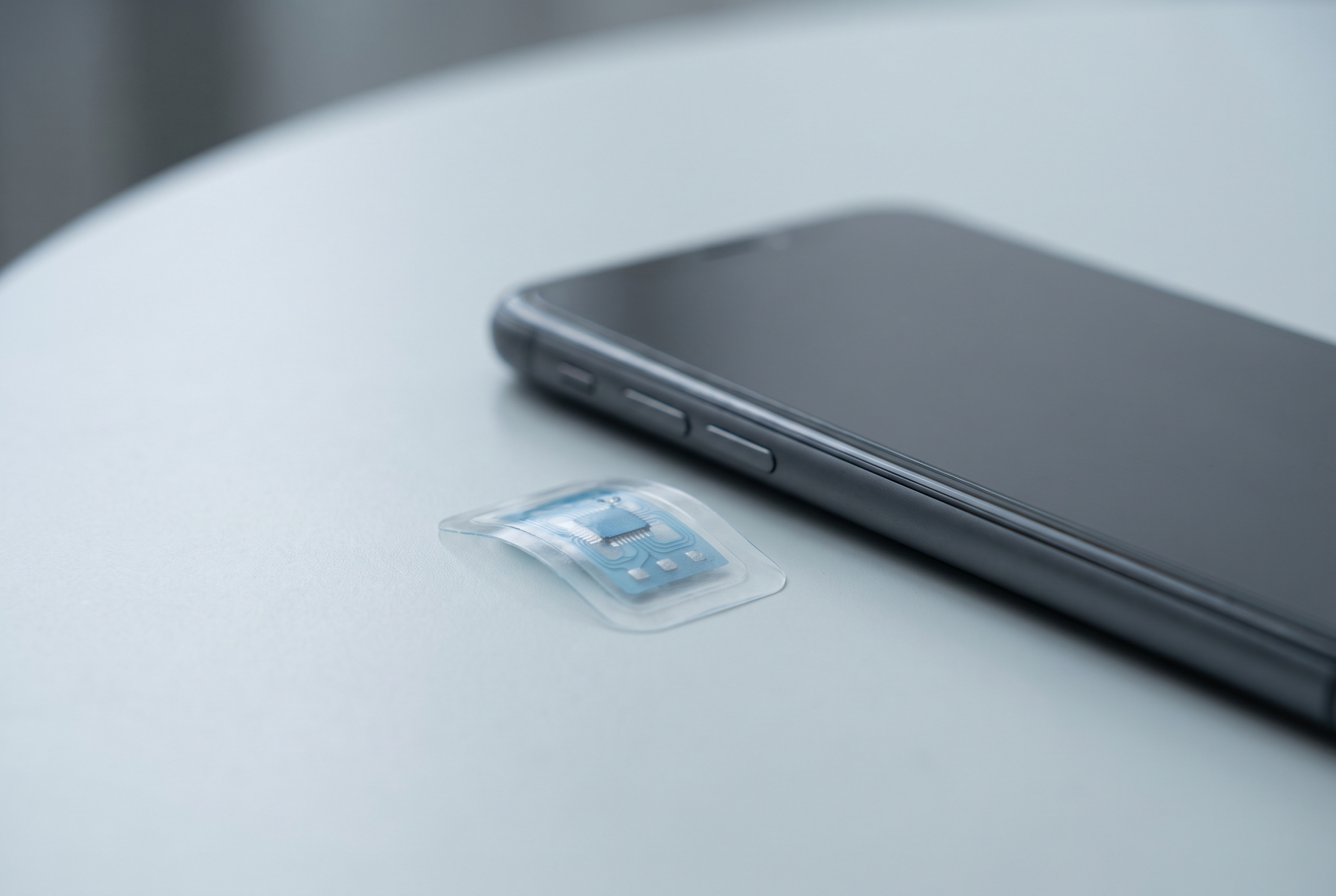
A pain-relief patch the size of a plaster, controlled from a phone
A research team in South Korea has built a small wearable device that delivers electrical pain relief through the skin, and can be controlled remotely from a sm…

Scientists looked a quarter of a proton deep inside an atom - and found something odd
Physicists working on the ALICE experiment at CERN's Large Hadron Collider have managed to look deeper inside atomic nuclei than anyone has before. What they fo…