
Scientists looked a quarter of a proton deep inside an atom - and found something odd
What happened
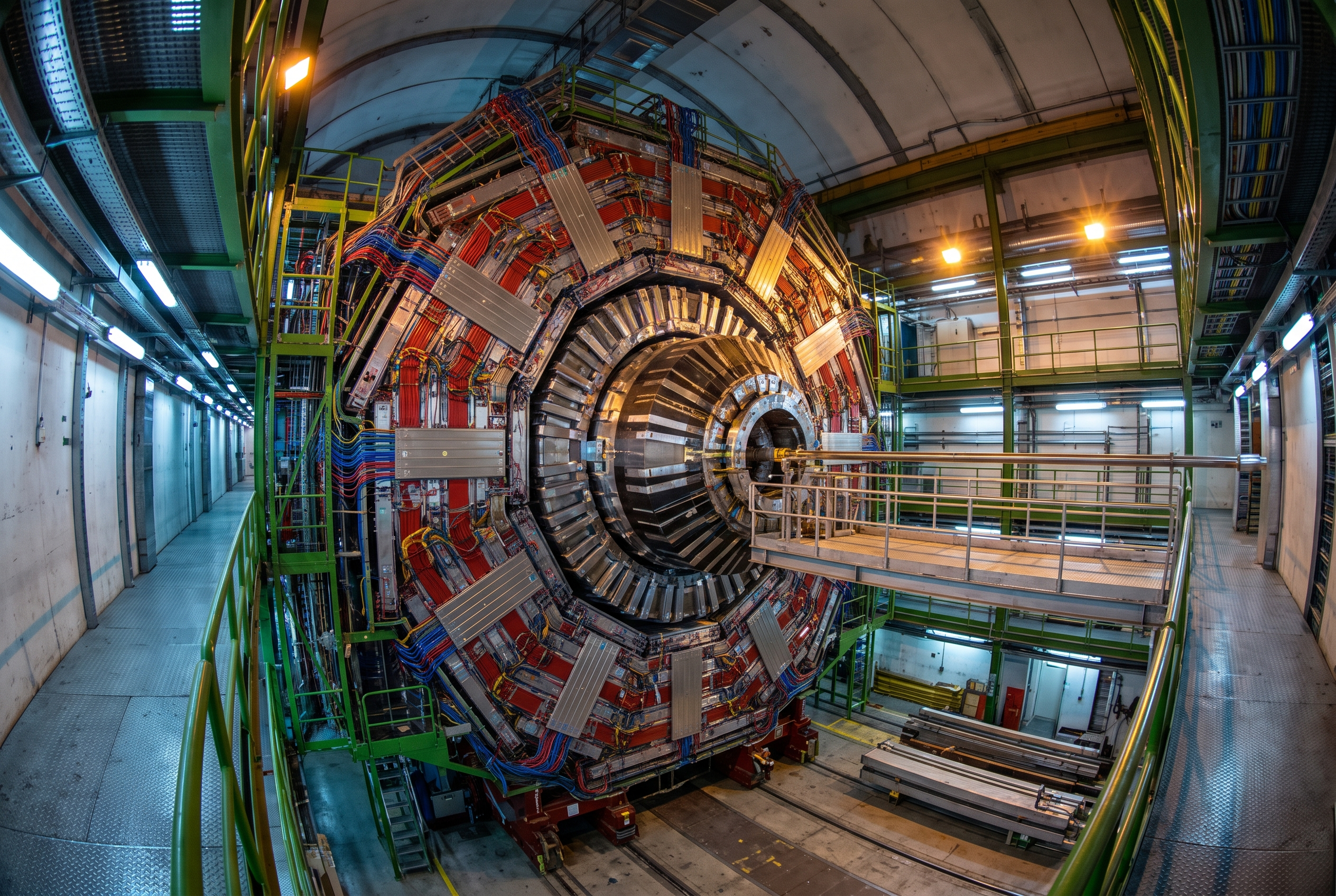
Physicists working on the ALICE experiment at CERN's Large Hadron Collider have managed to look deeper inside atomic nuclei than anyone has before. What they found does not match the textbook explanation. The study was published in the journal Physical Review Letters on 12 September 2026. It was led by Daniel Tapia Takaki, a physicist at the University of Kansas. To understand what they were looking at, you need one idea. Atoms have a nucleus. The nucleus is made of protons and neutrons. Those, in turn, are made of quarks, held together by particles called gluons. Gluons are the glue, which is where the name comes from. Nobody can photograph a gluon. Instead, physicists study them by watching what happens when particles collide, and reading the debris. The team measured the production of a particle called J/psi at three different levels of detail: 0.6, 0.3 and 0.2 femtometres. A femtometre is a millionth of a billionth of a metre. The finest of those measurements resolves structures about a quarter the width of a proton. At that smallest scale, fewer J/psi particles appeared than expected. The suppression showed up at three standard deviations.
Why this matters
This is not a story with a product at the end of it. There is no gadget coming. It is worth understanding anyway, because it is about how well we actually know the stuff everything is made of. For years, physicists have had two competing explanations for how gluons behave when you look very closely inside a nucleus. The first is called nuclear shadowing. The rough idea is that particles at the front of the nucleus block your view of the ones behind, like trees at the edge of a wood hiding the trees further in. The second is called gluon saturation. This says that when you look at small enough scales, gluons become so tightly packed that they start interacting with each other and effectively limit their own numbers. There is only so much room, so they stop piling in. The new measurements point towards saturation, not shadowing. That matters because these models underpin a lot of other calculations. If you want to understand what happened in the first moments after the Big Bang, or how neutron stars hold together, you need to know how matter behaves when it is squeezed that hard. Getting the foundations right is not glamorous, but everything else sits on top of it.
What the evidence actually says
The honest headline is 'strong hint', not 'proved'. The key number is three standard deviations. In everyday language, that means the result is unlikely to be a fluke, but particle physics has a stricter bar. The convention for claiming a discovery is five standard deviations. Three is the level at which physicists say 'evidence for', and then go and collect more data. That convention exists for good reason. Physics has a long history of three-sigma results that melted away when more data arrived. What is genuinely new here is the resolution. Measuring structures at 0.2 femtometres, across an energy range from 20 to 633 billion electron volts, is a real technical achievement. It is the first time anyone has been able to compare the two theories at that level of detail. It is also worth saying what this does not overturn. Nothing in your understanding of atoms from school is now wrong. Nuclei still contain protons and neutrons. This is a refinement to a specialist model of how gluons distribute themselves, not a rewrite of chemistry. The next step is more collisions and better statistics. Future colliders, including the planned Electron-Ion Collider in the United States, are being built partly to settle exactly this question.
Practical advice
There is no health advice attached to a gluon, so here is something more useful: how to read science news like this without being misled. Look for the sigma. If a physics story mentions three standard deviations, treat it as interesting evidence. Five means the field considers it settled. Anything less than three is a hint. Watch for the word 'suggests'. Careful researchers use it deliberately. When a press release drops it, the press release is usually ahead of the science. Check whether the result is a first measurement or a confirmation. First measurements are exciting and often later adjusted. Confirmations are less exciting and more reliable. And notice who is cautious. In this case, the researchers themselves reported three sigma plainly rather than dressing it up. That is a good sign about the quality of the work. These same habits work just as well on health headlines, which is where they are likely to matter more to you.
What to know
Physicists at CERN's ALICE experiment measured gluon behaviour inside atomic nuclei at the finest scale yet, resolving structures about a quarter the size of a proton. They found fewer J/psi particles than expected at the smallest scales. That fits the gluon saturation theory better than the older nuclear shadowing explanation. The result reached three standard deviations, which counts as evidence rather than discovery in particle physics. More data is needed, and is coming. It changes nothing about your daily life, and quite a lot about how confident physicists can be in models used to describe the early universe and dense matter such as neutron stars. Sources: ScienceDaily, 'CERN Finds Gluons Behaving Strangely Deep Inside Atomic Nuclei', 12 September 2026, https://www.sciencedaily.com/releases/2026/09/260911214303.htm ; Physical Review Letters, volume 137, issue 5, study led by Daniel Tapia Takaki of the University of Kansas with the ALICE Collaboration at CERN, 12 September 2026, https://journals.aps.org/prl/ This article is for general information only. It contains no medical advice, and does not replace advice from a doctor, pharmacist or other qualified healthcare professional.
Related articles

A pain-relief patch the size of a plaster, controlled from a phone
A research team in South Korea has built a small wearable device that delivers electrical pain relief through the skin, and can be controlled remotely from a sm…
Something dark is hiding in Venus's clouds, and scientists just narrowed down what it can be
Venus has a mystery that has sat unsolved for roughly a century. Seen in ordinary light, the planet is a smooth, featureless cream-yellow ball. Look at it in ul…