
Ten minutes: the Riviera's tsunami problem, and what holidaymakers can do
What happened
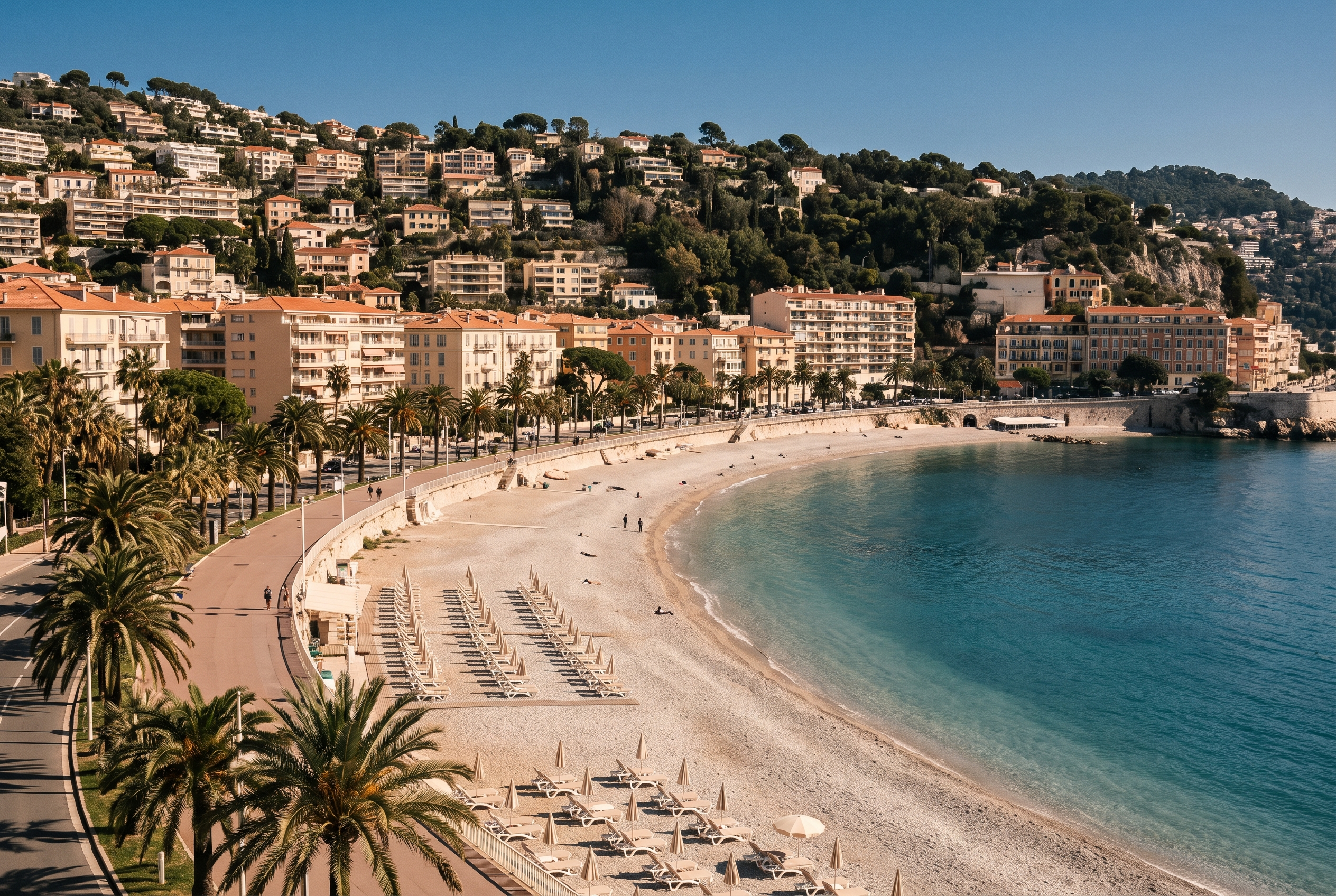
Scientists working on Mediterranean tsunami risk have set out how quickly a wave could reach the French Riviera, and how that compares with how quickly an official warning can be issued. The work was reported on 10 September 2026, and draws on research from the Laboratory of Geography and Land Planning at the University of Montpellier. The background figure comes from UNESCO. In a statement made in June 2022, UNESCO said the probability of a tsunami wave exceeding one metre somewhere in the Mediterranean within the following 30 years is close to 100%. That covers the period to roughly 2052. The newer work is about timing, and this is where it gets uncomfortable. A tsunami generated in the Ligurian Sea, which sits just off this stretch of coast, could reach the shore in under 10 minutes. One generated off North Africa would take under 90 minutes. France's national warning centre is designed to issue its first alert to authorities within about 15 minutes of a potentially dangerous earthquake. For the nearest sources, the wave arrives before the warning does. The region has history. Researchers count roughly 20 reported tsunami events along the French Riviera between the 16th century and the early 2000s. The Ligurian earthquake of 1887, magnitude between 6.5 and 6.8, produced waves approaching two metres. In 1979, an underwater landslide near Nice caused a tsunami in which eight people died, with water reaching 3.5 metres in places. The scale of exposure is considerable. The French Mediterranean evacuation planning area covers around 1,700 kilometres of coastline and 187 towns, with at least 164,000 residents. In summer, beach attendance estimates reach 835,000 people. There has been progress too. Nice Côte d'Azur received UNESCO Tsunami Ready recognition in June 2026.
Why this matters
The Mediterranean is not the first place most British holidaymakers associate with tsunamis. That association belongs to the Indian Ocean and the Pacific. But the Mediterranean is geologically active, and this stretch of coast has a documented record. What makes this particular finding worth knowing is the mismatch between wave speed and warning speed. Most emergency planning assumes a warning arrives and then people act. If the water can arrive first, the warning system is not the thing that saves you. What saves you is knowing in advance what to do. That shifts the responsibility, at least partly, onto individuals. Not in a way that should cause anxiety, but in a way that makes a small amount of preparation genuinely useful. The summer figure of up to 835,000 people on beaches is also the crux of the problem. The people at greatest risk in a fast-onset event are often visitors, precisely because they do not know the area, do not know where high ground is, and may not understand local warning signals or speak the language. And the local response has been sensible rather than alarmist. Rather than relying only on warning systems, authorities around Nice have focused on evacuation routes, places of refuge and public drills. That is the right approach when the warning may not beat the water.
What the evidence actually says
It helps to separate the well-established parts from the parts that are estimates. The historical record is solid. The 1887 Ligurian earthquake and the 1979 Nice landslide tsunami are documented events, and the 1979 event has been reconstructed in research published in the journal Natural Hazards. Eight deaths and water reaching 3.5 metres are recorded facts, not projections. The wave travel times are modelled. They come from simulations of how water would move from particular source locations, and simulations depend on assumptions about the size and position of the triggering event. Under 10 minutes describes the worst case from the nearest sources, not every scenario. The UNESCO probability figure needs reading carefully, because it is frequently misquoted. "Close to 100% chance of a tsunami wave exceeding one metre in the Mediterranean within 30 years" is a statement about the whole Mediterranean basin, not about any particular beach, and about a one-metre wave, not a catastrophic one. A one-metre tsunami is dangerous, particularly to people in the water or on a beach, but it is not the wall of water people picture. The figure also dates from 2022, so roughly four years of that 30-year window have already passed. It is also worth keeping perspective. Over the last century, the number of people killed by tsunamis on the French Riviera is in single figures. The risk is real and worth preparing for. It is not a reason to change your holiday plans. For what it is worth, the far more common holiday risks on this coast are drowning, road accidents, heat and sunburn, and all of those are more worth your attention.
Practical advice
This takes about two minutes and applies to any coastal holiday, not just the Riviera. Learn the natural warning signs. If you feel an earthquake strong enough that standing is difficult, if you see the sea suddenly draw back and expose the seabed, or if you hear a loud roar from the sea, do not wait for an official alert. Those signs are the warning. Move inland and upwards immediately. Distance from the water and height above it are what matter. Go on foot if you can, because roads clog quickly. Two storeys up in a solid building is better than nothing if there is no high ground nearby. Have a quick look when you arrive. Note where the ground rises and where the nearest sturdy multi-storey building is. Many Mediterranean coastal towns have marked evacuation routes and refuge points, and in UNESCO Tsunami Ready communities like Nice these are signposted. Do not go back for belongings, and do not go down to the shore to look. Tsunamis arrive as a series of waves, and the first is often not the largest. Wait for official confirmation before returning. Register with FRANCE Alerte or similar local alert systems where they are available, and make sure your phone is not silenced overnight. Before any trip abroad, check the FCDO travel advice page for your destination, and take out travel insurance that covers natural disasters. And if you take regular medicines, carry them in your hand luggage with a few days spare, in their original packaging with a copy of your prescription. In an emergency evacuation, whatever is on you is what you have. An ordinary precaution is worth more than an unlikely fear.
What to know
Researchers have highlighted a timing gap on the French Riviera: a tsunami from a nearby Ligurian Sea source could reach the shore in under 10 minutes, while France's national warning centre is designed to issue its first alert within about 15 minutes. UNESCO has said the probability of a tsunami wave over one metre somewhere in the Mediterranean within 30 years, from 2022, is close to 100%. That is a basin-wide figure for a one-metre wave, not a prediction for any specific beach. The area has a real history, including a 1979 landslide tsunami near Nice that killed eight people. The evacuation planning area covers 1,700km of coastline, 187 towns and up to 835,000 people on beaches in summer. Because the wave can outrun the warning, the useful preparation is personal rather than technological: know the natural warning signs, and move inland and uphill without waiting for an alert. This is a reason for two minutes of awareness, not for changing your holiday. Sources: ScienceDaily, 'UNESCO warns there's close to a 100% chance of a Mediterranean tsunami', 10 September 2026, https://www.sciencedaily.com/releases/2026/09/260910022149.htm; UNESCO Intergovernmental Oceanographic Commission, Mediterranean tsunami probability statement and Tsunami Ready programme, June 2022 onwards, https://www.unesco.org/en/ioc/tsunami; Natural Hazards, research reconstructing the 1979 Nice landslide tsunami, https://link.springer.com/journal/11069 This article is for general information and does not replace advice from a doctor, pharmacist or other qualified healthcare professional, or official emergency guidance from local authorities. Always check FCDO travel advice before you travel.
Related articles

Heading to Kosovo? Large demonstrations are planned in Pristina this month
The Foreign, Commonwealth and Development Office updated its travel advice for Kosovo on 11 September 2026. The change was the addition of information about la…

Jordan travel advice has changed. What UK travellers should do now
The Foreign, Commonwealth and Development Office updated its travel advice for Jordan on 10 September 2026. Information about Iranian missile strikes on Jordan…
Nepal travel advice updated: what trekkers and visitors need to check now
The Foreign, Commonwealth and Development Office updated its travel advice for Nepal on 11 September 2026. Two things changed. The first was information about…