
Light while you sleep: what 11,000 wrist sensors and heart scans showed
What happened
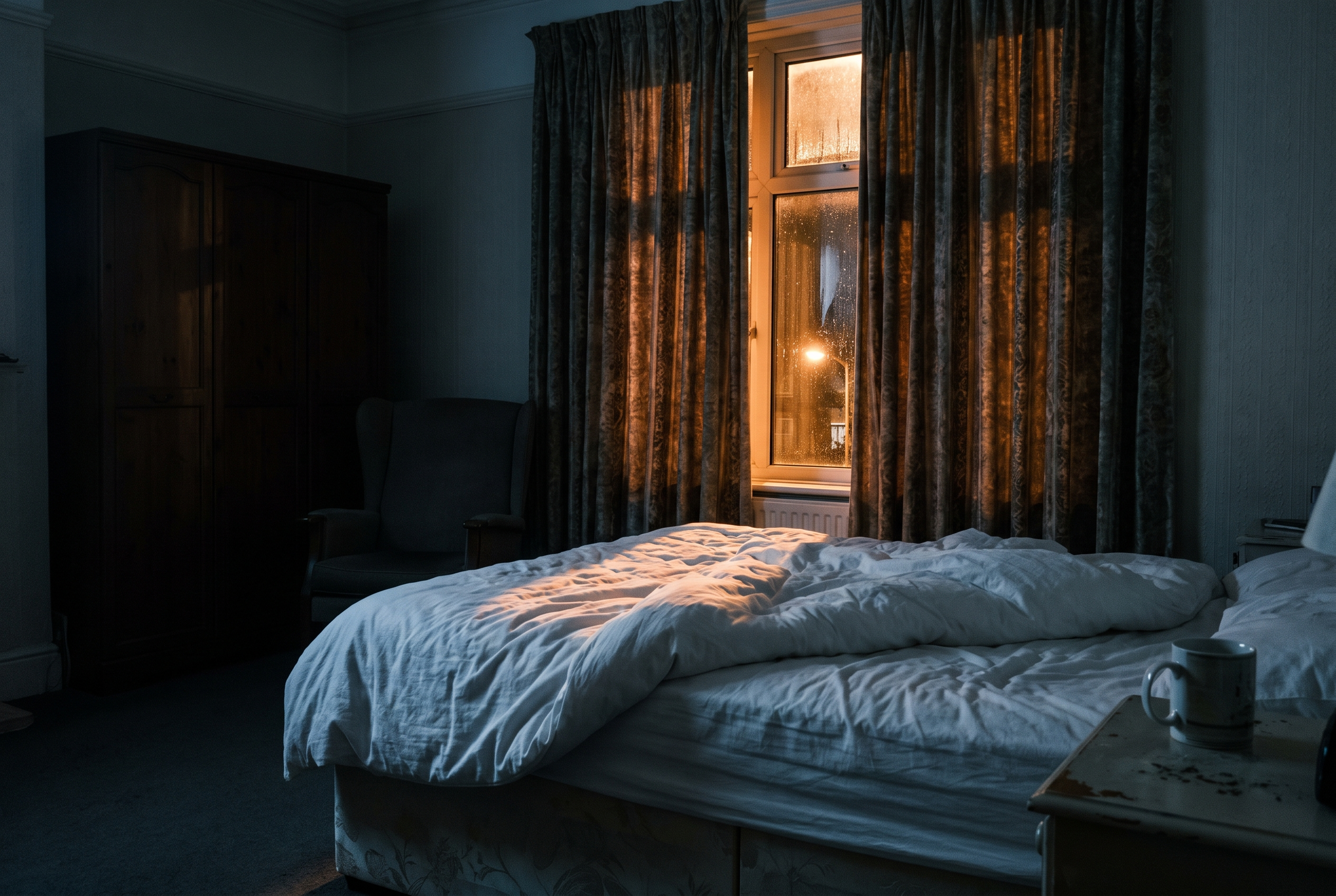
A study published on 10 September 2026 in the European Heart Journal has linked light exposure during the night to measurable changes in the structure and working of the heart. The research was led by Professor Lu Qi at Tulane University in New Orleans, and used data from more than 11,000 people taking part in UK Biobank, a large long-term British health study. Here is how it worked. A total of 11,071 people, none of whom had heart disease at the start, wore a light sensor on their wrist for seven days. The sensor recorded how much light they were exposed to overnight. Three years later, the same people were given a cardiac MRI scan, which produces a detailed picture of the heart's chambers, walls and pumping action. The researchers then compared people exposed to more than three lux of light overnight with people exposed to almost none. Lux is a measure of brightness. Three lux is not much. It is roughly the level of a dim night light, or streetlight coming through thin curtains. It is far below the brightness of a lit room. The people with higher nighttime light exposure showed thickening of the wall of the left ventricle, the heart's main pumping chamber, which reduced the space inside the chamber. The researchers suggest this may help explain something already noticed but not well understood: the link between light pollution and heart disease.
Why this matters
The left ventricle is the chamber that pushes blood out to the rest of the body. It does the hardest work in the heart. When its wall thickens and the space inside shrinks, doctors call this left ventricular hypertrophy. It is not a disease in itself, but it is a well-recognised warning sign. It is associated with a higher risk of heart failure, irregular heart rhythms and stroke, and it is one of the things cardiologists specifically look for. What makes this study interesting is the ordinariness of the exposure. Three lux is not a bright bedroom. It is the amount of light a great many people sleep in without ever thinking about it. Streetlight through curtains. A landing light left on. A charging cable glowing. A phone face-up on a bedside table. The likely explanation involves the body clock. Light is the main signal that tells the body whether it is day or night, and that signal reaches far beyond sleep. Heart rate, blood pressure and hormone release all follow a daily rhythm. Light at the wrong time disturbs that rhythm. And unlike most things linked to heart health, this one is unusually cheap to do something about.
What the evidence actually says
This is a good study, and it still has real limits. Both things are true. The strengths are worth noting. The light exposure was measured with a wrist sensor rather than asked about in a questionnaire, which removes a lot of guesswork. The heart changes were measured by MRI, which is precise. The light came first and the scan came three years later, so the order is right. And with 11,071 participants it is a substantial group. Now the limits. This is an observational study. It shows an association between nighttime light and heart changes. It does not prove that light caused them. The obvious worry is that something else explains both. People who sleep in more light may live on busier roads, which means more noise and more air pollution, both linked to heart problems. They may do shift work. They may sleep less, or more poorly. They may be more likely to be scrolling on a phone late at night. Researchers adjust for factors like these, but adjustment is never perfect. The light was also measured over a single week, which is assumed to represent normal habits but may not for everyone. And the study measured heart structure, not heart attacks. Left ventricular thickening is a recognised risk marker, but this study did not follow people to see who went on to develop heart disease. So the sensible reading is this: a plausible, well-measured association, consistent with what we already know about body clocks, that strengthens the case for darker bedrooms without proving it single-handedly.
Practical advice
Most of what follows costs little or nothing, and none of it will do you any harm. Make the bedroom darker. Blackout curtains or a lined blind are the most effective single change, particularly if you have a streetlight outside. A well-fitting sleep mask does a similar job for much less money. Get screens off the bedside table, or at least turn them face down. Phone screens are far brighter than three lux, and notifications light the room intermittently through the night. Deal with the small glowing things. Standby lights on televisions, chargers and plug sockets add up. A bit of electrical tape over an LED is unglamorous and works. If you need a light to get up safely in the night, use a dim warm-toned one low to the floor rather than a bright overhead light. Safety comes first here. Falls at night are a real risk, especially for older people, and a dark landing is more dangerous than a dim lamp. Get bright light in the morning instead. The flip side of avoiding light at night is seeking it during the day. Morning daylight strengthens the body clock, which is the same system this study is about. If you work night shifts, none of this is straightforward, and it is worth speaking to your occupational health service rather than trying to solve it alone. And see a GP if you have chest pain, breathlessness on mild exertion, palpitations or ankle swelling. Those need proper assessment, and a dark bedroom is no substitute.
What to know
Researchers using UK Biobank data measured overnight light exposure with wrist sensors in 11,071 adults with no heart disease, then scanned their hearts by MRI three years later. People exposed to more than three lux at night showed thickening of the left ventricle wall and a smaller chamber inside it. Three lux is dim. It is the level of streetlight through curtains or a small night light, which makes this a very common exposure. The study shows an association, not proof of cause. Noise, air pollution, shift work and sleep quality could all play a part, and the study measured heart structure rather than heart attacks. Even so, the advice it points to is cheap, harmless and supported by what we already understand about body clocks: darker at night, brighter in the morning. Just don't trade a dark room for a trip hazard. Sources: European Heart Journal, study on nighttime light exposure and cardiac structure and function (Qi et al., Tulane University, using UK Biobank data), 10 September 2026, https://www.escardio.org/news/press/press-releases/too-much-light-at-night-changes-the-shape-and-working-of-the-heart; EurekAlert / European Society of Cardiology, 'Too much light at night changes the shape and working of the heart', 10 September 2026, https://www.eurekalert.org/news-releases/1142769; TIME, 'Nighttime Light Exposure Is Linked to Heart Changes', 11 September 2026, https://time.com/article/2026/09/11/light-exposure-at-night-is-linked-to-heart-changes/ This article is for general information and does not replace advice from a doctor, pharmacist or other qualified healthcare professional.
Related articles
Researchers found a way to win at Wordle 99% of the time. The trick is counterintuitive
Researchers at Binghamton University, part of the State University of New York, have published a mathematical strategy for the word game Wordle that succeeds in…
Some bats live 50 years. A new study looked at why, and the answer is surprising
Bats should not live as long as they do. In the animal world there is a rough rule: small things die young. A mouse weighs about the same as a small bat and li…

Where have all the wasps gone? A strange summer for a much-hated insect
Something odd has happened in British gardens this summer. The wasps largely have not turned up. By late August most of us are usually batting them away from a…