
A video game built so nobody gets left out of the research
What happened
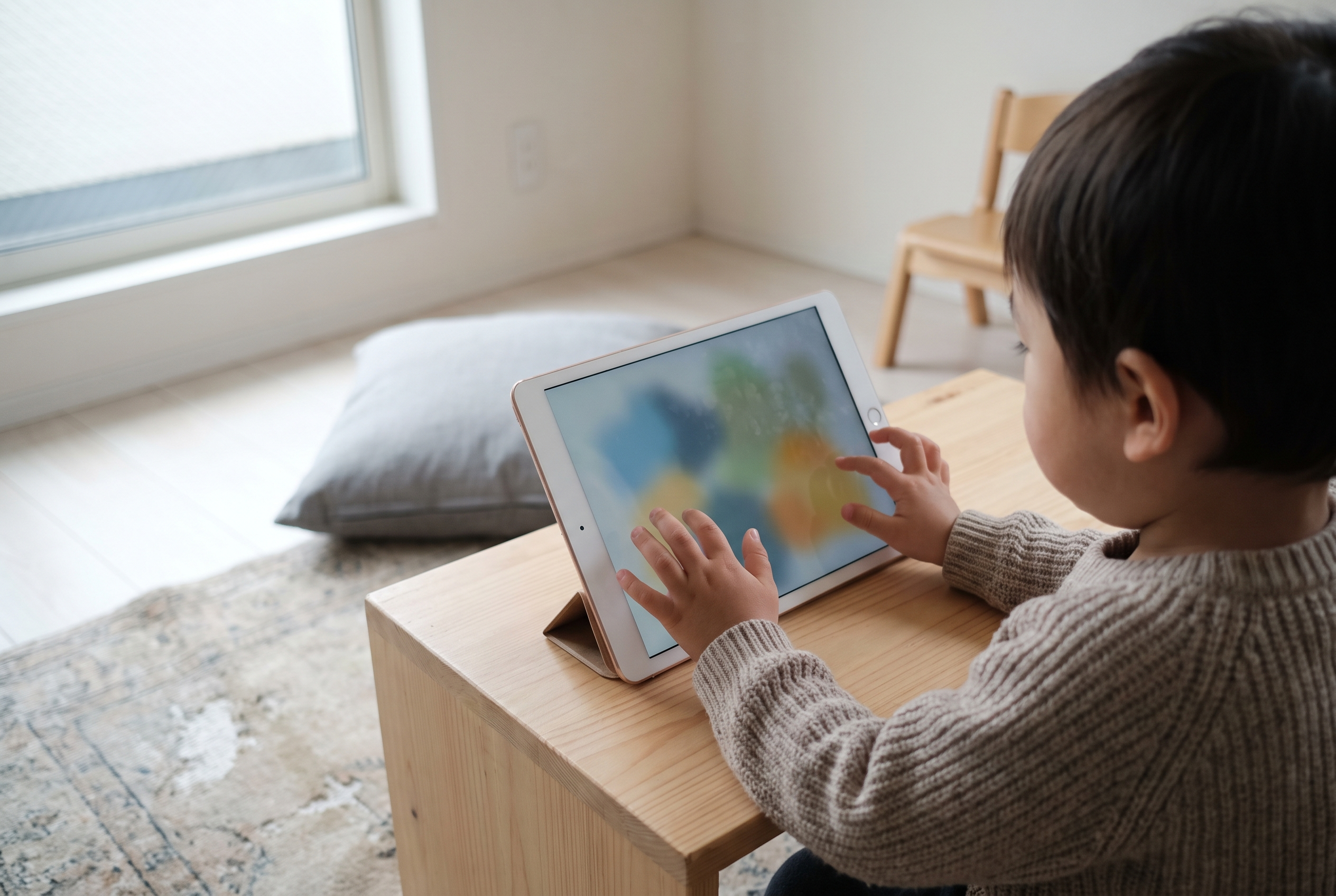
Researchers at Boston University have built a video game designed to measure how autistic people take in and interpret information, and crucially, one that people across the whole range of autism can play, including people who do not speak. The work was led by Benjamin Scott and colleagues, and was published in the journal Science Advances. It was announced on 11 September 2026. The problem the team set out to solve is not about autism itself. It is about research. Most studies of perception rely on tasks that involve following spoken or written instructions, answering questions, or reporting what you experienced. Anyone who cannot do those things reliably gets excluded. In practice, that has meant autistic people with more significant support needs, and autistic people who are non-speaking, have been left out of a great deal of the research that is supposed to be about them. The game gets around this by being playable without verbal instruction. Because of that, it can be used across the full spectrum rather than only at one end of it. Using the game, the researchers also identified something specific. They point to a process they call noisy evidence integration, which is about how the brain gathers and adds up a flood of incoming sensory information to reach a decision. Differences in that process may underlie some of the perceptual differences seen in autism.
Why this matters
There is a long-standing and uncomfortable gap in autism research. The people whose needs are greatest have often been the least studied. This is not usually because anyone intended to exclude them. It is because the tools did not fit. If your experiment requires someone to press a button when they hear a word, then people who cannot do that are not in your data. Over decades, that quietly shapes what we think we know. Families have felt this directly. Many parents want their children to take part in research, and have found them turned away because their child could not complete the tasks. Being told your child cannot contribute to understanding their own condition is a hard thing to hear repeatedly. There is a second reason this matters. If new treatments and therapies are to be tested properly, the tests need measures that work for everyone who might use them. A measure that only works for people with milder support needs cannot tell you much about whether something helps people with greater ones. So a tool that widens who can be studied is not just fairer. It makes the resulting science more useful.
What the evidence actually says
It is worth separating the two claims here, because they are at different stages. The stronger claim is about the method. The researchers have built a game-based task that can be used by people who could not take part in conventional perceptual experiments, and have demonstrated it works. That is a solid, practical contribution, and it is the part most likely to matter in the long run. The second claim, about noisy evidence integration, is more preliminary. The team describe it as a potential cause of some perceptual differences. It is a finding from a trial, and one mechanism among what are almost certainly several. Autism is enormously varied, and no single process explains it. A few other things are worth holding in mind. Some of this line of research involves work in animal models alongside human participants, which is standard in neuroscience but means results do not transfer straight across. The number of people involved in a new task like this is typically modest. And Science Advances is a reputable journal with proper peer review, which tells you the work was examined, not that it is the final word. It also should not need saying, but does: this is a research tool, not a diagnostic test and not a therapy. Nobody should read it as a way to assess autism at home, and no game of this kind is a substitute for a proper clinical assessment.
Practical advice
This is research rather than anything you can use today, but there are useful things to take from it. If you are a parent or carer who has been told your child cannot take part in a study, it may be worth asking again in future. Tools like this exist precisely to change that answer, and researchers are increasingly aware of the gap. In the UK, families interested in taking part in research can look at the NIHR's Be Part of Research service, which lists studies open to volunteers across the country. Autism charities such as the National Autistic Society also share opportunities and can explain what taking part involves. Be careful with commercial apps that claim to screen for or assess autism. Some are harmless, some are not, and none of them are a diagnosis. Diagnosis in the UK comes through a proper multidisciplinary assessment, usually via a GP referral. If you are waiting for an assessment, support does not have to wait with you. Schools can put support in place based on need rather than diagnosis, and local authorities have duties around special educational needs regardless of whether a formal diagnosis has arrived. And if a child's sensory environment is clearly causing distress, small practical adjustments to light, noise and routine often help more than waiting for a label.
What to know
Researchers at Boston University have developed a video game that measures how people take in and interpret sensory information, and that can be played by autistic people across the full range of support needs, including those who are non-speaking. The work was published in Science Advances and announced on 11 September 2026. The main achievement is access. Conventional perception experiments rely on verbal instruction and reporting, which has excluded many autistic people from research about their own condition for decades. Using the game, the team also pointed to a process called noisy evidence integration as a possible contributor to some perceptual differences. That part is early and is one mechanism among likely several. This is a research tool, not a diagnostic test or a therapy. Its value is that it makes future studies, including tests of new treatments, more representative of everyone they are meant to serve. Sources: Science Advances, study on a game-based measure of perceptual decision-making in autism (Scott et al., Boston University), September 2026; EurekAlert, 'New video game could help reveal how people with autism perceive the world', 11 September 2026, https://www.eurekalert.org/news-releases/1143031; News-Medical, 'Video game offers new insights into autistic perception', 11 September 2026, https://www.news-medical.net/news/20260911/Video-game-offers-new-insights-into-autistic-perception.aspx This article is for general information and does not replace advice from a doctor, pharmacist or other qualified healthcare professional. It is not a diagnostic tool for autism.
Related articles
A pain-relief patch the size of a plaster, controlled from a phone
A research team in South Korea has built a small wearable device that delivers electrical pain relief through the skin, and can be controlled remotely from a sm…

Something dark is hiding in Venus's clouds, and scientists just narrowed down what it can be
Venus has a mystery that has sat unsolved for roughly a century. Seen in ordinary light, the planet is a smooth, featureless cream-yellow ball. Look at it in ul…

Scientists looked a quarter of a proton deep inside an atom - and found something odd
Physicists working on the ALICE experiment at CERN's Large Hadron Collider have managed to look deeper inside atomic nuclei than anyone has before. What they fo…