
Taking sweets off the checkout really did cut fizzy drink sales
What happened
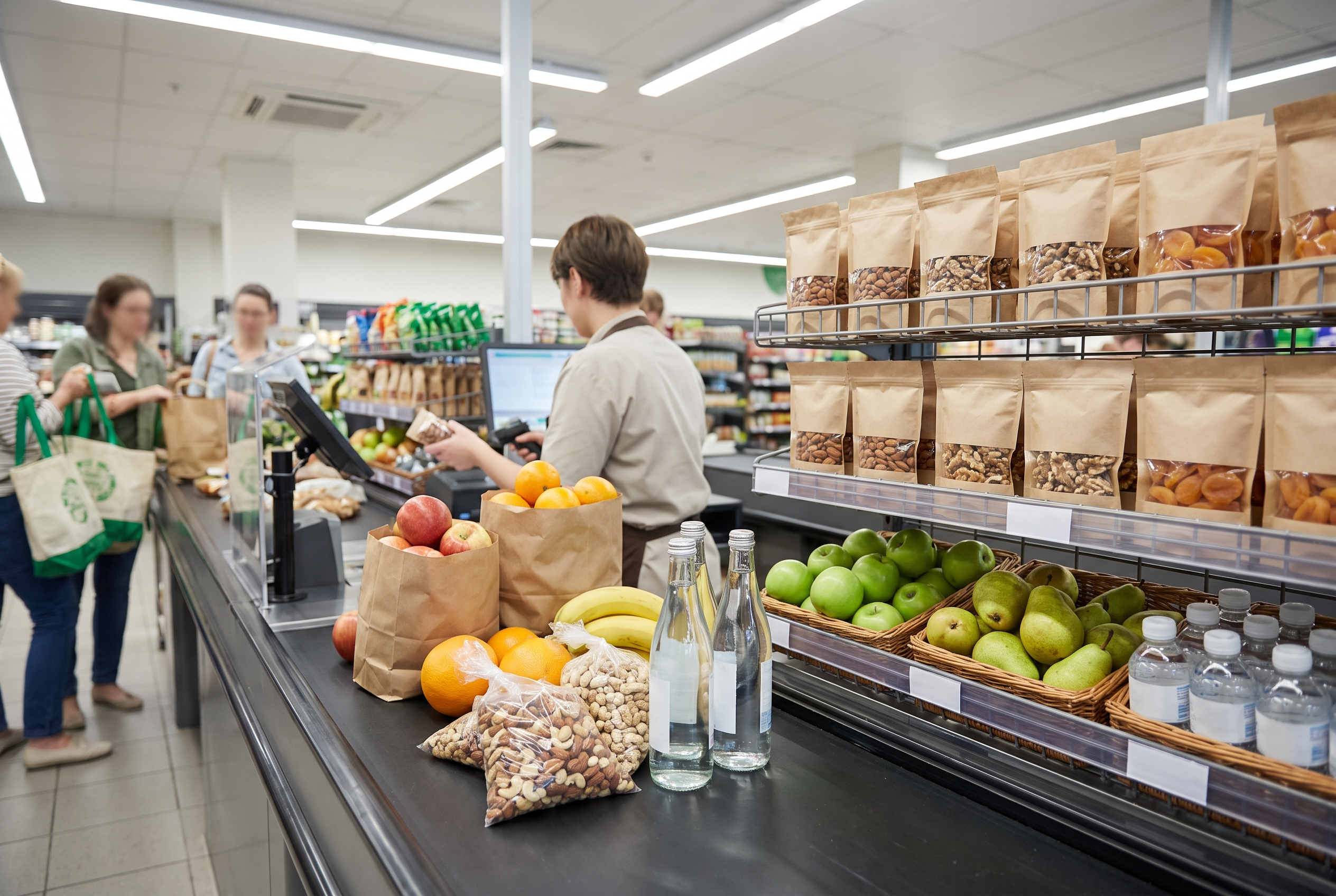
Berkeley, in California, became the first city in the world to ban shops from displaying sugary drinks and snacks in the checkout lane. Enforcement of the rule stepped up in 2022. Researchers have now measured what happened, and the results were reported on 10 September 2026 in The Lancet Public Health. The study was led by Justin White and Ziyue Xu at Boston University School of Public Health with Jennifer Falbe at the University of California, Davis, alongside colleagues at Washington University in St. Louis, the University of Illinois Chicago and Stanford University. They used till data from 71 stores, comparing Berkeley with three similar Californian cities that had no such rule: Davis, Oakland and Sacramento. The data ran from March 2019 to December 2023. Fizzy drink sales fell. Sales of small packets of sweets fell in supermarkets. Sales of snack-sized nuts and seeds went up.
Why this matters
The checkout queue is not an accident of shop design. It is one of the most carefully engineered pieces of retail space there is. You are standing still. You are slightly bored. You have already decided what you came for, so your guard is down. That is exactly when a chocolate bar at eye level does its work. As Dr White put it, checkout lanes are "intentionally designed to draw shoppers' attention to snacks and beverages with high added sugar". This matters for families in particular. Anyone who has queued at a till with a tired five-year-old knows the design is working on the child as well as on you. What makes this study useful is that it is not asking people what they would do. It is counting what they actually bought, over nearly five years, in real shops.
What the evidence actually says
The results were genuinely mixed, and the researchers said so rather than picking the flattering half. Fizzy drink sales dropped after the rule was enforced. Small packets of sweets, the kind sold specifically for impulse buying, also dropped in supermarkets. Sales of healthier snack packs rose. But total sweet sales went up modestly. So some shoppers appear to have bought their sweets elsewhere in the shop, in bigger packets. The biggest single finding was about enforcement. Supermarkets followed the rule most closely and showed the largest falls in sugary purchases. Drug stores followed it least, and showed almost no change at all. Dr White's conclusion was blunt: cities "must actively enforce these policies if they aim to see meaningful and sustained decreases". A rule nobody checks is not really a rule. Dr Falbe added the important caveat: "No single policy alone can address the problems with our food system." One more limit worth noting. This was a study of what was sold, not of what was eaten, and not of anyone's health. It cannot tell you whether anyone's teeth or weight changed. The study was funded by the US National Institute of Diabetes and Digestive and Kidney Diseases.
Practical advice
You do not need a new law to use what this study shows. The finding is really about how much your surroundings shape what you buy. Shop with a list, and treat it as the decision. The list is you, calm, at home. The checkout is you, tired, at 5.30pm. Try not to shop hungry. It is an old piece of advice because it keeps being true. If you shop online, you skip the checkout display entirely. For some families that alone makes a difference. At the till, pick a lane without a sweet display if there is one. Small effort, no willpower needed. Keep an alternative in your bag for children: a small pack of nuts, some dried fruit, a satsuma. The point is not to say no, it is to have something to say yes to. And be kind to yourself about it. The lesson here is not that people lack self-control. It is that the shop was designed to win.
What to know
Berkeley's healthy checkout rule, the first in the world, was linked to lower sales of fizzy drinks and small packets of sweets in supermarkets, and higher sales of snack nuts and seeds. Total sweet sales rose slightly, and shops that were not properly checked barely changed at all. Enforcement was the deciding factor. The study, in The Lancet Public Health, used till data from 71 shops across four Californian cities from 2019 to 2023. It measured sales, not health. For you, the practical point is simple: what is in front of you at the till has more influence than most of us like to admit. Sources: News-Medical.net, "Healthy checkout ordinance linked to lower soda and candy sales", 10 September 2026, https://www.news-medical.net/news/20260910/Healthy-checkout-ordinance-linked-to-lower-soda-and-candy-sales.aspx | The Lancet Public Health, 2026, https://www.thelancet.com/journals/lanpub/issue/current | Global Food Research Program, "Healthy Food Checkout Ordinances: Changing retail food environments", https://www.globalfoodresearchprogram.org/wp-content/uploads/2023/08/FERN23_HCO_factsheet.pdf This article is for general information and does not replace advice from a doctor, pharmacist or other qualified healthcare professional.
Related articles
Researchers found a way to win at Wordle 99% of the time. The trick is counterintuitive
Researchers at Binghamton University, part of the State University of New York, have published a mathematical strategy for the word game Wordle that succeeds in…

Some bats live 50 years. A new study looked at why, and the answer is surprising
Bats should not live as long as they do. In the animal world there is a rough rule: small things die young. A mouse weighs about the same as a small bat and li…
Where have all the wasps gone? A strange summer for a much-hated insect
Something odd has happened in British gardens this summer. The wasps largely have not turned up. By late August most of us are usually batting them away from a…