
The sugar-free sweetener that your body may turn into sugar after all
What happened
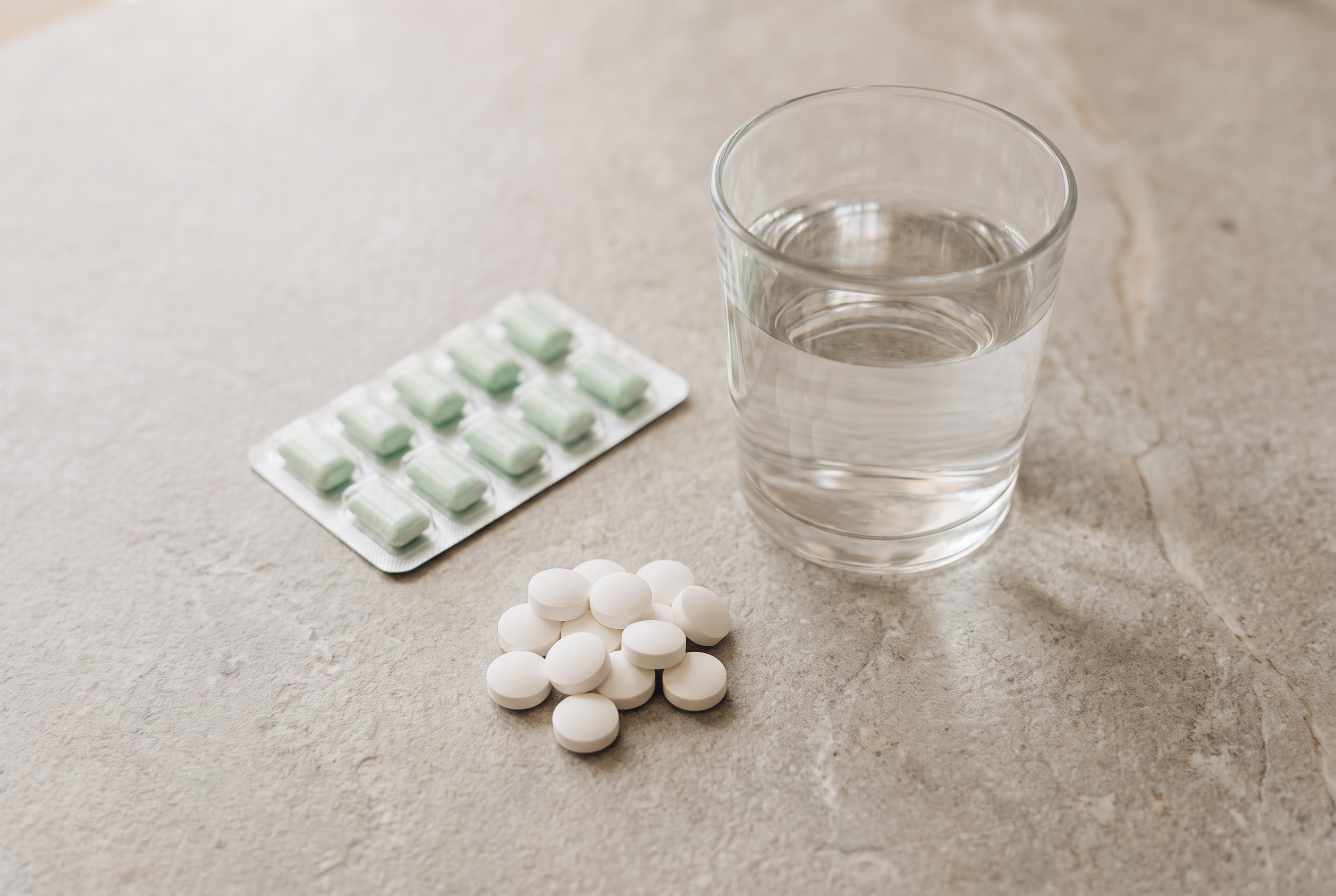
Sorbitol is one of the most widely used sweeteners you have probably never thought about. It is a sugar alcohol, and it turns up in sugar-free chewing gum, mints, sweets, some 'no added sugar' products, and a number of medicines, including liquid ones. It is also used as a laxative, which is a clue to how the body handles it. Research from Washington University in St Louis, reported in early September 2026, suggests sorbitol may not be as inert as its reputation implies. The researchers found that sorbitol can be converted in the liver into fructose 1-phosphate, a compound in the fructose pathway. In adult zebrafish whose gut bacteria had been sharply reduced, sorbitol travelled to the liver, was converted, and then changed how the liver handled energy: it activated glucose metabolism and increased the build-up of both fat and glycogen in the organ. There were two other findings worth knowing. First, your own body can make sorbitol. Enzymes in the intestine can produce it from glucose after a meal, so it is not purely something you eat. Second, certain gut bacteria, including some Aeromonas strains, can break sorbitol down into a harmless product, which appears to keep it in the gut and stop it reaching the liver. So what happens to sorbitol seems to depend on how much you have taken in and which bacteria are living in your gut.
Why this matters
A great many people have swapped sugar for sugar-free products in good faith. Sugar alcohols like sorbitol, xylitol and maltitol have been a big part of that, because they taste sweet, contain fewer calories, and do not cause tooth decay. The tooth decay benefit is real and well established, and nothing here changes it. What this research questions is the assumption that a sweetener which is not sugar therefore has no metabolic effect. Fructose in large amounts is linked to fat building up in the liver, which is now the most common liver condition in the UK. If sorbitol can become a fructose compound inside the body under some conditions, then 'sugar-free' may not mean 'metabolically free' for everyone. The role of gut bacteria is the genuinely novel part. It suggests that two people could eat the same sugar-free mints and have quite different things happen, depending on their gut microbes. That fits a broader pattern emerging across nutrition science: population-level advice hides a lot of individual variation.
What the evidence actually says
This is early-stage research, and most of the experiments were done in zebrafish. Zebrafish are genuinely useful for studying liver metabolism, and they let researchers do things you cannot do in people, such as sharply reducing gut bacteria and watching what happens. But a fish is not a person, and the fish in this study had a deliberately depleted microbiome, which is not the state most humans are in. So the findings cannot show that sorbitol causes liver disease in humans. The research team has been clear about that. What the study does provide is a plausible route by which it might, and a reason to look. Earlier work, published in 2025, had already linked sorbitol to liver disease, so this is not an isolated signal. It is also worth being proportionate about doses. Sorbitol has well-known effects at high intakes, which is why products containing more than a certain amount must carry the warning that excessive consumption may produce laxative effects. Most people who chew the occasional piece of gum are nowhere near the amounts used in laboratory work. The honest position: not a reason to panic about a packet of mints, and a good reason for researchers to run proper human studies. Regulators including the Food Standards Agency keep sweetener safety under review, and if that view changes, it will change on the basis of human evidence.
Qurexa perspective
There is one angle here that is easy to miss, and it sits close to what we do. Sorbitol is not only in food. It is a common ingredient in liquid medicines, and in some tablets, as a sweetener and bulking agent. For most people that is completely unimportant. But for someone taking several liquid medicines a day, long term, the amounts can add up, and sorbitol at higher doses is a recognised cause of diarrhoea and stomach discomfort. If you or someone you care for has unexplained tummy trouble and takes multiple liquid medicines, that is a genuinely worthwhile question to raise with your pharmacist. Sugar-free formulations sometimes have alternatives, and a pharmacist can check the excipients, which is the technical term for the non-active ingredients in a medicine. It is exactly the sort of thing that gets missed because nobody thinks to ask. Please do not stop any medicine on your own. Ask first.
Practical advice
Nothing in this research warrants throwing anything away. A few sensible steps, though. Read the ingredients rather than the front of the packet. 'Sugar-free' and 'no added sugar' are marketing phrases. The ingredients list tells you what is actually in there, and sorbitol appears as sorbitol or as E420. If sugar-free sweets or gum give you bloating, wind or loose stools, sorbitol is a very likely culprit, and cutting back usually settles it quickly. Do not let this push you back towards sugary versions. The evidence that free sugars harm teeth and contribute to weight gain is far stronger than anything in this early research. Water, and unsweetened food, remain the straightforward answer. If you are concerned about liver health specifically, the things that matter most are well established: alcohol intake, body weight, physical activity and, where relevant, managing type 2 diabetes. And if you take several liquid medicines, ask your pharmacist about their sorbitol content rather than working it out yourself.
What to know
Researchers at Washington University in St Louis found that sorbitol, a sweetener in sugar-free gum, sweets and some medicines, can be converted in the liver into a fructose compound, and in zebrafish with depleted gut bacteria this increased fat and glycogen build-up in the liver. Some gut bacteria appear to break sorbitol down and keep it out of the liver, so the outcome may vary from person to person. Your own intestine can also make sorbitol from glucose. This is early animal research and does not show that sorbitol causes liver disease in people. The dental benefits of sugar-free products are unchanged. If sugar-free sweets upset your stomach, sorbitol is a likely cause, and if you take several liquid medicines, ask your pharmacist about their sorbitol content. Sources: ScienceDaily, 'Scientists discover a hidden problem with this popular sugar substitute', 3 September 2026, https://www.sciencedaily.com/releases/2026/09/260903064251.htm ; Medical Xpress, 'Alternative sweetener sorbitol linked to liver disease', November 2025, https://medicalxpress.com/news/2025-11-alternative-sweetener-sorbitol-linked-liver.html ; SciTechDaily, 'Scientists Link Popular Sugar Substitute to Liver Disease', https://scitechdaily.com/scientists-link-popular-sugar-substitute-to-liver-disease/ This article is for general information and does not replace advice from a doctor, pharmacist or other qualified healthcare professional. Never stop or change a prescribed medicine without speaking to your clinician or pharmacist first.
Related articles

Researchers found a way to win at Wordle 99% of the time. The trick is counterintuitive
Researchers at Binghamton University, part of the State University of New York, have published a mathematical strategy for the word game Wordle that succeeds in…

Some bats live 50 years. A new study looked at why, and the answer is surprising
Bats should not live as long as they do. In the animal world there is a rough rule: small things die young. A mouse weighs about the same as a small bat and li…
Where have all the wasps gone? A strange summer for a much-hated insect
Something odd has happened in British gardens this summer. The wasps largely have not turned up. By late August most of us are usually batting them away from a…