
£1.5 billion for NHS buildings, including £32m to cool hot wards
What happened
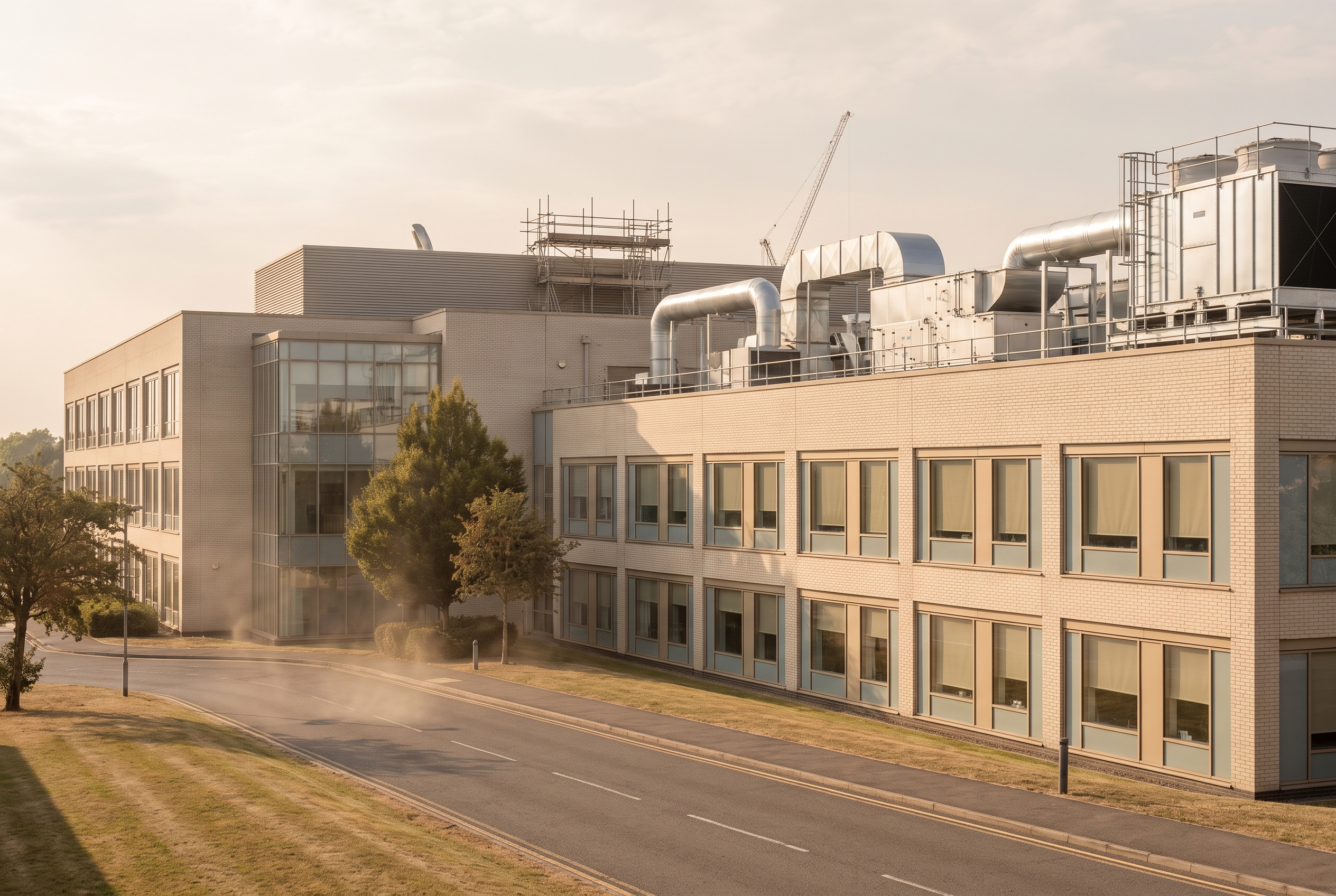
On Wednesday 9 September 2026, the Department of Health and Social Care announced more than £1.5 billion for NHS buildings in England. The money will pay for over 950 separate projects. They range from big building schemes to small but important repairs. The announcement splits into three parts. Just over £200 million goes to 10 major hospital schemes. The largest is £41 million for new operating theatres at Bristol Royal Infirmary. The Royal Free Hospital in London gets £32 million, also for operating theatres. Stepping Hill Hospital in Stockport gets £26 million for a new pathology building, which is where samples such as blood tests are analysed. The other seven named schemes are Wycombe Hospital in Buckinghamshire (£25 million), St George's Hospital in Stafford (£25 million), the John Howard Centre in London (£25 million), the Crystal Centre and Linden Centre in Essex (£15 million), the Queen Elizabeth Hospital in Gateshead (£12 million), the Lister Hospital in Hertfordshire (£11 million) and Southend Hospital in Essex (£1 million). Several of these are for maternity, mental health or children's services. A further £1.3 billion goes on maintenance, safety and resilience across the NHS estate. That covers unglamorous but vital work: fire safety, electrical systems and worn-out equipment. The part that has drawn most attention is smaller. £32 million is set aside for cooling, ventilation and reducing overheating, so hospitals cope better in extreme heat. Yvette Cooper, Secretary of State for Health and Social Care, said: "For decades, hospitals have focused on preparing for winter pressures, but the NHS is now facing new challenges, including periods of extreme heat and sustained pressure on services throughout the year." The money comes from the Estates Safety Fund, which was set out earlier and is worth £6.75 billion in total.
Why this matters
Hospital buildings are easy to overlook. They are not doctors, nurses or medicines. But they decide a lot about the care you get. If an operating theatre has to close because of a fault, planned operations are cancelled. If a pathology lab goes down, test results are delayed. If a ward gets too hot in July, patients who are already unwell get more uncomfortable, and staff work in difficult conditions. The scale here is worth noticing. This is not one hospital in one city. It is more than 950 projects spread across England, in big teaching hospitals and smaller district ones alike. That tells you the problem is widespread, not local. The heat point is the genuinely new part of the story. For years, the NHS planned for winter: flu, cold snaps and busy A&E departments. Summer was the quieter season. Recent hot summers have changed that thinking. Buildings put up decades ago were designed to hold heat in, not let it out. So this announcement is partly about repairs, and partly about a shift in what the NHS is preparing for.
What the evidence actually says
It is worth being careful about what has and has not been promised. First, this is not brand new money. The £1.5 billion comes from the £6.75 billion Estates Safety Fund, which was already announced. NHS England's capital guidance for 2026/27 to 2029/30 describes that fund as roughly £750 million a year over nine years, aimed at cutting critical infrastructure risks and reducing incidents that stop clinical services running. What is new today is the decision about where a chunk of that money goes, and which schemes have been picked. Second, the ten major schemes are still subject to design work and business case approval. In plain English, that means the amounts are allocated but the spades are not in the ground yet. Some of this work will take years. Third, the cooling money is modest. £32 million out of more than £1.5 billion is about 2 pence in every pound. The announcement does not say how many hospitals will get cooling or ventilation work, or when it will be finished. None of that makes the announcement unimportant. It does mean it is a step, not a solution. If you read a headline suggesting hot wards are about to be fixed everywhere, that is going further than the evidence supports.
Qurexa perspective
We deliver prescriptions and support people with their medicines here in Lincolnshire, so two parts of this story stand out to us. The first is disruption. Building work is good news in the long run, but in the short run it can mean clinics move, entrances change and appointment letters get updated. If you or someone you care for has hospital appointments coming up, it is worth double-checking the details rather than assuming nothing has changed. The second is heat. Hospitals are not the only buildings that got uncomfortably warm this summer. Homes did too, and that is where most medicines are kept. Keeping medicines in good condition at home is a small thing that quietly matters, and it is something we talk about with customers most summers. We would rather point you to the official advice below than sell you anything on the back of a news story.
Practical advice
If you have a hospital appointment booked Check your latest letter, text or email before you travel, especially if your hospital is one of those named above. Departments sometimes move while work is going on. If your appointment is cancelled or moved, ring the number on your letter rather than waiting. Rebooking early usually gets you a better choice of dates. Looking after medicines in hot weather The MHRA published clear advice on this in June 2026. Three points stand out. Store medicines below 25°C in a cool, dry place, out of direct sunlight. That includes tablets, inhalers, patches, insulin and adrenaline pens, not just tablets. Keep them in a cupboard away from windowsills, and out of parked cars and warm bags. Bathroom cupboards are a poor choice because of the damp. Stay well hydrated if you take water tablets (diuretics), ACE inhibitors, beta-blockers or calcium channel blockers, as these can raise the risk of dehydration. Some diabetes medicines and antipsychotics can also make heat harder to handle. Watch for dizziness, headache, tiredness or confusion. Check whether your medicine makes you burn more easily in the sun. Some antibiotics, diuretics, antidepressants and acne treatments do. Alison Cave, Chief Safety Officer at the MHRA, said: "Some medicines can also make you more likely to burn in the sun, feel dizzy, or get dehydrated." Methotrexate needs particular care, as it can cause extreme skin sensitivity to the sun even at low doses. Important: never stop or change a prescribed medicine because of hot weather. Speak to your GP or pharmacist first. If a medicine has changed colour, texture or smell, do not take it. Ask your pharmacist. Ordering repeat prescriptions Order a few days before you run out rather than on the last day. It gives everyone time to sort out problems without a rush.
What to know
The Department of Health and Social Care has announced more than £1.5 billion for over 950 NHS building projects in England, published on 9 September 2026. Just over £200 million goes to 10 major schemes, including £41 million for operating theatres at Bristol Royal Infirmary and £32 million for operating theatres at the Royal Free Hospital in London. About £1.3 billion goes to maintenance, fire safety, electrical work and resilience. £32 million is set aside for cooling, ventilation and reducing overheating, reflecting a shift from planning only for winter to planning for hot summers too. The money comes from the previously announced £6.75 billion Estates Safety Fund, so it is an allocation of existing funding rather than new money, and the major schemes still need design work and business case approval. If you have a hospital appointment, check your letter before travelling. If you take medicines at home, store them below 25°C, out of the sun, and ask your pharmacist if you are unsure. Sources: Department of Health and Social Care, "Over £1.5 billion to help NHS withstand year-round pressure", 9 September 2026, https://www.gov.uk/government/news/over-15-billion-to-help-nhs-withstand-year-round-pressure ; UKPOL, "Government announces £1.5 billion for NHS building improvements", 9 September 2026, https://www.ukpol.co.uk/news-story-government-announces-1-5-billion-for-nhs-building-improvements/ ; NHS England, "Capital guidance 2026/27 to 2029/30", published 17 November 2025 and updated 11 February 2026, https://www.england.nhs.uk/long-read/capital-guidance-2026-27-to-2029-30/ ; MHRA, "Don't let this heatwave affect your medicines: three important tips from the MHRA", 26 June 2026, https://www.gov.uk/government/news/dont-let-this-heatwave-affect-your-medicines-three-important-tips-from-the-mhra This article is for general information and does not replace advice from a doctor, pharmacist or other qualified healthcare professional. Never stop or change a prescribed medicine because of hot weather without speaking to your GP or pharmacist first.
Related articles
A new lung cancer drug beat the current standard on survival. Here is the detail
Results from a large lung cancer trial were presented on 12 September 2026 at the World Conference on Lung Cancer, run by the International Association for the…
A two-minute test that tells you whether laser surgery for reading vision will suit you
Research presented at the 44th Congress of the European Society of Cataract and Refractive Surgeons has found that a simple, quick test can predict whether a pa…
The body's own brake on inflammation - and a drug that helped it work
Researchers at University College London have described a natural 'off switch' that helps the body stop inflammation once it has done its job. The work was publ…