
Brussels Airport is back on the high-speed rail map after more than a decade
What happened
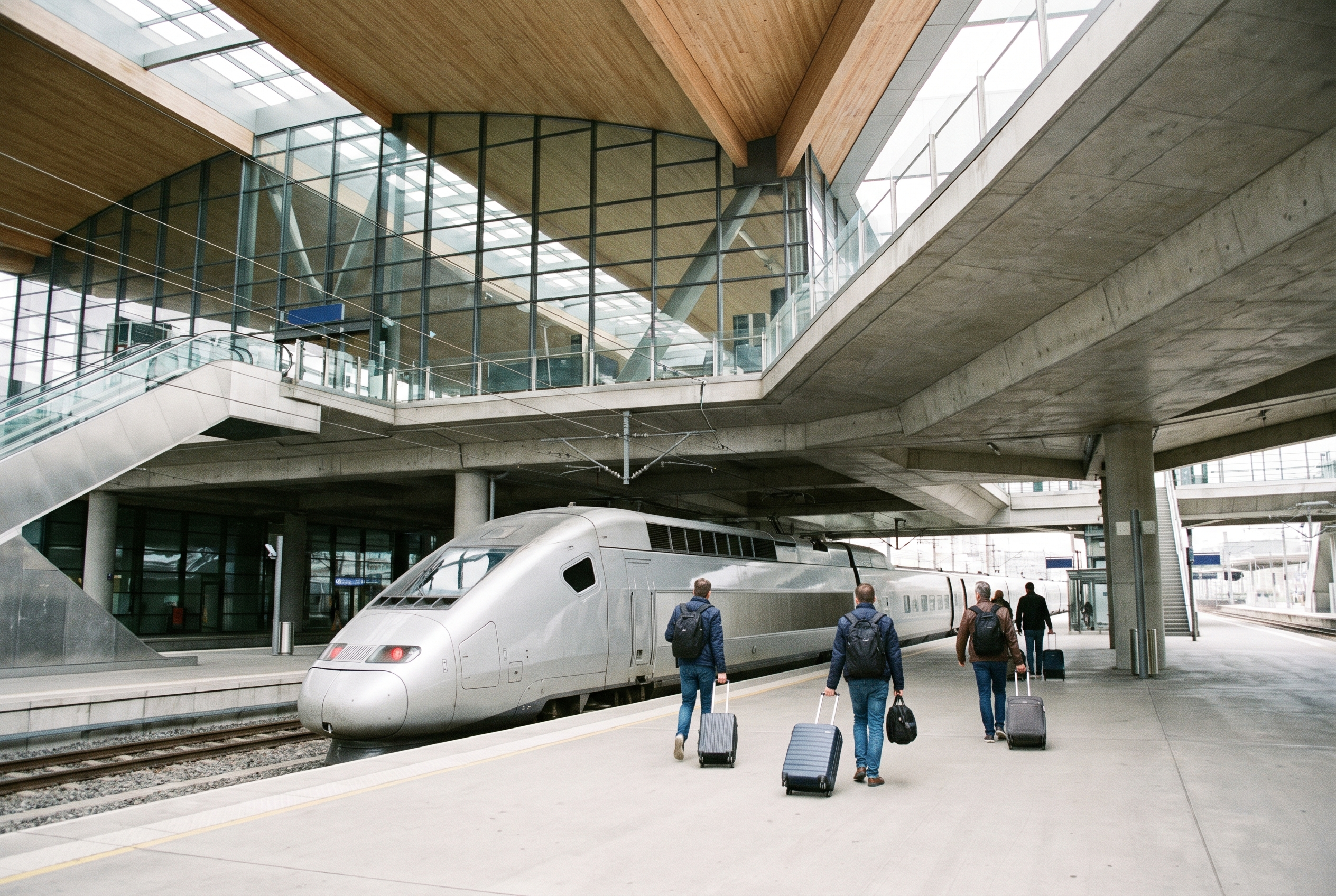
Brussels Airport has regained a direct international high-speed rail connection for the first time in more than a decade. The new service began on 7 September 2026 and was reported on 8 September 2026. Deutsche Bahn, the German national rail operator, now runs two ICE services each way per day between Cologne and Antwerp. Brussels Airport is a stop along the route, alongside Aachen, Liege and Leuven. That means passengers can travel from western Germany directly to the airport terminal by high-speed train, rather than changing in Brussels city centre and taking a local connection. Brussels Airlines and Deutsche Bahn have also set up a joint booking arrangement, announced in February 2026. Passengers can buy a single ticket covering both the train and the flight. More than 1,000 such tickets have been sold since the partnership was announced. The combined ticket comes with two useful features. Passengers collect Miles & More points, and they are guaranteed a connection if a delay causes them to miss the next leg. That second point is the important one: with separate tickets, a delayed train usually means buying a new flight. Arnaud Feist, the airport's chief executive, said the service "marks an important step in further development as an intermodal hub". Dr Michael Peterson of Deutsche Bahn said the aim was "making international rail travel even easier and more appealing".
Why this matters
For UK travellers this is not a direct connection, but it is a useful piece of a bigger jigsaw. Brussels is already reachable from London by Eurostar in around two hours. Brussels Airport has long been a sensible place to pick up longer flights. What has been missing is the ability to move on from Brussels by fast train without changes that make the journey feel like hard work with luggage. For people who prefer not to fly short distances, or who cannot fly for medical reasons, more rail links mean more of Europe becomes reachable without an aeroplane. There is also an accessibility angle worth naming. Rail travel is often significantly easier than flying for people with limited mobility, for wheelchair users, and for anyone travelling with bulky medical equipment. There is no baggage size limit on liquids, no security queue of the same intensity, and it is generally easier to move around, use a toilet or stretch during the journey. Train travel also produces far lower carbon emissions per passenger than a short-haul flight over the same distance. The through-ticketing point matters more than it sounds. Guaranteed connections remove the single biggest reason people avoid mixing trains and planes: the fear of being left stranded and out of pocket.
What the evidence actually says
It is worth being clear about the scale of this. Two return services a day is a modest offer, not a transformation. The route runs between Cologne and Antwerp. It does not connect Brussels Airport directly to London, Paris or Amsterdam by high-speed rail. The combined air-rail ticket is currently a partnership between Deutsche Bahn and Brussels Airlines specifically. It is not a general arrangement covering every airline flying from the airport. The 1,000 tickets sold since February 2026 is a real figure, but it is a modest one for an airport of this size. This is an early-stage service being tested rather than a mature network. The guaranteed connection applies within that partnership. If you book a train and a flight separately with different companies, you have no such protection, and that has not changed. It is also fair to note that the previous international rail service to Brussels Airport was withdrawn, which is a reminder that these connections are not permanent fixtures. They depend on demand. None of that makes the news less welcome. It just means the honest description is "a good first step that may grow", rather than a completed network.
Practical advice
If you are considering a rail-and-air trip through Brussels, book the legs on a single ticket wherever possible. The protection when something goes wrong is worth far more than a small saving from booking separately. If you must book separately, leave a generous gap. Three hours between a train arrival and a flight departure sounds excessive until a train is 90 minutes late. Check your travel insurance covers missed departures. Many standard policies do, but the conditions vary and some require a minimum connection time. For anyone travelling with medicines: rail travel is more forgiving than flying, but keep the same habits. Carry medicines with you rather than in a stored bag, keep them in original labelled packaging, and bring more than the trip strictly requires. If you are travelling in Europe, apply for a free GHIC before you go. It gives access to state-provided medically necessary healthcare in the EU on the same basis as a local resident. Apply through the official NHS route - it is free, and websites charging a fee for it are not official. If you need assistance at stations or on board because of a disability or reduced mobility, book it in advance. European rail operators generally require notice, and the amount of notice varies by country. Finally, check whether your journey needs any Schengen border formalities. Travelling by train does not exempt UK passport holders from EU entry requirements.
What to know
Deutsche Bahn began running ICE high-speed services calling at Brussels Airport on 7 September 2026, the airport's first international high-speed rail link in more than a decade. There are two return services a day between Cologne and Antwerp, also serving Aachen, Liege and Leuven. Brussels Airlines and Deutsche Bahn offer a combined single ticket with guaranteed connections if a delay causes a missed leg - more than 1,000 have been sold since February 2026. This is a modest service rather than a network. It does not connect the airport directly to London, Paris or Amsterdam by high-speed rail. For UK travellers, it makes Brussels a slightly more useful hub, especially for anyone who prefers or needs to travel by train. Sources: Euronews Travel, "Brussels Airport reconnects to Europe's high-speed rail network after more than 10 years", 8 September 2026, https://www.euronews.com/travel/2026/09/08/brussels-airport-reconnects-to-europes-high-speed-rail-network-after-more-than-10-years ; NHS, Global Health Insurance Card (GHIC) information, https://www.nhs.uk/using-the-nhs/healthcare-abroad/apply-for-a-free-uk-global-health-insurance-card-ghic/ This article is for general information and does not replace advice from a doctor, pharmacist or other qualified healthcare professional. If you take prescription medicines abroad, check the rules for your destination before you travel.
Related articles

Two weekends, two different closures, and a concrete foundation under a tunnel in Glasgow
Network Rail announced on 14 October 2026 that it is carrying out £1.7 million of work on Glasgow's Argyle line and at Glasgow Central Low Level station. The w…
A burst sewer pipe in December 2025, and 1km of track that has to be replaced because of it
Network Rail issued a reminder on 13 October 2026 that the Hertford East branch line closes for nine days, from Saturday 17 to Sunday 25 October 2026. Four sta…
Nine days, one tunnel, and three speed restrictions caused by a dry summer
Network Rail announced on 14 October 2026 that the Hastings line will close for nine days over the October half term. The dates are Saturday 24 October to Sund…