
Hundreds of flights were cancelled by an air traffic fault. Here is where you stand
What happened
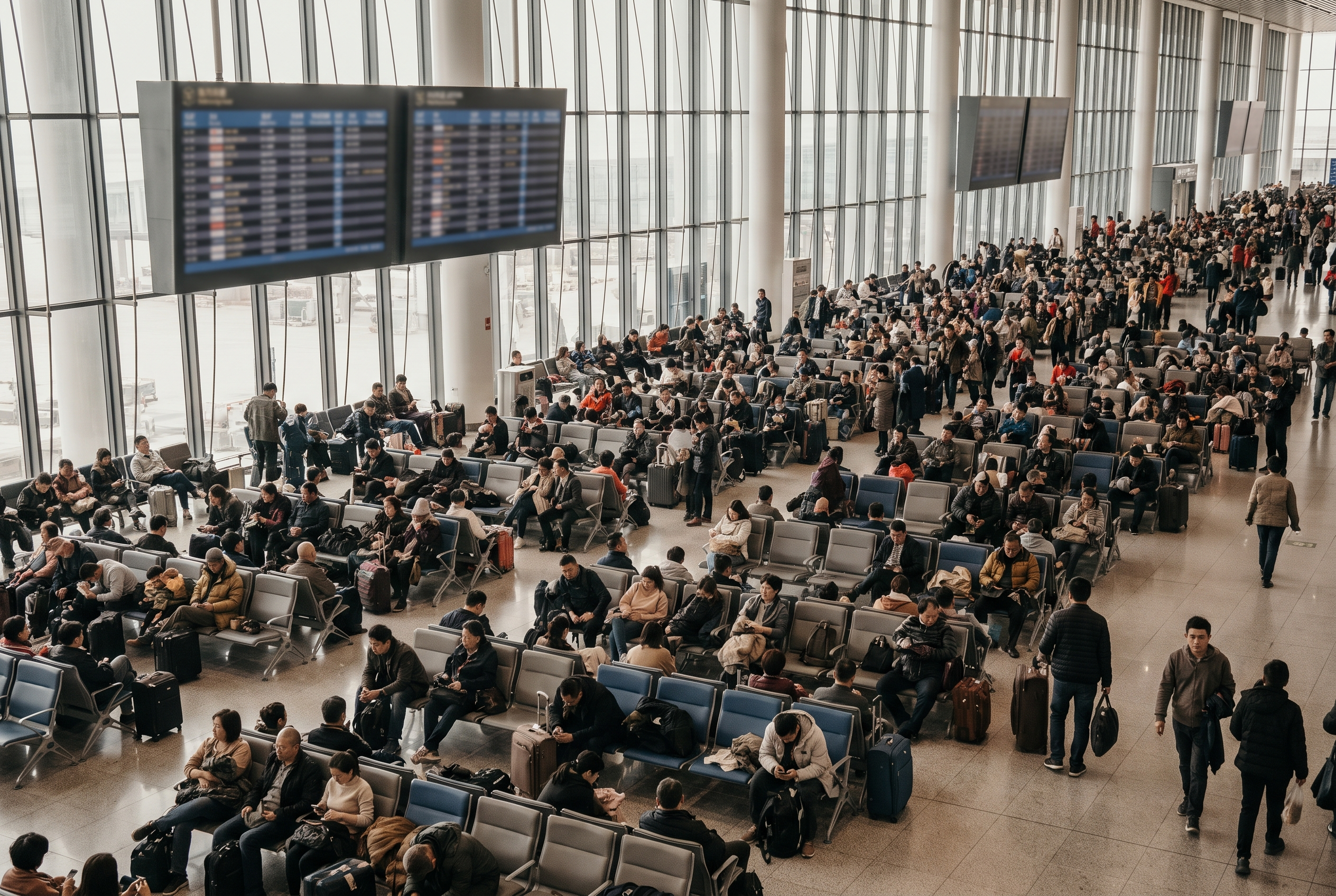
A technical fault at NATS, the company that runs air traffic control across the UK, caused widespread disruption to flights on Tuesday 8 September 2026. The problem was in the system that processes flight plans. It began around the middle of the day. Because departing aircraft need their flight plans processed, airports had to slow down or temporarily stop take-offs while engineers worked. Controllers prioritised aircraft already in the air. By late afternoon, flight-tracking data showed at least 625 cancellations, with the total number of delayed or disrupted flights approaching 1,000. Heathrow saw around 100 cancellations and 367 delays. Gatwick had roughly 250 delays, about a third of its flights. Stansted, Luton, London City, Manchester, Birmingham, Edinburgh, Glasgow, Aberdeen, East Midlands and Belfast were all affected, and Dublin reported knock-on disruption. British Airways cancelled or diverted more than 100 flights. Ryanair said more than 65,000 of its passengers were delayed and more than 50 of its flights cancelled. easyJet confirmed delays across Europe. NATS said its engineers were "on-site and working urgently to resume normal operations as quickly as possible". A fix was applied in the late afternoon, and NATS announced at 19:34 BST that the fault had been resolved and operations had returned to normal. Transport Secretary Heidi Alexander acknowledged the disruption and apologised to passengers. British Airways told customers: "This is entirely out of our control and we're in touch with our customers whilst our teams work to get them on their way as quickly as possible."
Why this matters
This is the second serious NATS failure in recent years. A 2023 outage cost airlines more than £100 million in refunds and compensation, and led to a regulatory review of contingency planning. For passengers, the practical question is money and rights, and the answer is not straightforward. Air traffic control failures are usually treated as "extraordinary circumstances". That phrase matters, because under UK261 - the UK's retained version of the EU air passenger rights rules - extraordinary circumstances remove the airline's obligation to pay cash compensation for a cancellation or long delay. But, and this is the part many people miss, it does not remove the airline's other duties. The right to care and the right to a refund or re-routing still apply regardless of whose fault it was. Airlines sometimes emphasise the compensation exemption and are quieter about the rest. There is a health angle too, and it is the reason we are covering this story. Thousands of people were stranded overnight or into the following day. A meaningful number of them were carrying a limited supply of prescription medicine.
What the evidence actually says
Here is what the rules actually say, in plain terms. If your flight departed from a UK airport, or was on a UK or EU airline flying into the UK, UK261 applies. Right to care. If you are delayed beyond a set threshold - two hours for short flights, longer for further ones - the airline must provide food and drink appropriate to the wait, two free phone calls or emails, and hotel accommodation plus transfers if you are kept overnight. This applies even in extraordinary circumstances. Right to a refund or re-routing. If your flight is cancelled, you choose between a full refund and being re-routed to your destination at the earliest opportunity. The choice is yours, not the airline's. Re-routing can include another airline, though airlines do not always volunteer this. Cash compensation. This is where extraordinary circumstances usually apply. An air traffic control system failure is normally outside the airline's control, so fixed compensation is generally not payable. Airlines will still assess claims individually. If the airline fails to provide care and you have to arrange your own meals or hotel, keep every receipt. Reasonable costs can be claimed back. Reasonable means a modest hotel and ordinary meals, not a luxury suite and champagne. Travel insurance may cover some costs that airlines will not, particularly missed connections and prepaid arrangements. Check your policy's travel disruption section. If an airline refuses a valid claim, you can escalate to an alternative dispute resolution scheme. Most UK airlines belong to one, and the Civil Aviation Authority lists which scheme covers which airline.
Qurexa perspective
The part of this story that gets least attention is medicines. When people pack for a trip, they very often take exactly the number of tablets the trip needs, and no more. That works perfectly until an air traffic control system fails and one night becomes three. Running out of a blood pressure tablet, an inhaler, insulin or an anticoagulant while stranded abroad is not a minor inconvenience. Getting a replacement in another country, without a local prescription, can be slow and expensive. As a pharmacy delivery service, this is something we see the other side of: people coming home from disrupted trips having missed several days of a medicine that is not supposed to be interrupted. The fix is very simple and costs nothing. Take more than you need, keep it in your hand luggage, and carry a copy of your repeat prescription list. If you are travelling in the next few weeks and you are running low on a repeat medicine, order it before you go rather than after you get back.
Practical advice
If you are disrupted by any flight problem, do these things in order. Stay near your gate or check the airline app before you queue. Airline apps often rebook faster than a desk queue, and some carriers offered fee-free changes during this disruption. Ask explicitly for care. Use the words: "I am requesting my right to care under UK261." Meals, and a hotel if it is overnight. Choose refund or re-routing deliberately. If you still need to get there, ask for re-routing, including on another airline. If your trip no longer makes sense, take the refund. Photograph the departure board and keep boarding passes, booking references, receipts and any messages from the airline. Claims are far easier with evidence. For medicines specifically: always pack them in hand luggage, never in the hold. Take at least a week more than the trip needs. Carry them in original labelled packaging. Keep a written list of your medicines, including generic names and doses, in case you need to explain them to a pharmacist abroad. If you use a medicine that needs refrigeration, ask the airline for help before you need it, not after. Before any trip, check you have a valid GHIC or EHIC card if travelling in Europe, and travel insurance that covers your existing conditions. The card is free and never costs money to apply for.
What to know
A fault in the NATS flight-plan processing system on 8 September 2026 caused at least 625 UK flight cancellations and close to 1,000 disrupted flights before being fixed by early evening. Air traffic failures are normally treated as extraordinary circumstances, so fixed cash compensation is generally not payable. Your right to care - meals, communication and overnight accommodation - and your right to a full refund or re-routing still apply regardless of the cause. Keep receipts, use the airline app, and ask explicitly for what you are entitled to. If you travel with prescription medicines, carry extra supply in your hand luggage and a written list of what you take. Disruption is the moment that decision pays off. Sources: The National, "Hundreds of flights cancelled after air-traffic control 'technical issue' at major UK airports", 8 September 2026, https://www.thenationalnews.com/news/uk/2026/09/08/hundreds-of-flights-cancelled-after-air-traffic-control-technical-issue-at-major-uk-airports/ ; Al Bawaba, "UK flight chaos as air traffic control failure disrupts hundreds of flights", 8 September 2026, https://www.albawaba.com/news/uk-flight-chaos-air-traffic-control-1636683 ; UK Civil Aviation Authority, passenger rights guidance, https://www.caa.co.uk/passengers/resolving-travel-problems/ This article is for general information and does not replace advice from a doctor, pharmacist or other qualified healthcare professional. If you run short of a prescription medicine while travelling, contact a local pharmacy or doctor rather than skipping doses.
Related articles

Two weekends, two different closures, and a concrete foundation under a tunnel in Glasgow
Network Rail announced on 14 October 2026 that it is carrying out £1.7 million of work on Glasgow's Argyle line and at Glasgow Central Low Level station. The w…
A burst sewer pipe in December 2025, and 1km of track that has to be replaced because of it
Network Rail issued a reminder on 13 October 2026 that the Hertford East branch line closes for nine days, from Saturday 17 to Sunday 25 October 2026. Four sta…
Nine days, one tunnel, and three speed restrictions caused by a dry summer
Network Rail announced on 14 October 2026 that the Hastings line will close for nine days over the October half term. The dates are Saturday 24 October to Sund…