
Music helped people recover from stress faster than the sound of water
What happened
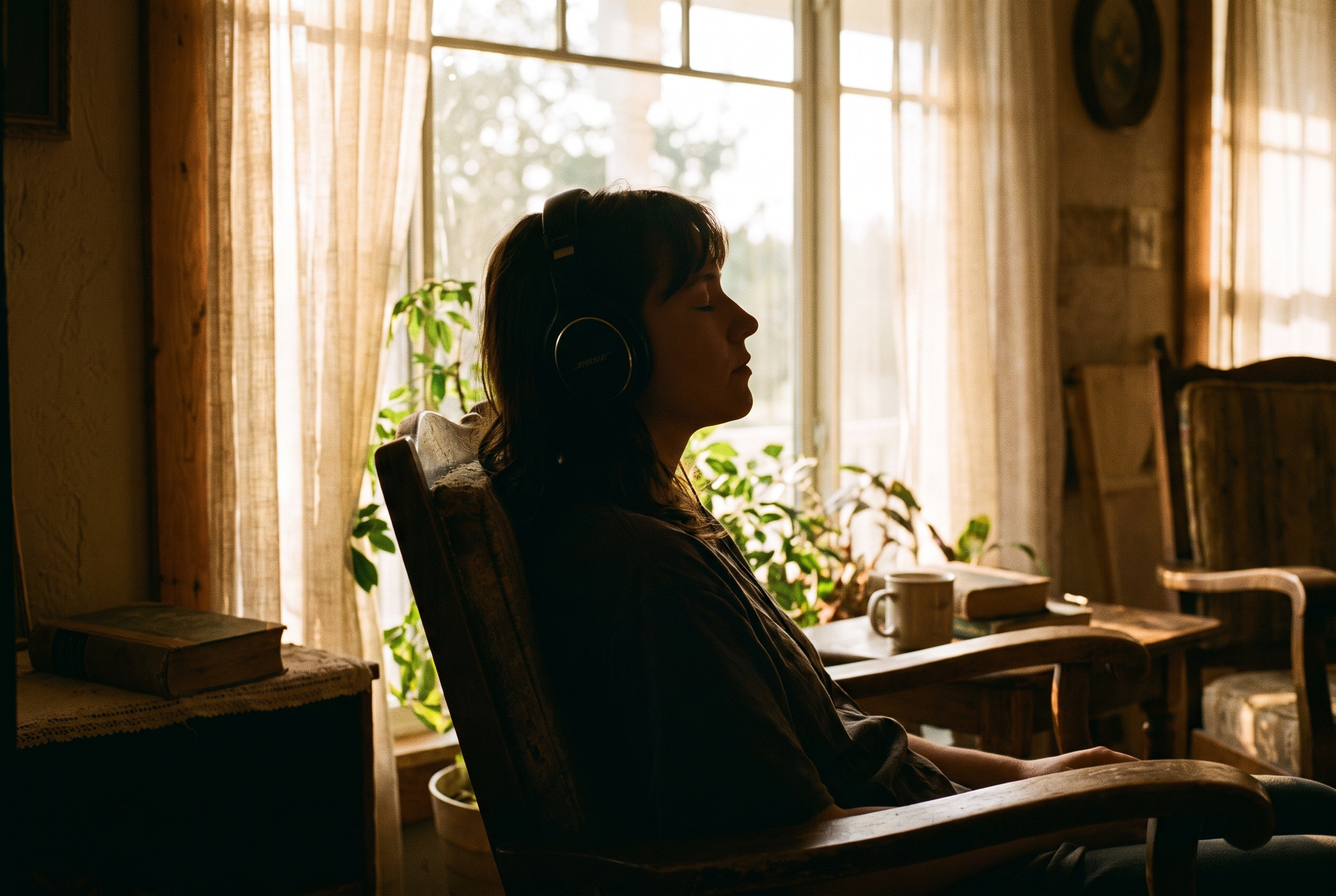
Researchers have found that listening to music after a stressful task helped people settle down faster than listening to calming water sounds. The study was published in the Proceedings of the National Academy of Sciences on 8 September 2026. It was led by Siqi You at the Chinese Academy of Sciences in Beijing. The team worked with 120 healthy volunteers. First they made them stressed, using a method well established in psychology research: mental arithmetic under time pressure. It is not pleasant, and it reliably raises heart rate and stress hormones. Then, during the recovery period afterwards, groups of 30 participants listened either to relaxing music or to soothing water sounds. The researchers tracked what happened in two ways. They measured the body's responses - heart rate, sweating and cortisol levels in saliva. And they used fMRI scanning to watch what was happening in the brain. The music listeners recovered faster. Their heart rate came down more quickly, their sweating settled sooner, and their mood improved more. Saliva samples showed lower cortisol, the main stress hormone, than in the comparison group. The brain scans showed changes in how three regions communicated with each other: the auditory cortex, which processes sound, the insula, which monitors what is happening inside the body, and the thalamus, which routes sensory information. The timing mattered. The benefit showed up after the stressful task had finished, not before it.
Why this matters
Almost everyone has a version of this in their life already. The drive home with the radio on. The playlist that gets you through the washing-up after a hard shift. What this study offers is evidence that the effect is measurable in the body, not just a feeling. That is genuinely useful, because stress is not merely unpleasant. Long-running stress is linked to raised blood pressure, poorer sleep and worse control of conditions like diabetes. It also matters because music is free, available to almost everyone, and has no side effects. In a world of expensive wellness products, an intervention that costs nothing and is already in your pocket deserves attention. The authors put the mechanism in an interesting way: "Music does not simply mask stress; it provides a structural framework that reconfigures the brain's response to it." In plain terms: it is not that music drowns out the stress. It seems to give the brain something ordered to follow while it settles.
What the evidence actually says
This is a well-designed experiment, and it is also a small one. 120 volunteers, split into groups of 30, is a normal size for a brain imaging study. It is not large enough to detect small effects reliably, and results from studies this size do not always replicate. The participants were healthy volunteers. That means the findings apply most directly to ordinary, short-term stress in people without a diagnosed condition. This study does not show that music treats anxiety disorders, depression or post-traumatic stress. The comparison is also worth understanding. Music was compared against water sounds, which are themselves relaxing. So the finding is not "music beats nothing". It is "music beat another calming sound", which is a more demanding test and makes the result more interesting. The stress was artificial: timed mental arithmetic in a lab. Real-life stress lasts longer, has consequences, and cannot be switched off by the experimenter. Whether the same effect holds for a difficult week at work is not something this study can answer. And the benefit appeared during recovery, not as prevention. Music before the stressful task did not do the same job. The authors also note that they do not yet fully understand the role of what they call subjective musical tension - roughly, the build and release within a piece of music - and that this needs more work.
Practical advice
Use music after the stressful thing, not instead of dealing with it. On this evidence, the recovery period is where it helps. Pick something you find genuinely relaxing rather than something a playlist has labelled "calm". Musical taste is personal, and the study used music chosen to be relaxing rather than one specific genre. Give it a proper stretch of time. A single track while you rush between tasks is not the same as sitting with fifteen or twenty minutes of it. Try pairing it with something else that settles the body: slow breathing, a walk, or simply sitting down. Music is not a substitute for rest, but it seems to help rest work. If you are a shift worker, a carer or anyone who comes off a demanding stretch with no natural wind-down, this is worth building in deliberately. The gap between finishing and sleeping is exactly where a recovery routine belongs. If stress is persistent - if it is affecting your sleep, your appetite, your relationships or your ability to work - please speak to your GP. Music helps people recover from ordinary stress. It is not a treatment for an anxiety disorder or depression, and you should not have to manage those alone.
What to know
In a study of 120 healthy volunteers, those who listened to relaxing music after a stressful task recovered faster than those who listened to soothing water sounds, with lower cortisol, quicker drops in heart rate and sweating, and better mood. Brain scans showed changed communication between the auditory cortex, insula and thalamus. The benefit appeared during recovery, not as prevention, and the comparison was against another calming sound rather than silence. This was a small laboratory study in healthy people using artificial stress. It does not show that music treats anxiety, depression or long-term stress conditions. Sources: Medical Xpress, "How music helps the stressed brain bounce back", 8 September 2026, https://medicalxpress.com/news/2026-09-music-stressed-brain.html ; Proceedings of the National Academy of Sciences, You S et al., 2026, DOI 10.1073/pnas.2611584123, https://doi.org/10.1073/pnas.2611584123 This article is for general information and does not replace advice from a doctor, pharmacist or other qualified healthcare professional. If stress or low mood is affecting your daily life, please speak to your GP.
Related articles

The first thing you say matters, and most of us have no idea what it should be
On 15 October 2026, the Ministry of Justice launched a campaign called Respond. It sits within the government's wider ENOUGH campaign on violence against women…
Legal to buy from today, illegal after 11pm: what the fireworks rules actually say
On 15 October 2026, the Office for Product Safety and Standards (OPSS) launched a campaign about fireworks. Its title is 'Think Beyond your garden, Know your Im…
Update: the driest April to September in over a century, and six counties now in severe drought
This is a follow-up to a story we have covered before, because something significant has changed. On 15 October 2026, the government declared severe drought in…