
Britain's tallest standing stones were hauled at least 18km, and now we know from where
What happened
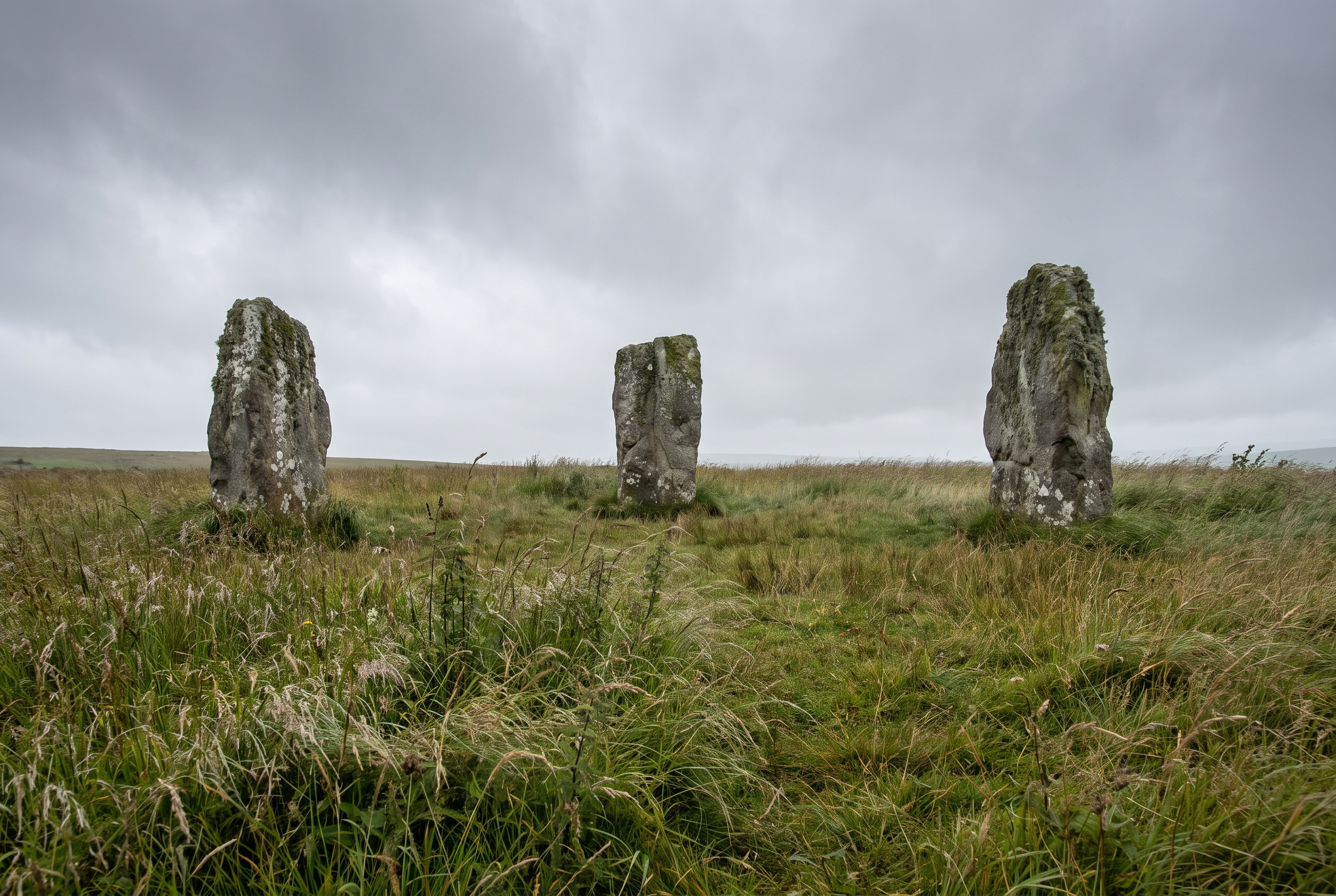
Scientists have worked out where the stones of one of Britain's most striking prehistoric monuments actually came from, and the answer is further away than anyone thought. The Devil's Arrows stand in a field near Boroughbridge in North Yorkshire. There are three of them, up to seven metres tall, and together they form the tallest surviving prehistoric stone row in Britain. They weigh around 25 tonnes each. The research was published on 8 September 2026 in Proceedings of the Royal Society A. It was led by Dr Anthony Clarke of Curtin University in Australia, working with colleagues at the University of York. For a long time, the assumed source was Plumpton Rocks, a nearby outcrop. This study says that is wrong. The team matched the stones to Brimham Rocks instead - a well-known National Trust site of weathered gritstone formations, at least 18 kilometres, or about 11 miles, away. The method was clever and gentle. Rather than drilling into a protected monument, the researchers used adhesive tape to lift tiny mineral grains from the surface of the stones. They then dated the minerals inside those grains. Different rock outcrops have slightly different mineral age "fingerprints". By comparing the fingerprints, they could match the standing stones to their parent outcrop, and rule out the alternatives. They also ruled out the possibility that glaciers had carried the stones there naturally. Somebody moved them on purpose.
Why this matters
Moving a 25-tonne block of gritstone 18 kilometres is not a small job. There were no wheels in general use in Britain at the time, no draught horses as we would recognise them, and no metal tools worth the name. The stones are thought to have been raised in the Late Neolithic or Early Bronze Age, possibly around 2000 BC. That means a community organised, fed and coordinated a very large effort, probably over a long period, to move stone past perfectly usable rock that was closer to hand. This is the part that changes the story. If the stones had come from the nearest outcrop, the obvious explanation would be convenience. Because they did not, the choice looks deliberate. "These stones weren't simply taken from the nearest available source - they were deliberately chosen," Dr Clarke said. Dr Leary, a co-author, said the findings "highlight the importance of landscape and shared belief systems" in how these monuments were built. In other words, where the stone came from mattered to the people who moved it. That tells us something about them that the stones alone could not.
What the evidence actually says
The strength of this study is that the sourcing method is well established and the sampling was non-destructive. Mineral grains in gritstone carry an age signature from the older rocks they eroded out of. Because different outcrops draw on slightly different mixtures, those signatures act like fingerprints. Matching them is a standard technique in geology. Applying it with sticky tape, rather than a drill, means the monument itself is not damaged. That matters for a protected site. The researchers also checked the obvious alternative explanation. Glaciers do move very large rocks long distances, and Yorkshire has plenty of glacial deposits. The pattern here did not fit glacial transport. There are limits, and the team are open about them. The study establishes where the stones came from. It does not establish exactly when they were raised, or how. Dating a standing stone is genuinely hard. You can date material found in the hole it sits in, if you dig, but the researchers say targeted excavation at both the monument and at Brimham Rocks would be needed to pin the timeline down. There is also no direct evidence for the method of transport. Sledges, rollers, timber trackways and river routes have all been suggested for monuments of this kind, and this study does not settle the question.
Practical advice
Both sites in this story are open to visitors, and both are free to walk to, which makes this a genuinely easy day out. The Devil's Arrows stand in a field beside a road just outside Boroughbridge, off the A1(M) in North Yorkshire. Two are in one field and the third is across the road. Access is on foot from a public path. Brimham Rocks is a National Trust site near Summerbridge, with parking, paths and a visitor centre. Parking charges apply for non-members. The rocks themselves are dramatic weathered gritstone formations and popular with families. If you go to either, please treat them gently. The Devil's Arrows are scheduled monuments. Do not climb on them, chip at them or attempt your own sampling. Wear proper footwear at Brimham. The paths are uneven and the rock surfaces get slippery in rain. For anyone with children, this story is an unusually good one to tell on site. The question "why would you carry a rock this heavy for eleven miles when there was rock right here?" is a genuinely open one, and archaeologists are still arguing about the answer.
What to know
Researchers have matched the Devil's Arrows near Boroughbridge in North Yorkshire to Brimham Rocks, at least 18 kilometres away, overturning the long-held assumption that the stones came from nearby Plumpton Rocks. The stones weigh around 25 tonnes each and stand up to seven metres tall, making them Britain's tallest surviving prehistoric stone row. The team used adhesive tape to lift mineral grains without damaging the monument, then matched mineral age fingerprints to the source outcrop, ruling out natural glacial transport. The study establishes where the stones came from, not exactly when they were raised or how they were moved. Both would need targeted excavation. Sources: Phys.org, "Prehistoric builders hauled 25-tonne stones at least 18 km to build iconic Devil's Arrows", 8 September 2026, https://phys.org/news/2026-09-prehistoric-builders-hauled-tonne-stones.html ; Proceedings of the Royal Society A, 2026, DOI 10.1098/rspa.2026.0504, https://doi.org/10.1098/rspa.2026.0504 This article is for general information. It is science and heritage reporting rather than health advice, and does not replace guidance from a doctor, pharmacist or other qualified healthcare professional.
Related articles

Switched on in 1956, switched off in 2003, and now being taken apart piece by piece
Seventy years ago, in October 1956, Queen Elizabeth II opened Calder Hall on the Sellafield site in west Cumbria. It was the world's first nuclear power station…
25 storms, £179,000 of delay each, and ten weather stations bolted to masts already standing
On 14 October 2026, Network Rail announced that its Wales and Borders route has become the first in Britain to turn existing railway radio masts into weather st…
Two dead satellites, 17,000 mph, and one refuellable spacecraft sent to fetch them
On 15 October 2026, the UK government confirmed funding for a mission to go up and fetch two dead satellites. It is called the UK Active Debris Removal mission…