
Mission Coastal starts in two seaside towns. Where next?
What happened
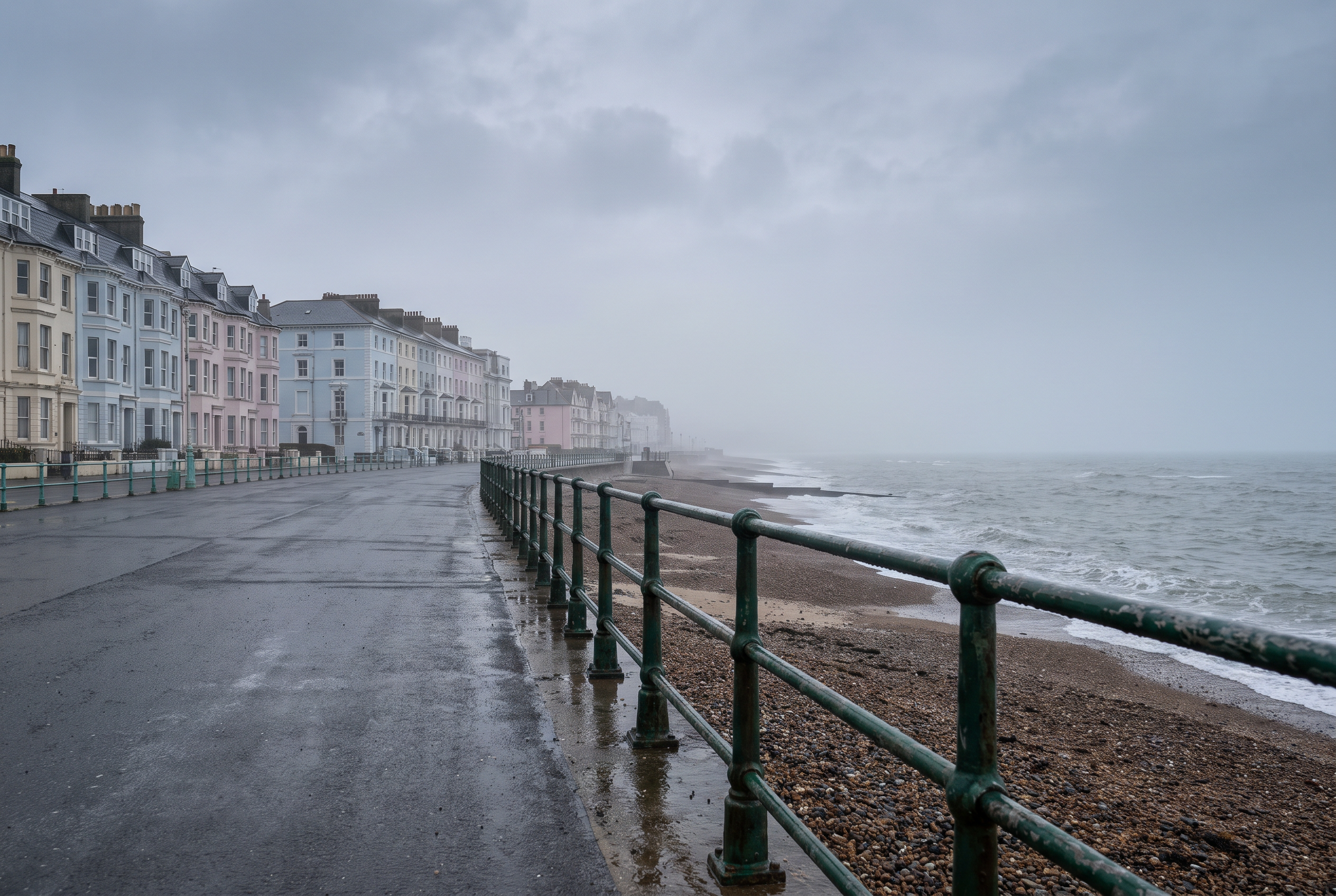
A new government programme aimed at schools in England's coastal towns has begun, and attention has already turned to where it goes next. The programme is called Mission Coastal. It launched in September 2026 in two places: Hastings in East Sussex and Scarborough in North Yorkshire. It was covered by Tes on 8 September 2026. The idea is to help children in coastal communities that have been left behind, through mentoring and through better access to opportunities outside the classroom. The Department for Education has been open about its model: the London Challenge, a school improvement programme from the early 2000s that is widely credited with transforming results in the capital. The DfE chose Hastings and Scarborough using three measures: attainment over three years, attendance rates, and the Income Deprivation Affecting Children Index, known as IDACI, which measures the proportion of children in an area living in low-income households. The plan is to learn what works in these two towns and then extend to what the department describes as a wider alliance of other coastal areas facing similar challenges. Tes reports that Thanet in Kent and Tendring in Essex scored poorly across several of the criteria and could be candidates for expansion. Other coastal areas known to be struggling include Blackpool, Great Yarmouth and Hartlepool. One detail matters a great deal: no new money comes with Mission Coastal. It is funded from existing Department for Education budgets.
Why this matters
There is a pattern in English education that has been visible for years and is not much talked about outside the sector. Children in coastal towns do worse, on average, than children inland with similar backgrounds. It is not about ability. It is about geography. Martyn Reah, headteacher at The Hayling College in Havant, described the programme as overdue for communities like his, and listed the reasons coastal areas struggle: geographic isolation, difficulty recruiting staff, reduced access to wider opportunities and entrenched disadvantage. Each of those is worth sitting with for a moment. A coastal town has the sea on one side. That halves the area you can recruit teachers from, and it halves the number of employers offering work experience, apprenticeships and part-time jobs. A city school can draw staff from every direction. A seaside school cannot. Transport tends to be thin. A trip that would be routine in a city becomes a day out that has to be planned and paid for. That is why Kerry Payne, from King's Academy Brune Park in Gosport, welcomed the programme but flagged funding as the sticking point, saying that dedicated money for field trips and cultural activities is vital to offset geographical isolation. And there is often a summer economy: seasonal work, low pay, and a housing market shaped by holiday lets. That affects family income in ways that show up in a child's schooling.
What the evidence actually says
The London Challenge comparison is the interesting part, and it deserves a fair look in both directions. The London Challenge is genuinely one of the better-evidenced school improvement stories in England. London schools went from being among the worst performing to among the best. Most analysts credit a mixture of factors: strong school-to-school support, good data, focused leadership development, and a sustained effort over years rather than terms. But London had things a coastal town does not. It had density: hundreds of schools within a short journey of each other, which makes school-to-school support practical. It had a huge pool of teachers, and graduates arriving every year. And it had sustained investment. Hastings and Scarborough have none of those in the same measure. That does not mean the approach cannot work. It does mean copying the method without the conditions is a real risk. The absence of new funding is the honest weak point, and both headteachers quoted in the coverage put their finger on it. Mentoring and coordination cost less than buildings, so a programme funded from existing budgets is not automatically doomed. But 'wider opportunities' for children in an isolated town usually means minibuses, tickets, cover staff and time. Those cost money. It is also very early. The programme started this month. Nothing about its results can be judged yet, and the DfE has been sensible in framing it as a place to learn from rather than a finished model.
Practical advice
**If you live in Hastings or Scarborough**, ask your child's school what Mission Coastal means for them in practice. Programmes announced nationally do not always arrive in every classroom at the same speed, and schools generally welcome parents who ask constructive questions. **If you live in another coastal area**, this is worth following. Thanet and Tendring have been named as areas that score poorly on the criteria, and the DfE has said it intends to widen the programme. **Look for the mentoring element.** Mentoring is one of the more promising parts of this kind of scheme, because it does not depend on big budgets. If your child's school is recruiting mentors, and you have time and something to offer, that is a genuinely useful thing to volunteer for. **Do not overlook attendance.** Attendance was one of the three measures used to pick the first two areas, and it is one of the few things that families can directly influence. Regular attendance remains one of the strongest predictors of how a child does at school. **Ask about opportunities beyond the classroom.** Trips, clubs, work experience and visits are exactly what the programme is meant to improve. If your school runs a hardship fund or offers help with costs, it is worth asking rather than assuming.
What to know
Mission Coastal, a school improvement programme modelled on the London Challenge, launched in September 2026 in Hastings and Scarborough. The two areas were chosen on three-year attainment, attendance, and the Income Deprivation Affecting Children Index. The Department for Education plans to extend it to a wider alliance of coastal areas. Thanet and Tendring have been identified as scoring poorly on the criteria, and Blackpool, Great Yarmouth and Hartlepool face similar challenges. Headteachers have welcomed it while warning that no new money is attached, and that the extra opportunities coastal children need, such as trips and cultural activities, cost money to provide. Sources: Tes, 'Where will Mission Coastal go next?', 8 September 2026, https://www.tes.com/magazine/news/general/where-will-mission-coastal-go-next | Department for Education, https://www.gov.uk/government/organisations/department-for-education | Ministry of Housing, Communities and Local Government, 'English indices of deprivation' (IDACI), https://www.gov.uk/government/collections/english-indices-of-deprivation This article is for general information about education policy and does not replace advice from your child's school, local authority, or another qualified professional.
Related articles

A 47-year record broken, glaciers at their biggest loss yet, and a 4,000-year-old piece of ice on a table
On 15 October 2026, the UK launched an updated Arctic Policy Framework. Uma Kumaran MP, Minister for the Polar Regions at the Foreign, Commonwealth and Developm…
Almost a million young people are NEET, and six in ten have never had a job at all
On 15 October 2026, the Department for Work and Pensions and UKHospitality announced a partnership with sixteen of Britain's biggest hospitality employers. The…
Only 14% passed their maths resit. The Education Secretary says that has to stop
On 15 October 2026, Education Secretary Lucy Powell gave a speech to the Confederation of School Trusts conference. Powell was appointed Education Secretary in…