
A knitted fabric that snaps into shape - and works as a switch
What happened
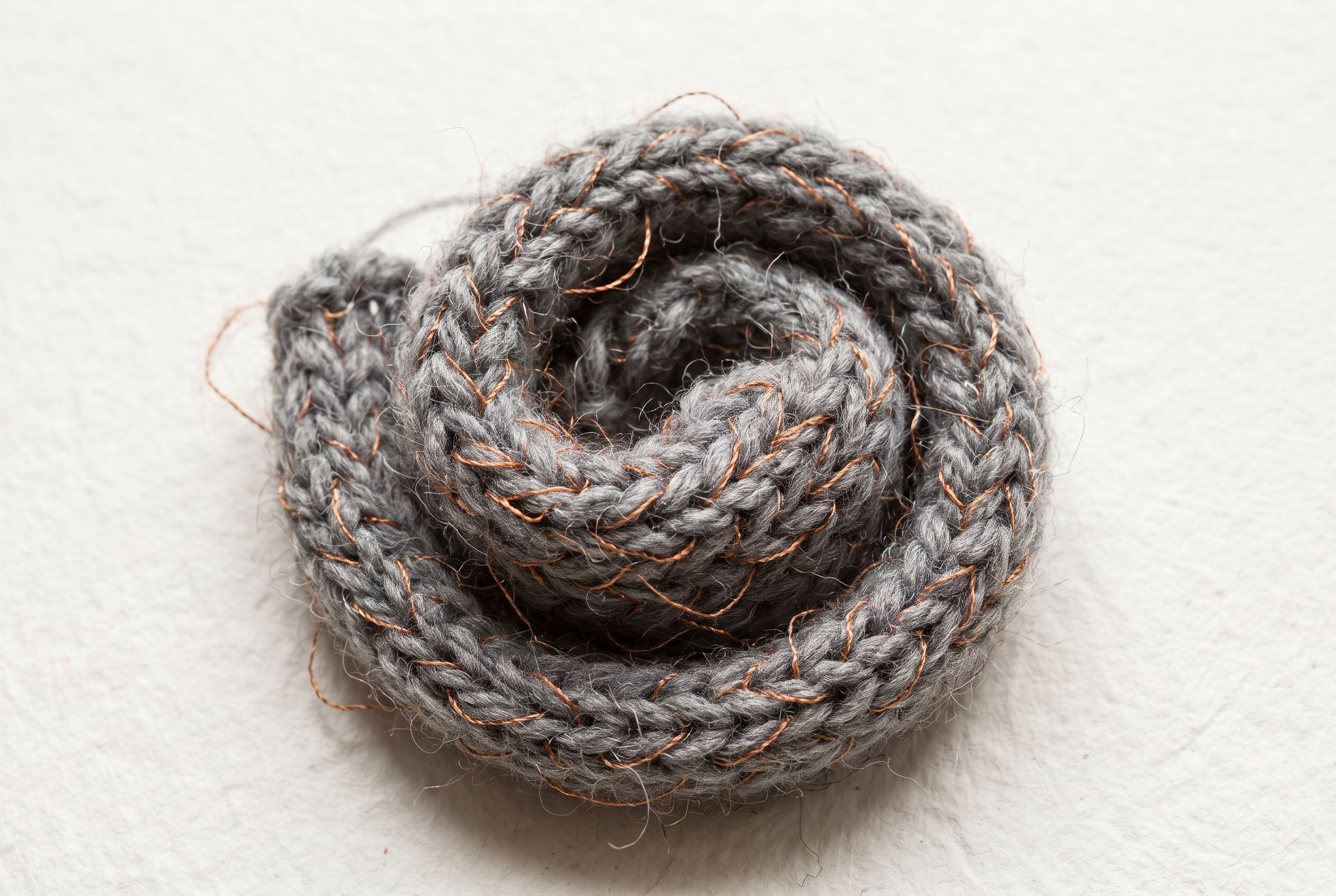
Engineers at Harvard have made knitted fabrics that can snap between different shapes and hold them, and that can double as soft electronic switches. The research was published in the journal Advanced Functional Materials and reported on 4 September 2026. It comes from the Harvard John A. Paulson School of Engineering and Applied Sciences. The property they built into the fabric is called multistability. That is a technical word for something you already know well: a light switch. A light switch has two stable positions, up and down. It does not sit halfway. It snaps. The Harvard team made textiles that behave the same way. Using elastic yarns and a machine-knitting technique called plating, they produced dense, naturally curved fabrics that curl up and then lock into one of several stable configurations. Push them, and they snap to the next one. They also knitted conductive yarns into the fabric. That means the act of snapping from one shape to another can complete or break an electrical circuit. The fabric is not just changing shape. It is reporting that it changed. The lead researcher was Kausalya Mahadevan, who recently completed a PhD and is now a postdoctoral associate. The work came out of the lab of Katia Bertoldi, the William and Ami Kuan Danoff Professor of Applied Mechanics. Mahadevan described where the idea came from: their thinking about multistability in textiles arose from being inspired by textile artists and how they approach structures, combined with how the lab has traditionally thought about nonlinear mechanics.
Why this matters
Wearable technology has a long-standing problem. It is not really wearable. Most of it is a rigid electronic device that has been attached to something soft. A watch, a strap, a clip, a patch. It has a battery, a circuit board and a case, and however small you make those, they are still hard objects sitting against a body that moves. What this work points towards is different: the fabric itself doing the job. No separate device. The knit is the sensor and the switch. That could matter a good deal in health and care, though it is early. The researchers list possible uses including a step counter worn on a joint, tracking body movement, and delivering tactile feedback, which means the fabric nudging you rather than a screen telling you something. Think about what that could mean for someone recovering from a knee operation, or someone who needs to be reminded to move, or someone whose walking pattern a physiotherapist wants to monitor at home rather than in a clinic. A sleeve that quietly records how a joint is bending, with nothing to charge and nothing to clip on, is a genuinely appealing idea. The more everyday examples are fun too: controlling an LED, or a lampshade that changes shape and colour when you push it.
What the evidence actually says
This is a materials science result, not a product, and the honest summary is that it is a very good demonstration of a principle. What the team has shown is that standard industrial knitting machines, using elastic and conductive yarns, can produce fabrics with genuinely useful mechanical behaviour built in at the level of the stitch. That is important because it means these are not exotic laboratory materials. They can, in principle, be made at scale on equipment that already exists. What has not been shown is durability, washability, comfort over a long day, or how the fabric behaves after a thousand cycles of snapping back and forth. Those are the questions that decide whether a smart textile becomes a real garment or stays a demonstration piece, and they take years to answer. There is no medical claim here at all. Nothing in this research has been tested as a health device, and a fabric that counts steps at a joint is a long way from anything a clinician would rely on. One detail worth appreciating, though. The researchers say openly that part of their inspiration came from textile artists. That is not decoration on the press release. Knitters have understood for a very long time that structure in fabric comes from how stitches are arranged, not from what the yarn is made of. Engineering has caught up to something craft already knew.
Practical advice
There is nothing to buy yet, so here is how to think about smart textiles as they start to arrive. **Ask what happens when you wash it.** This is the single most useful question about any smart clothing, and the one most often skipped over. Electronics and washing machines are old enemies. **Ask what it needs.** The appeal of a fabric that works mechanically is that there may be little or nothing to charge. If a garment still needs a battery pack, most of the advantage has gone. **Be sceptical of health claims on clothing.** Garments sold as monitoring your health are not usually regulated as medical devices. A step counter in a sleeve is a convenience. It is not a diagnosis, and it should never replace advice from a clinician. **Watch for comfort, not just cleverness.** The history of wearable technology is full of impressive things that people stopped wearing after a fortnight. **If you already use a fitness tracker**, the useful habit is to treat its numbers as trends rather than precise measurements. That will remain true whatever the device is made of.
What to know
Harvard engineers have knitted fabrics that snap between several stable shapes, like a light switch, and have added conductive yarn so the fabric can act as a soft electronic switch. They were made using elastic yarns and a standard machine-knitting technique called plating, which means the approach could in principle scale. Possible uses suggested by the team include joint-worn step counters, movement tracking, tactile feedback, LED switches and shape-changing lampshades. This is early-stage materials research. There are no medical claims, and questions about durability and washing are still open. Sources: ScienceDaily, 'Harvard scientists turn knitting into shape-shifting smart fabric', 4 September 2026, https://www.sciencedaily.com/releases/2026/09/260901070543.htm | Mahadevan K, Bertoldi K et al., Advanced Functional Materials, 2026, volume 36, https://onlinelibrary.wiley.com/journal/16163028 | Harvard John A. Paulson School of Engineering and Applied Sciences, https://seas.harvard.edu/ This article is for general information. It is about materials research and contains no medical advice; for anything concerning your health, please speak to a doctor, pharmacist or other qualified healthcare professional.
Related articles

Switched on in 1956, switched off in 2003, and now being taken apart piece by piece
Seventy years ago, in October 1956, Queen Elizabeth II opened Calder Hall on the Sellafield site in west Cumbria. It was the world's first nuclear power station…
25 storms, £179,000 of delay each, and ten weather stations bolted to masts already standing
On 14 October 2026, Network Rail announced that its Wales and Borders route has become the first in Britain to turn existing railway radio masts into weather st…
Two dead satellites, 17,000 mph, and one refuellable spacecraft sent to fetch them
On 15 October 2026, the UK government confirmed funding for a mission to go up and fetch two dead satellites. It is called the UK Active Debris Removal mission…