
Scientists have turned bacteria into living transistors
What happened
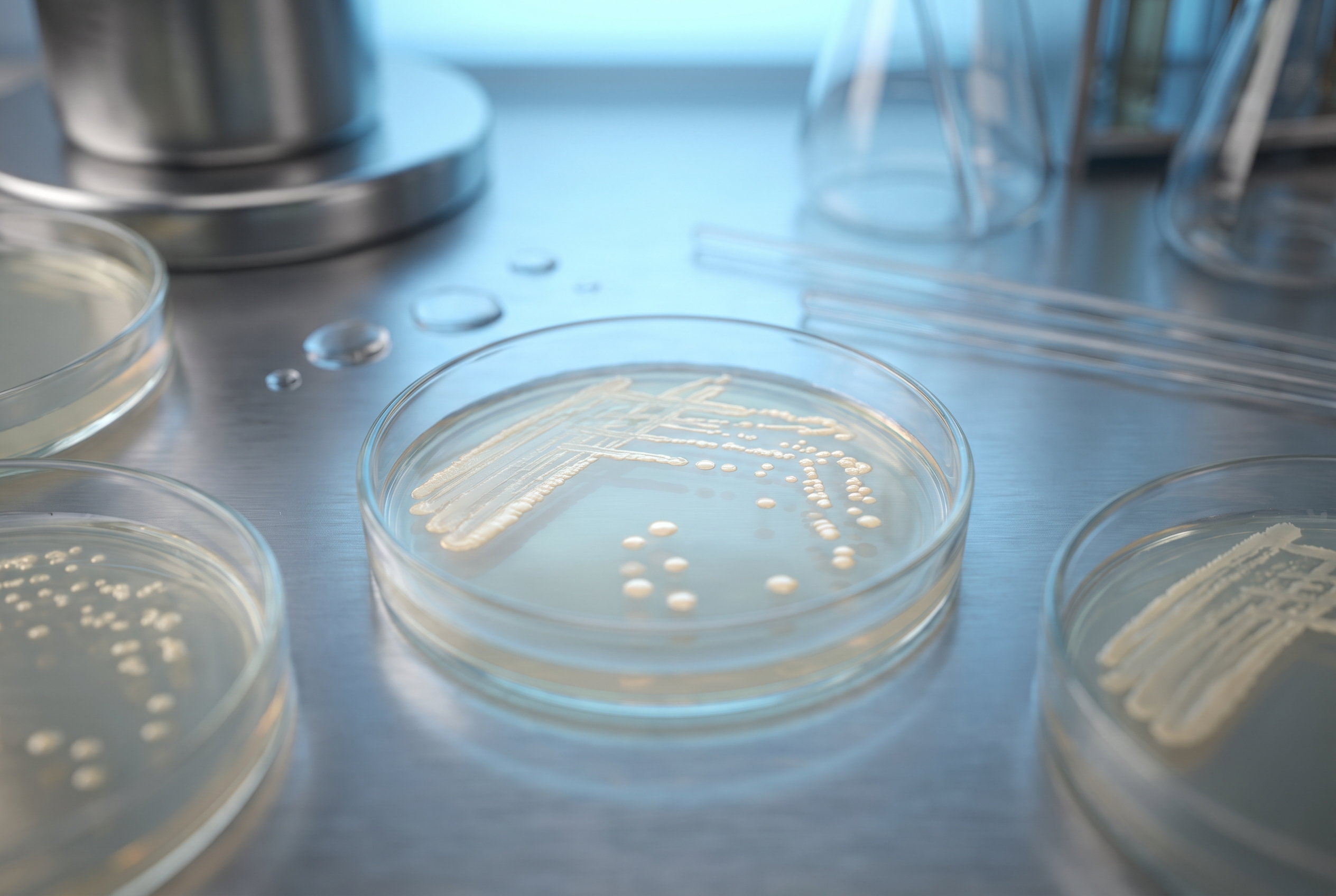
Engineers at MIT have made bacteria behave like the components inside a computer. The work was published in Nature Chemical Biology and reported on 4 September 2026. The team engineered a bacterium called Pantoea agglomerans, which lives naturally on plants, so that it works like a transistor. A transistor is the basic building block of every computer chip. Its job is simple: it is a switch. A signal coming in decides whether another signal gets through or not. String enough of them together and you can do arithmetic, store information, and make decisions. The MIT team made five bacterial strains in total. Two of them act as the transistors themselves. The other three are 'relay' strains, whose job is to carry signals from one transistor to the next. The difference is that these circuits run on chemistry rather than electricity. Instead of electrical current flowing along a wire, molecules pass between the bacteria. The research was led by Hamid Doosthosseini, an MIT postdoctoral researcher, with Haorong Chen, and with Christopher Voigt, head of MIT's Department of Biological Engineering, as senior author. Doosthosseini described what they had made as initial computer architecture components that are commonly used, adding that any operation can be built from these five strains. They are slow. Voigt put it in perspective: running a simple calculation overnight is fast enough relative to a growing season.
Why this matters
That last quote is the key to the whole story. Nobody is trying to replace your laptop with a petri dish. A silicon chip does billions of operations a second. These bacteria take hours. On speed, it is not a contest. But speed is not always the point. There are jobs where being slow is fine and being alive is a huge advantage. Think about a field of wheat. You would like to know if part of it is short of water, or if pests have arrived in one corner, or if a fungal infection is starting. Covering a field in electronic sensors is expensive, fragile and awkward. The sensors need power. They need to survive rain and tractors. Someone has to collect them. Bacteria do not need any of that. They live on plants already. They multiply on their own. They are powered by the same things that power the rest of the living world. So the vision the researchers describe is bacteria coating plant roots or leaves, sensing environmental stress, working out what they are seeing, and then doing something about it. That last bit is what makes a circuit different from a sensor. A sensor tells you something. A circuit can decide. In the researchers' examples, that could mean detecting drought or a pest attack and automatically triggering a plant's own defences, or producing a fungicide only in the spot where it is needed rather than spraying an entire field.
What the evidence actually says
This is early, foundational work, and it is worth saying so clearly. What has been demonstrated is that bacteria can be engineered to behave as logic components and to pass signals to each other reliably enough to build simple circuits. That is a genuine technical achievement and it was published in a serious peer-reviewed journal. What has not been demonstrated is any of the agricultural applications. There is no crop being protected by bacterial circuits today. The gap between 'this works on a laboratory bench' and 'this works in a rainy field in Lincolnshire' is enormous. There are also questions that will have to be answered before anything like this is used outdoors, and they are not primarily scientific questions. Releasing engineered organisms into the environment is tightly regulated in the UK and the EU, for good reasons. How would you contain them? What happens if they spread? How do you switch them off? None of that is a criticism of the research. It is the normal, healthy distance between a discovery and a product. It is also worth noting what this is not. This is not about engineering bacteria inside the human body, and nothing in this study relates to medical treatment.
Practical advice
There is nothing to buy or do here, so the practical value is in how you think about news like this. **Separate the demonstration from the vision.** Almost every science story contains both. The demonstration is what was actually done, in a lab, this year. The vision is what it might one day enable. Both are legitimate. Confusing them is how people end up disappointed. **Look at the timescale the researchers themselves use.** When a senior author talks about a growing season rather than a product launch, that tells you where this sits. **Be wary of the word 'living computer'.** It is a fair shorthand, but it invites the wrong picture. This is closer to a very slow chemical switchboard than to anything you would recognise as a computer. **Ask what problem it solves.** The strongest case for this technology is not that it computes. It is that it can live where electronics cannot. **Keep an eye on regulation, not just the science.** For anything involving engineered organisms outdoors, the rules will decide the timeline as much as the laboratory does.
What to know
MIT researchers have engineered five strains of bacteria that work together as living circuits: two act as transistors, three carry signals between them. The circuits pass chemical signals rather than electricity, and they are extremely slow by computing standards. A simple calculation can take overnight. That is acceptable for the jobs the team has in mind, such as sitting on plant roots and leaves, detecting drought or pests, and triggering a response only where it is needed. This is foundational laboratory research. Real-world agricultural use would need years of further work and would face significant regulatory hurdles. Sources: ScienceDaily, 'MIT turns bacteria into living transistors', 4 September 2026, https://www.sciencedaily.com/releases/2026/09/260901070526.htm | Doosthosseini H, Chen H, Voigt C et al., Nature Chemical Biology, 2026, https://www.nature.com/nchembio/ | MIT Department of Biological Engineering, https://be.mit.edu/ This article is for general information. It is about laboratory research and contains no medical advice; for anything concerning your health, please speak to a doctor, pharmacist or other qualified healthcare professional.
Related articles

Switched on in 1956, switched off in 2003, and now being taken apart piece by piece
Seventy years ago, in October 1956, Queen Elizabeth II opened Calder Hall on the Sellafield site in west Cumbria. It was the world's first nuclear power station…
25 storms, £179,000 of delay each, and ten weather stations bolted to masts already standing
On 14 October 2026, Network Rail announced that its Wales and Borders route has become the first in Britain to turn existing railway radio masts into weather st…
Two dead satellites, 17,000 mph, and one refuellable spacecraft sent to fetch them
On 15 October 2026, the UK government confirmed funding for a mission to go up and fetch two dead satellites. It is called the UK Active Debris Removal mission…