
Free finger-prick kits that tell you your blood type
What happened
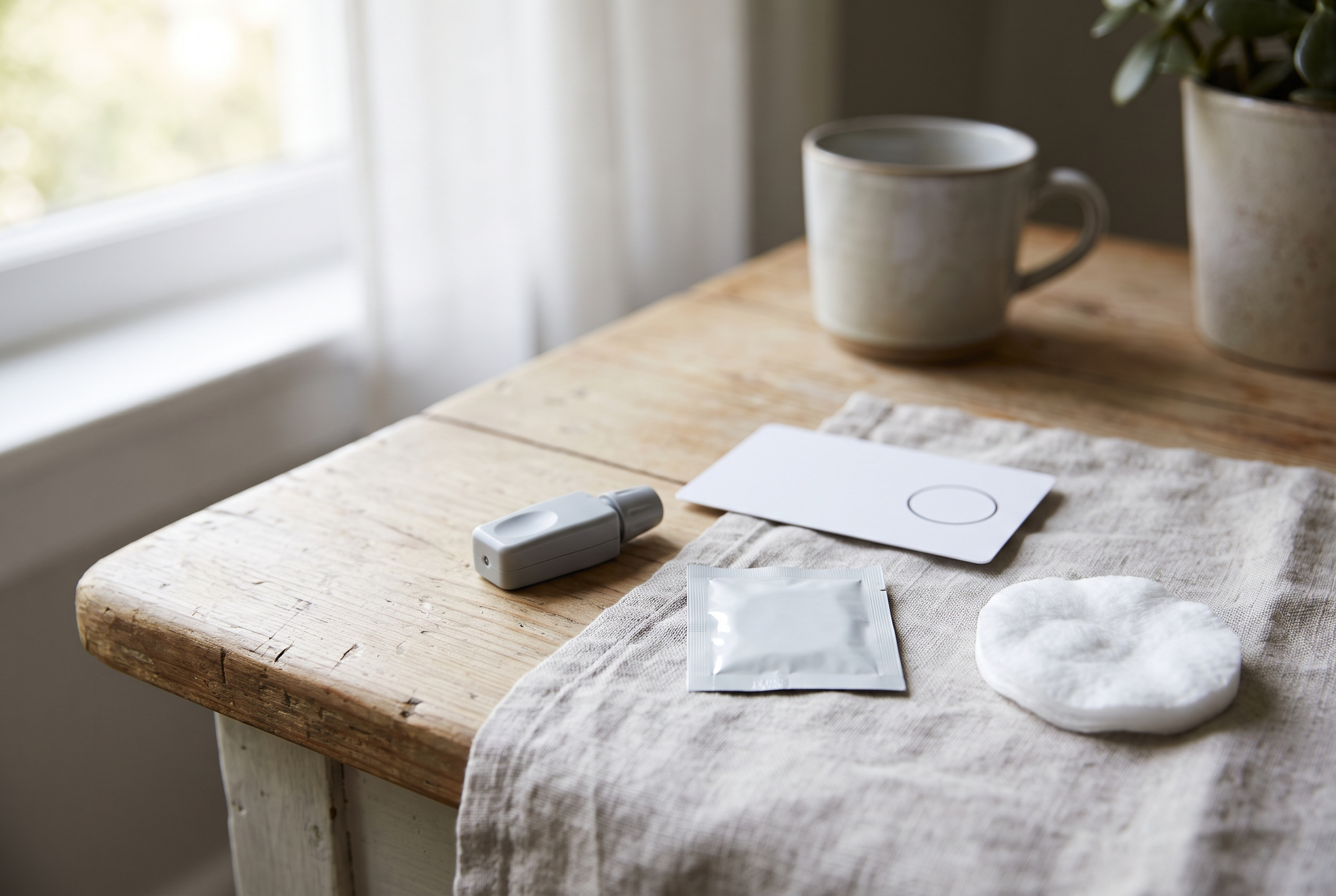
NHS Blood and Transplant has started giving away free kits that let you find out your own blood type at home. The scheme was announced on 2 September 2026. Up to 25,000 kits are available, and they are being handed out at four Boots pharmacies: - Brixton Road, London (SW9 8HH) - Walworth Road, London (SE17 2TG) - The Bull Ring Shopping Centre, Birmingham (B5 4BE) - Birmingham High Street (B4 7TA) The kit uses a finger-prick test. You do it yourself at home and it gives a result in around five minutes. Everything you need is in the box, along with a QR code you scan to submit your result and, if you want to, book an appointment to give blood. To pick one up you need to be 17 or over and answer some eligibility questions. If you go on to donate, the lab confirms your blood type properly after your first donation. The home test is a starting point, not a formal medical record. Altaf Kazi, an assistant director at NHS Blood and Transplant, put the idea simply: a quick finger-prick test could reveal your blood type and start your journey as a lifesaver. Heather Elliott, a director at Boots, said the partnership helps people understand the important role that blood donors play.
Why this matters
The NHS needs around 5,000 blood donations every day in England, and about 200,000 new donors every year just to keep the supply steady. That sounds like a lot because it is. Blood does not keep for long, so it is not something that can be stockpiled and forgotten about. It has to keep coming in. And not all blood is equally easy to find. Two types are in particular demand. O negative is the universal donor type. It can be given to almost anyone, which makes it the blood that ambulance crews and emergency departments reach for when there is no time to test. It makes up about 16 per cent of what hospitals order, but only about 8 per cent of donors have it. B negative is rarer still. Only about 2 per cent of current donors have it. There is also a specific and urgent need for donors of Black heritage. People with sickle cell disorder often need regular transfusions, sometimes for life, and the blood works best when it is closely matched. That kind of match is far more likely to come from a donor of the same ethnic background. Sickle cell is the fastest growing genetic condition in the UK, and the demand for well-matched blood has grown with it. That is not an accident of geography either. The four pharmacies chosen are in Brixton, Walworth and central Birmingham, communities where that need is real and where donor centres have appointments waiting to be filled.
What the evidence actually says
The starting point for this scheme is a simple fact: fewer than half of people know their blood type. That is not a failing on anyone's part. There is no routine moment in most people's lives when they are told. Unless you have given blood, been pregnant, or had certain hospital treatment, nobody has ever had a reason to tell you. So the idea being tested here is straightforward. Curiosity is a strong motivator. If finding out is free, quick and can be done at your kitchen table, more people will do it. And a proportion of those people, once they know, will go on to donate. There is a sensible thing to say about accuracy. A home finger-prick blood typing card is a screening tool. It is good enough to tell you something interesting about yourself and good enough to start a conversation about donating. It is not a substitute for laboratory testing, and that is exactly why NHS Blood and Transplant confirms your type in the lab after your first donation. So treat the result as a genuine and useful piece of information, but not as a medical document. Do not, for example, write it on a card and assume a hospital would act on it in an emergency. They would test you anyway.
Qurexa perspective
We are a pharmacy delivery business, so we may be biased, but we think this is a good example of something the sector does well. Pharmacies are where people already are. You do not need an appointment, a referral or a reason. You are in the shop anyway. That is why so much preventive health work in England has been shifting into community pharmacy: blood pressure checks, contraception, some vaccinations, and now this. The wider point is one we come back to a lot. Health services work best when they fit around ordinary life rather than asking ordinary life to fit around them. A kit you can pick up on your lunch break and use at home is a very small version of that idea, but it is the right one. If you live near one of the four stores, it is worth a five-minute detour.
Practical advice
**Check you are eligible before you travel.** You need to be 17 or over and answer some screening questions at the pharmacy. There are only 25,000 kits and only four stores, so they will not last indefinitely. **Do the test properly.** Read the instructions before you start, not halfway through. Wash and dry your hands, use the lancet once, and follow the timings on the card. Rushing is the main reason home tests go wrong. **Submit your result.** Scan the QR code in the kit. That is how the result gets recorded and how you can book a donation slot if you want to. **If you can donate, consider it.** There are appointments available at the Birmingham Donor Centre and at Brixton Donor Centre. Giving blood takes about an hour from arrival to leaving, and the donation itself is around ten minutes. **If you cannot get to one of the four shops**, you do not need a kit to help. You can register to donate directly at blood.co.uk, and you will be told your blood type after your first donation anyway. **A gentle note on children.** These kits are for adults aged 17 and over. They are not toys, and the lancet is sharp. Keep them out of reach.
What to know
NHS Blood and Transplant is giving away up to 25,000 free blood-type testing kits at four Boots pharmacies in south London and Birmingham. You need to be 17 or over. The test is a finger prick, takes about five minutes at home, and comes with a QR code to record your result and book a donation. The aim is to recruit new donors, especially people with O negative and B negative blood, and donors of Black heritage whose blood is needed for people living with sickle cell disorder. Fewer than half of us know our blood type. This is an easy way to find out, and a genuinely useful thing to do with ten minutes. Sources: NHS Blood and Transplant, 'Free NHS blood type testing now available from South London and Birmingham Boots pharmacies', 2 September 2026, https://www.nhsbt.nhs.uk/news/free-nhs-blood-type-testing-now-available-from-south-london-and-birmingham-boots-pharmacies/ | NHS Give Blood, 'Blood types', https://www.blood.co.uk/why-give-blood/blood-types/ | NHS Give Blood, 'Sickle cell and blood donation', https://www.blood.co.uk/why-give-blood/blood-types/sickle-cell-and-blood-donation/ This article is for general information and does not replace advice from a doctor, pharmacist or other qualified healthcare professional.
Related articles

47% stayed off, 14% called anyone: what 68,000 surveys say about how we handle flu
On 15 October 2026, the UK Health Security Agency (UKHSA) published new findings about what people actually do when they come down with flu-like symptoms. The…
One dose, not two: what WHO's advisers have just said about the HPV jab
The World Health Organization's expert vaccine panel has changed its advice on the HPV jab. The panel is called SAGE, short for the Strategic Advisory Group of…
3.5 million deaths a year, and no level of it is safe
On 15 October 2026, the World Health Organization (WHO) published an update calling on countries to speed up action against lead poisoning. It came just before…