
Half an hour on a bike protected memory after a short night's sleep
What happened
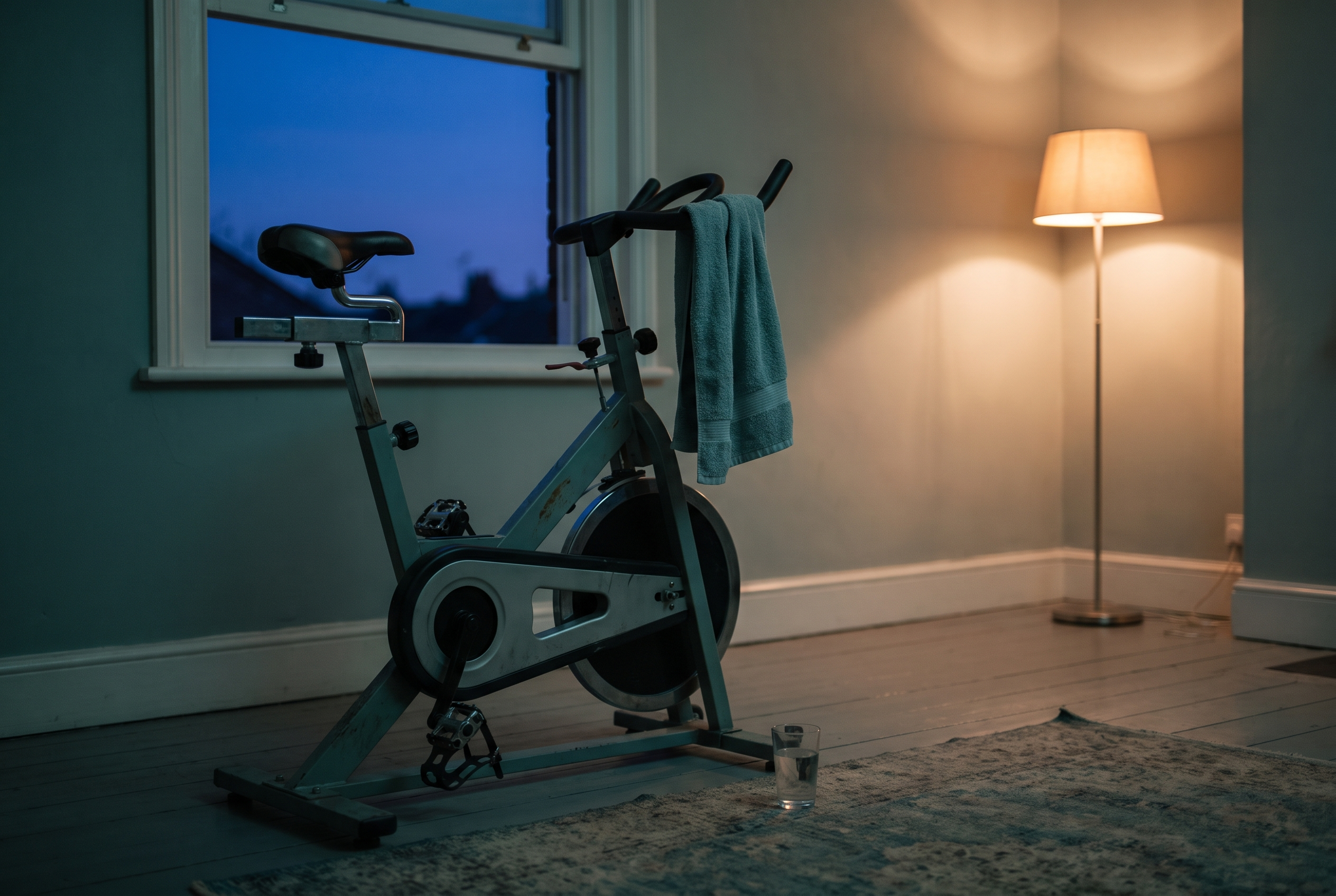
Most of us know the feeling. A short night, and the next day your memory feels like a sieve. A study reported on 5 September 2026 tested whether exercise before bed could soften that effect. The findings were published in the journal SLEEP by Emmanuel Frimpong and colleagues. Eighty-eight healthy young adults took part in a controlled laboratory experiment. They were split into four groups, based on two things: how long they were allowed to sleep, and whether they exercised first. Some were given a full night, from 11pm to 7.30am, which is eight and a half hours. Others were restricted to 2am to 7.30am, which is four and a half hours. Within each of those, some cycled at a moderate pace for 30 minutes, including a five-minute warm-up and cool-down. The others sat quietly for 40 minutes instead. Before sleeping, everyone memorised 80 pairs of faces and names. The next morning they were tested with 120 pairs: the 80 they had studied, plus 40 new ones. The result was striking. People who exercised before a short night performed on the memory test about as well as people who had slept a full night.
Why this matters
Short nights are not a rare event for most people. Shift work, a new baby, a poorly child, worry, pain, a long commute, a late finish. Life happens. The usual advice is to protect your sleep, and that advice is right. Sleep is when the brain files away what you learned during the day. Cutting sleep short interrupts that filing. But 'get more sleep' is not always advice you can act on tonight. What makes this study interesting is that it asks a different question: when you already know you are going to be short, is there anything you can do? The answer it gives is a modest, practical one. Thirty minutes of moderate cycling appeared to protect memories that had just been formed. That is the sort of finding worth knowing about, because it costs nothing and carries almost no risk. Moderate exercise is good for you anyway. If it also cushions a bad night, that is a bonus.
What the evidence actually says
Now the detail that stops this being oversold. The study involved 88 healthy young adults in a sleep laboratory. That is a decent size for this kind of tightly controlled experiment, but it is a specific group. Healthy young adults are not the same as older adults, shift workers, people with insomnia or people with long-term conditions. The memory difference only appeared the next morning, not immediately after learning. The researchers took this as a sign that exercise protected newly learned memories while they were being stored and stabilised during sleep, rather than simply making people better at learning in the first place. There was another interesting detail. People who had a higher proportion of slow-wave sleep, the deepest stage, seemed to get even more memory protection from the exercise. The authors are clear that this needs testing in larger, more diverse, real-world studies. A laboratory with a fixed bedtime is not a Tuesday night at home. And here is the crucial caveat. Nothing in this study says exercise replaces sleep. It tested one narrow outcome, memory for face-name pairs, after one short night. Sleep does a great deal more than store memories. It affects mood, appetite, immune function, blood pressure and reaction time, and none of those were rescued or even measured here. A single workout is a patch, not a substitute.
Practical advice
If you know a short night is coming, moderate exercise earlier in the evening is a reasonable thing to try. Moderate means you can still talk, but not sing. Brisk walking, cycling or swimming all count. A general note on timing: many people find vigorous exercise very close to bedtime makes it harder to drop off. If that is you, aim to finish an hour or two before you want to sleep, and see what suits you. After a short night, be honest about driving. Tiredness affects reaction times. If you feel sleepy at the wheel, stop somewhere safe, and remember that no amount of exercise the night before makes it safe to drive while sleepy. Protect the basics when you can. A dark, cool room. A consistent wake-up time, even after a bad night, because that is what anchors your body clock. Caffeine earlier in the day rather than late. If poor sleep is a regular thing rather than an occasional one, treat it as a health issue worth raising. Talk to your GP or pharmacist. Persistent insomnia has effective treatments, and NHS talking therapy services in England accept self-referral for insomnia-related problems. Loud snoring with pauses in breathing is worth mentioning too, as that can be sleep apnoea.
What to know
In a laboratory study of 88 healthy young adults, published in SLEEP and reported on 5 September 2026, 30 minutes of moderate cycling before a four-and-a-half hour night protected memory. Those who exercised did about as well on a next-morning memory test as people who had slept eight and a half hours. People with more deep, slow-wave sleep appeared to benefit most. The effect showed up the next morning, suggesting exercise helped memories settle during sleep. This was a single study in healthy young adults, testing one type of memory. The authors say larger, real-world studies are needed. Exercise is not a replacement for sleep. It may help cushion the occasional short night, and it is good for you regardless. Sources: Medical Xpress, 'A single workout may help protect memory after a short night's sleep', 5 September 2026, https://medicalxpress.com/news/2026-09-workout-memory-short-night.html ; Frimpong E and colleagues, SLEEP, 2026, DOI 10.1093/sleep/zsag235, https://doi.org/10.1093/sleep/zsag235 ; NHS, 'Insomnia', accessed 7 September 2026, https://www.nhs.uk/conditions/insomnia/ This article is for general information and does not replace advice from a doctor, pharmacist or other qualified healthcare professional. If poor sleep is affecting your daily life, please speak to a healthcare professional.
Related articles

The first thing you say matters, and most of us have no idea what it should be
On 15 October 2026, the Ministry of Justice launched a campaign called Respond. It sits within the government's wider ENOUGH campaign on violence against women…
Legal to buy from today, illegal after 11pm: what the fireworks rules actually say
On 15 October 2026, the Office for Product Safety and Standards (OPSS) launched a campaign about fireworks. Its title is 'Think Beyond your garden, Know your Im…
Update: the driest April to September in over a century, and six counties now in severe drought
This is a follow-up to a story we have covered before, because something significant has changed. On 15 October 2026, the government declared severe drought in…