
Laughing on purpose eased breathlessness in a small COPD trial
What happened
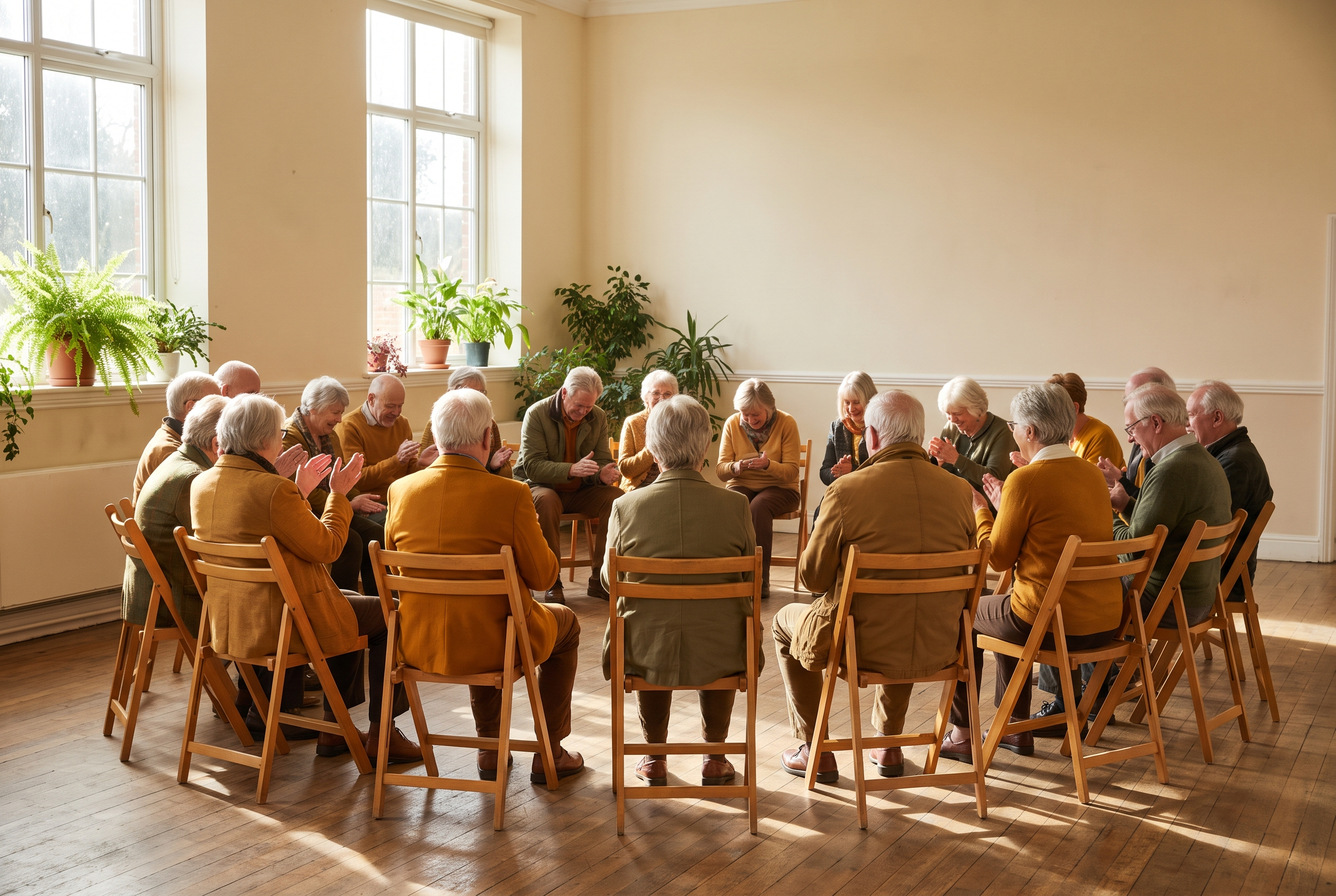
Researchers told a conference this week that eight weeks of laughter therapy eased breathlessness in people with COPD. The findings were presented on 6 September 2026 at the European Respiratory Society Congress in Barcelona. The study was led by Dr Goncagul Aldan, a lecturer and nurse at Hacettepe University Faculty of Nursing in Ankara, Türkiye. COPD stands for chronic obstructive pulmonary disease. It is a long-term lung condition that makes it harder to breathe out fully, and it is one of the most common lung conditions in the UK. The trial involved 63 people with COPD at Ankara Bilkent City Hospital. They were split into three equal groups of 21. One group did laughter therapy. One group did pursed-lip breathing exercises, which is a technique already widely taught for COPD. The third group carried on as normal, as a comparison. The two active groups had 30-minute sessions, three times a week, for eight weeks. Both laughter therapy and pursed-lip breathing significantly reduced breathing difficulty compared with the group that did neither. The improvement was still there a month after the programme finished.
Why this matters
Breathlessness is the symptom people with COPD find hardest to live with. It is frightening. It shrinks your world, because you stop doing things that might set it off. There is also a horrible loop involved. Feeling short of breath makes you anxious. Anxiety makes your breathing quicker and shallower. Quicker, shallower breathing makes the breathlessness worse. Round it goes. Most of the things that break that loop are cheap and drug-free. Pulmonary rehabilitation, breathing techniques and singing groups all have supporting evidence, and the NHS uses them. What is interesting here is that something as ordinary as organised laughing appeared to work about as well as a standard breathing exercise. If that holds up in bigger studies, it would be a genuinely low-cost, low-risk option. It would also be one that people might actually enjoy doing, which matters more than researchers sometimes admit. The best exercise is the one you keep doing.
What the evidence actually says
Now for the important caveats, because this is a small early study and it should be read that way. Sixty-three people is not many. With 21 people in each group, small differences can appear or disappear by chance. The trial was carried out at a single hospital in one country. It has been presented at a conference, which usually means it has not yet been through full peer review and publication. What the trial does not show is that laughter therapy is better than the breathing exercises. It found both helped compared with doing nothing. It did not find one beat the other. There was also no difference between the groups in how much day-to-day care people needed. Dr Aldan was measured about it. She said both approaches also showed promising results for overall health, and that laughter therapy 'may be a worthwhile area for further investigation'. The researchers noted that how laughter therapy works in COPD is still poorly understood, and that more thorough research is needed. So: an encouraging signal, not a proven treatment. It is the kind of finding that justifies a bigger trial, not a change to anyone's care plan. One more thing worth saying clearly. Nothing here suggests laughter replaces inhalers, pulmonary rehabilitation or any other prescribed treatment. It sits alongside them, at best.
Practical advice
If you live with COPD, there are things with strong evidence behind them that are worth doing first. Ask about pulmonary rehabilitation. It is an NHS programme of exercise and education, and it has good evidence for reducing breathlessness and improving quality of life. Ask your GP or respiratory nurse whether you can be referred. Learn pursed-lip breathing. Breathe in gently through your nose, then breathe out slowly through lips pursed as if you were cooling soup or blowing out a candle. Make the out-breath longer than the in-breath. Asthma + Lung UK has clear guides. Use your inhalers as prescribed, and get your technique checked. A surprising number of people are not getting the full dose because of how they use the device. Your pharmacist can watch you use it and correct it in a couple of minutes. Have your flu and COVID vaccinations if you are eligible. Chest infections are what tend to cause flare-ups. If you smoke, stopping remains the single most effective thing you can do for COPD. Local NHS stop smoking services roughly triple your chances compared with going it alone. And if a singing group, a comedy night or a laughter class appeals to you, there is no reason not to. Just tell your clinical team what you are doing, and never swap it for your prescribed treatment.
What to know
A small randomised trial presented at the European Respiratory Society Congress on 6 September 2026 found that eight weeks of laughter therapy eased breathlessness in people with COPD, roughly as much as pursed-lip breathing exercises did. The study involved 63 people at one hospital in Ankara, Türkiye. Benefits were still present a month later. It is early, small, single-centre work presented at a conference. It does not show laughter therapy is better than existing techniques, and it is not a reason to change any treatment. The well-evidenced steps for COPD remain the same: pulmonary rehabilitation, good inhaler technique, vaccinations, and stopping smoking if you smoke. Sources: News-Medical, 'Laughter therapy eases breathlessness in people with COPD', 6 September 2026, https://www.news-medical.net/news/20260906/Laughter-therapy-eases-breathlessness-in-people-with-COPD.aspx ; European Respiratory Society Congress 2026, Barcelona, 5-9 September 2026, https://www.ersnet.org/events/ers-congress-2026/ ; NHS, 'Chronic obstructive pulmonary disease (COPD)', accessed 7 September 2026, https://www.nhs.uk/conditions/chronic-obstructive-pulmonary-disease-copd/ This article is for general information and does not replace advice from a doctor, pharmacist, respiratory nurse or other qualified healthcare professional. Do not change or stop any prescribed treatment for a lung condition without medical advice.
Related articles

47% stayed off, 14% called anyone: what 68,000 surveys say about how we handle flu
On 15 October 2026, the UK Health Security Agency (UKHSA) published new findings about what people actually do when they come down with flu-like symptoms. The…
One dose, not two: what WHO's advisers have just said about the HPV jab
The World Health Organization's expert vaccine panel has changed its advice on the HPV jab. The panel is called SAGE, short for the Strategic Advisory Group of…
3.5 million deaths a year, and no level of it is safe
On 15 October 2026, the World Health Organization (WHO) published an update calling on countries to speed up action against lead poisoning. It came just before…