
Phone-free schools by default: the new rules English schools follow from this term
What happened
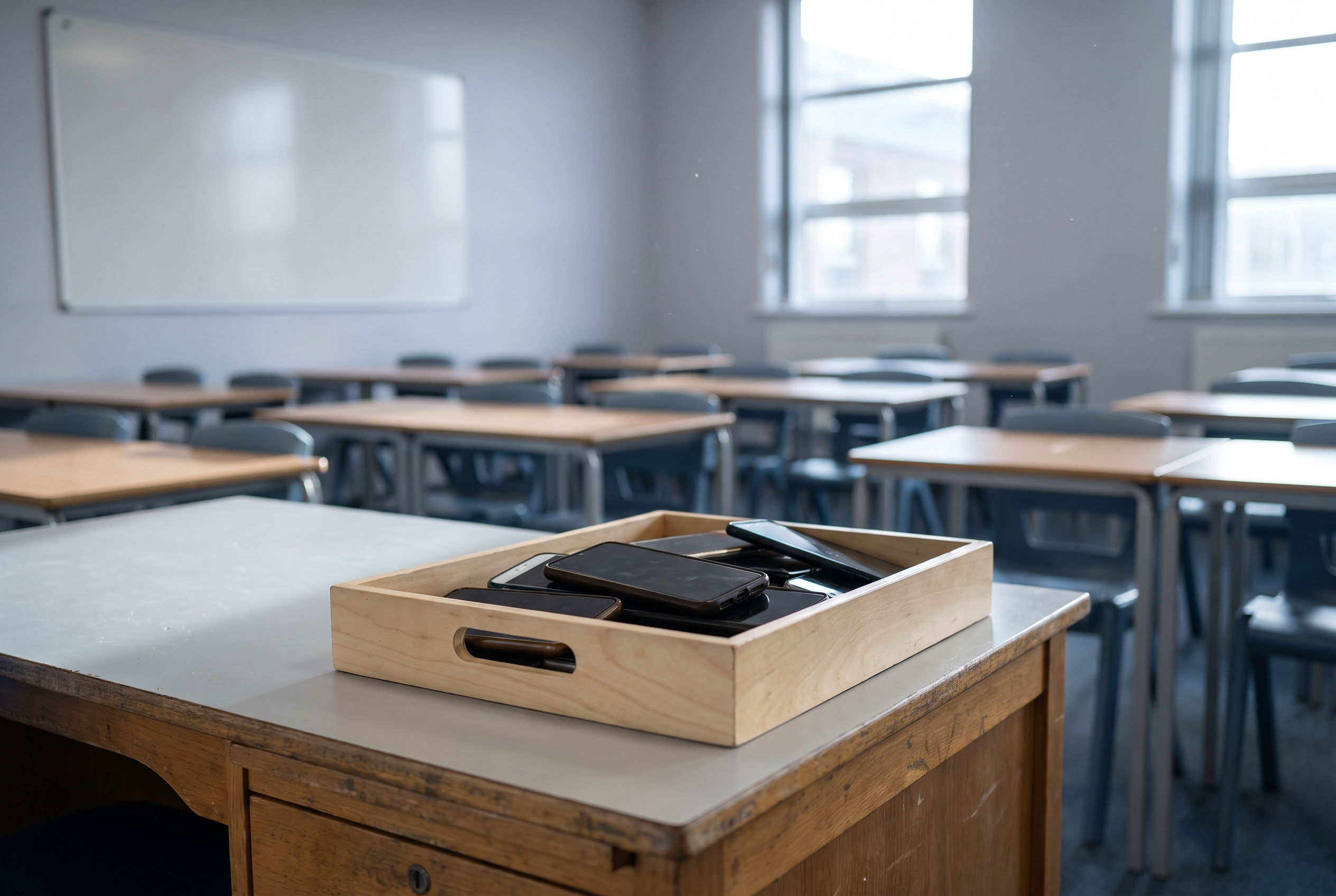
As pupils in England returned this week, schools were expected to be following new statutory guidance on mobile phones for the first time. The legal machinery behind this is section 36 of the Children's Wellbeing and Schools Act 2026. It requires state-funded schools in England to have regard to published government guidance on mobile phones. That provision came into force on 29 June 2026, and it is what turned advice into something with the force of law. The guidance itself was updated in January 2026. Its central line is direct: all schools should be mobile phone-free environments by default, and anything other than that should be by exception only. In practice, schools are expected to have a policy under which pupils do not have access to their phones during the school day. That covers lessons, the gaps between lessons, break time and lunchtime. Schools are expected to be following the guidance from 1 September 2026, and Ofsted has confirmed that it will look at schools' mobile phone policies as part of routine inspection. This is not entirely new ground. The Department for Education published non-statutory guidance in February 2024 recommending that schools prohibit phone use during the school day. What has changed is that it now carries legal weight, and that inspectors will be asking about it.
Why this matters
Most secondary school pupils in the UK have a smartphone. For many families it is how a child gets home safely, how they say they have missed the bus, and how parents know they arrived. So the policy asks something of families as well as of children. It is worth understanding what it does and does not require. The phrase "do not have access" is deliberate. Schools have taken different routes to it. Some ask for phones to be switched off and left in bags. Some use lockers. Some use sealed pouches that pupils carry but cannot open during the day. All of these can meet the same requirement. For teachers, the appeal is obvious. A phone buzzing in a pocket is a competitor for attention that no lesson plan can beat. Staff also point to phones as a route for bullying that follows a child from the corridor into their bedroom. For parents, the worry is usually about contact. In an emergency, most schools ask parents to ring the school office, which is how it worked before phones existed. That is a reasonable answer, though it takes some getting used to. And for pupils, it is a real change to the shape of the day. Break time without a screen is different. For some children that is a relief. For others, particularly those who find social situations hard, it can be genuinely difficult.
What the evidence actually says
This is a policy where the strength of feeling runs ahead of the strength of the evidence, and it is worth saying so plainly. There is reasonably good evidence that phone use during lessons harms learning. Attention does not switch between tasks cleanly, and a notification costs more than the second it takes to glance at it. The evidence on whether whole-day bans improve exam results is more mixed. Studies have found different things in different settings, and it is hard to separate the effect of a phone policy from everything else a well-run school does. The evidence linking smartphones and social media to teenage mental health is heavily debated among researchers. There is broad agreement that something has changed in adolescent wellbeing over the past fifteen years. There is much less agreement about how much of it phones caused. Serious researchers disagree, and anyone telling you the question is settled is overstating it. It is also worth being clear about what the guidance is legally. Schools must have regard to it. That is a real duty, but it is not the same as an absolute ban written into law. It means a school must follow it unless it has good reason not to, and must be able to explain that reason. The guidance also allows exceptions, and those matter. A pupil with a medical need, such as a continuous glucose monitor linked to a phone, or a pupil with a disability who uses a phone as an assistive device, should be accommodated. So should safeguarding cases such as a young carer who needs to be reachable. So the honest summary is: a clear policy direction, decent evidence on classroom distraction, contested evidence on the bigger claims, and important exceptions built in.
Practical advice
If you are a parent adjusting to this, a few things help. Read your school's specific policy. The guidance sets a direction, but schools differ in how they apply it. Find out where phones go, what happens if one is seen, and what the process is if a phone is confiscated. Agree the plan for contact before it is needed. Make sure your child knows how to reach you through the school office, and make sure you have the office number saved. If your child has a medical need involving a phone, tell the school in writing now rather than after a problem. Diabetes technology, hearing aid apps, epilepsy alerts and communication apps are all recognised reasons for an exception, but the school needs to know. If your child is a young carer or has another safeguarding reason to stay contactable, speak to the designated safeguarding lead. Expect the first few weeks to be bumpy. Habits take time to change, and a rule that is new to everyone will be tested. At home, it may be worth taking the chance to look at evening and night-time phone use too. Phones in bedrooms overnight are one of the more common causes of poor sleep in teenagers, and poor sleep affects mood, concentration and health. If your child seems genuinely distressed by the change rather than just annoyed by it, that is worth a conversation with their form tutor or head of year.
What to know
Statutory guidance on mobile phones applies to state-funded schools in England from this term, with schools expected to be following it from 1 September 2026. The legal basis is section 36 of the Children's Wellbeing and Schools Act 2026, in force since 29 June 2026, which requires schools to have regard to the guidance. The guidance says schools should be mobile phone-free environments by default, covering lessons, breaks and lunchtime, with exceptions only where justified. Ofsted will consider schools' mobile phone policies during routine inspections. Schools may meet the requirement in different ways, including bag rules, lockers or lockable pouches, so check your own school's policy. Exceptions exist for medical, disability and safeguarding needs, but the school has to be told about them. The evidence is strongest on classroom distraction and much more contested on wider claims about mental health, which is worth remembering when the debate gets heated. Sources: House of Commons Library, "Mobile phones in schools (England)", research briefing CBP-10241, https://commonslibrary.parliament.uk/research-briefings/cbp-10241/ | GOV.UK Department for Education, "Mobile phones in schools", guidance updated January 2026, https://www.gov.uk/government/publications/mobile-phones-in-schools/mobile-phones-in-schools | Tes, "What's changing in education in 2026-27: is your school ready?", 2026, https://www.tes.com/magazine/analysis/general/whats-changing-education-2026-27-your-school-ready This article is for general information about school policy in England and does not replace advice from your child's school. If your child has a medical device or condition that involves phone use at school, speak to the school and to your child's healthcare team. It does not replace advice from a doctor, pharmacist or other qualified healthcare professional.
Related articles

A 47-year record broken, glaciers at their biggest loss yet, and a 4,000-year-old piece of ice on a table
On 15 October 2026, the UK launched an updated Arctic Policy Framework. Uma Kumaran MP, Minister for the Polar Regions at the Foreign, Commonwealth and Developm…
Almost a million young people are NEET, and six in ten have never had a job at all
On 15 October 2026, the Department for Work and Pensions and UKHospitality announced a partnership with sixteen of Britain's biggest hospitality employers. The…
Only 14% passed their maths resit. The Education Secretary says that has to stop
On 15 October 2026, Education Secretary Lucy Powell gave a speech to the Confederation of School Trusts conference. Powell was appointed Education Secretary in…