
Nearly 250,000 MenB jabs given - and the NHS says finish the second dose
What happened
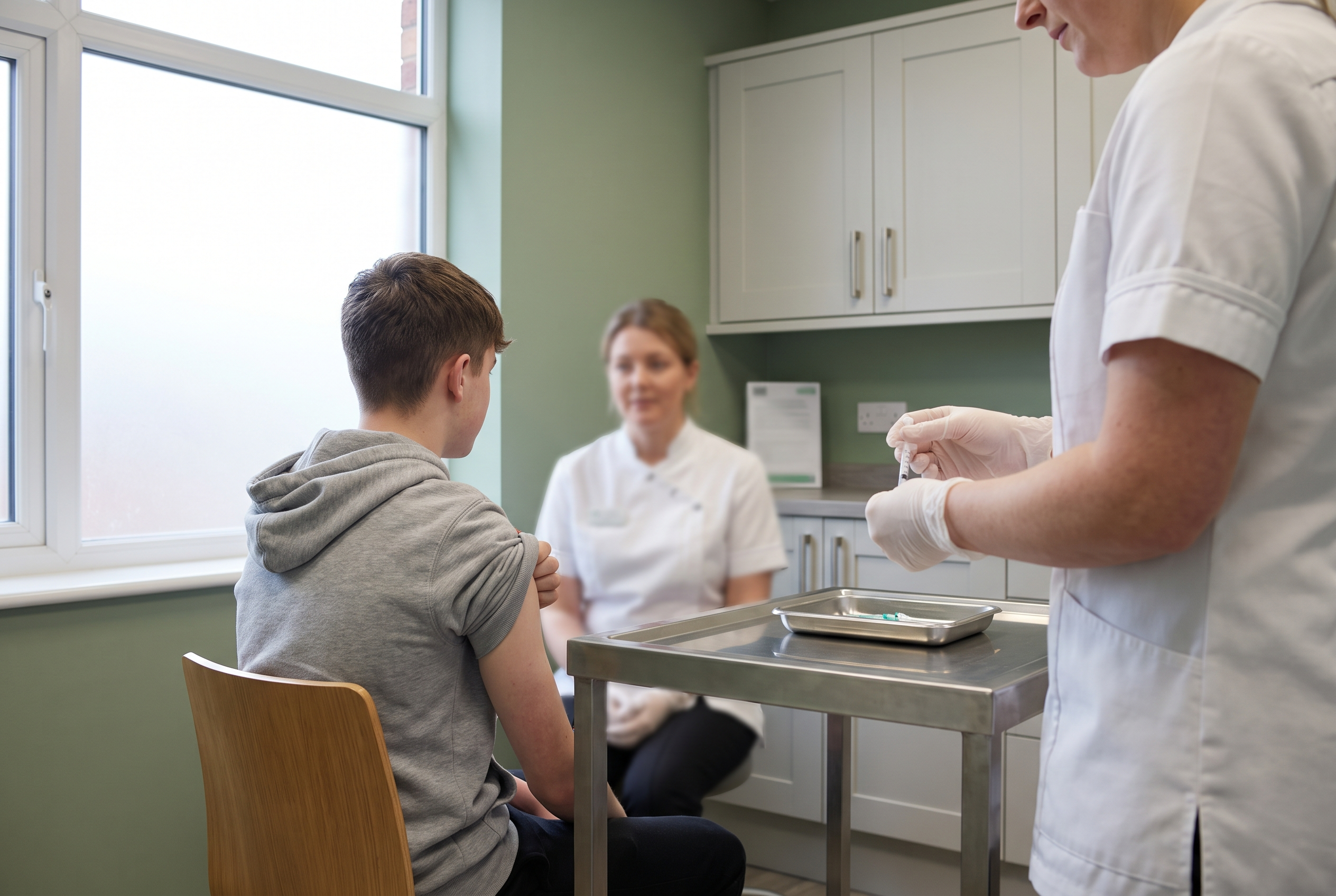
On 3 September 2026, NHS England said that 246,089 doses of the MenB vaccine had been given to young people since the programme started on 20 July 2026. That figure covers doses given up to 31 August. MenB is short for meningococcal group B. It is a type of bacteria that can cause meningitis and sepsis. Both are serious and can move very fast. The NHS is now asking people to come back for their second dose before the university term starts. The vaccine works best when you have both doses. They must be given at least 28 days apart. The programme is a one-off catch-up drive. UK Health Security Agency (UKHSA) announced it on 12 June 2026, after a rise in meningitis cases in young people. A fuller review by the Joint Committee on Vaccination and Immunisation (JCVI) is still going on. Three groups can get the jab. People born between 1 September 2007 and 31 August 2008. People born on or after 21 July 2001 who are starting university for the first time this autumn. And people born on or after 21 July 2001 who are starting at a residential further education college for the first time. You can book through the NHS National Booking Service or at a community pharmacy that offers it. Dr Amanda Doyle, NHS National Director for Primary Care and Community Services, said: "High street pharmacies up and down the country are making it easy and convenient to get jabbed, so if you're eligible, please come forward and book as soon as possible."
Why this matters
September is the month when hundreds of thousands of young people move into halls of residence and shared houses. They meet a lot of new people very quickly. They share kitchens, bathrooms and often drinks. That is exactly the kind of setting where meningococcal bacteria spread. The bacteria live harmlessly in the nose and throat of a fair number of healthy people. Most carriers never become ill. But when the bacteria get past the body's defences, the illness can be severe. NHS England points out that first-year university students are around seven times more likely to catch MenB than young people who are not at university. Meningitis and sepsis can be hard to spot early. The first signs often look like flu or a bad hangover. That is part of what makes them dangerous. By the time the classic rash appears, a person can already be very unwell. So the timing of this reminder is not an accident. The gap between doses is at least 28 days. If someone had their first dose in mid-August and term starts in late September, the window to get fully protected is genuinely tight.
What the evidence actually says
Let us be careful about what is known and what is not. The 246,089 figure is a count of doses given, not a count of people fully protected. Some of those doses are first doses. Some are second doses. NHS England has not broken the number down publicly, so we should not assume a quarter of a million young people are now fully covered. The two-dose schedule is well established for this age group. The NHS is clear that both doses are needed for the vaccine to work as intended. MenB vaccination is not new in the UK. It has been part of the routine baby schedule since 2015. What is new here is offering it to older teenagers and new students as a one-off catch-up, and doing it while the JCVI review is still under way. UKHSA described the move as a response to recent outbreaks. It is also worth being honest about the limits. No vaccine is 100 per cent effective. MenB vaccines protect against group B meningococcal disease, but there are other groups of the bacteria, and other causes of meningitis entirely. The MenACWY vaccine, offered separately to teenagers, covers different groups. So the sensible reading is this: the jab meaningfully lowers your risk, and it does not remove your need to know the warning signs.
Qurexa perspective
Moving away from home changes how medicines reach you. That is the part people tend to forget in the rush of packing. If you take a repeat prescription - an inhaler, the contraceptive pill, antidepressants, insulin, anything ongoing - your supply is usually linked to your GP practice at home. When you register with a new GP near your university, that link has to be rebuilt. It can take a few weeks. We work with people across Lincolnshire and beyond who need medicines delivered reliably, and the pattern we see every September is the same. A young person runs low in week three of term, has not registered locally yet, and ends up going without. A short conversation with your usual pharmacy before you leave is worth having. Ask how much supply you can take with you, and what to do if you run out. That is free advice, and it prevents a lot of stress later. The MenB jab itself is free on the NHS. So is that conversation.
Practical advice
If you think you are eligible, here is what to do. Check your date of birth against the three groups above. If you were born between 1 September 2007 and 31 August 2008, you qualify on age alone. Book through the NHS National Booking Service or ask a local pharmacy that is taking part. Many high street pharmacies are offering it without an appointment. If you have had your first dose, work out the date 28 days later and book the second dose from then. Put it in your phone. Do not wait until you have moved. If you are moving to university, register with a GP surgery near your new address in the first week. It takes about ten minutes online and saves a lot of trouble later. Learn the warning signs of meningitis and sepsis, and share them with your flatmates. Look for a severe headache, a stiff neck, dislike of bright light, a very high or very low temperature, cold hands and feet, confusion or drowsiness, and a rash that does not fade when you press a glass against it. The rash can come late or not at all, so do not wait for it. If someone seems seriously unwell and is getting worse quickly, call 999 or go to A and E. Say you are worried about meningitis or sepsis. It is always better to be checked and sent home than to wait.
What to know
The MenB catch-up programme has delivered 246,089 doses since 20 July 2026. The NHS is now focused on second doses, because two are needed and they must be at least 28 days apart. Eligibility covers 17 and 18 year olds born between 1 September 2007 and 31 August 2008, plus those born on or after 21 July 2001 starting university or residential college for the first time this autumn. First-year students face roughly seven times the risk of MenB compared with young people not at university, which is why the timing matters. The vaccine lowers risk. It does not remove it. Knowing the warning signs still matters, and acting fast still matters more than anything else. If you are unsure whether you qualify, a pharmacist can check with you in a couple of minutes. Sources: NHS England, "NHS delivers almost a quarter of a million MenB jabs to young people ahead of university year", 3 September 2026, https://www.england.nhs.uk/2026/09/nhs-delivers-almost-a-quarter-of-a-million-menb-jabs-to-young-people-ahead-of-university-year/ | UK Health Security Agency, "Who is eligible for the 2026 one-off MenB vaccine programme?", 12 June 2026, https://ukhsa.blog.gov.uk/2026/06/12/who-is-eligible-for-the-new-one-off-menb-vaccine-programme/ | GOV.UK, "Thousands of young people to be offered 2-dose MenB vaccine", June 2026, https://www.gov.uk/government/news/thousands-of-young-people-to-be-offered-two-dose-menb-vaccine This article is for general information and does not replace advice from a doctor, pharmacist or other qualified healthcare professional. If you are worried that you or someone else may have meningitis or sepsis, seek urgent medical help straight away.
Related articles

47% stayed off, 14% called anyone: what 68,000 surveys say about how we handle flu
On 15 October 2026, the UK Health Security Agency (UKHSA) published new findings about what people actually do when they come down with flu-like symptoms. The…
One dose, not two: what WHO's advisers have just said about the HPV jab
The World Health Organization's expert vaccine panel has changed its advice on the HPV jab. The panel is called SAGE, short for the Strategic Advisory Group of…
3.5 million deaths a year, and no level of it is safe
On 15 October 2026, the World Health Organization (WHO) published an update calling on countries to speed up action against lead poisoning. It came just before…